
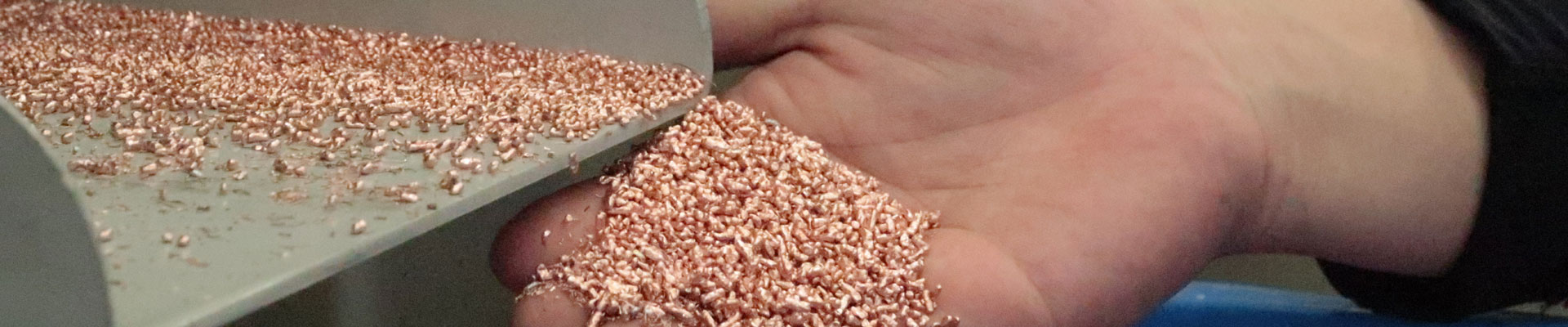
The Smart Way to Recycle Jelly Filled Cables
As global telecommunication systems continue upgrading, large quantities of scrap jelly filled cables are entering the recycling market every year. These cables contain valuable copper, aluminum, and plastic materials that can be efficiently recovered through modern recycling technology. Today, mechanical crushing, screening, and water washing recycling methods have become one of the most effective and environmentally friendly solutions for processing jelly filled cables.
What Are Jelly Filled Cables?
Jelly filled cables are special communication cables filled with a waterproof gel compound inside the cable structure. The jelly material protects internal conductors from moisture, corrosion, oxidation, and environmental damage.
These cables are widely used in:
- Telephone communication systems
- Underground communication networks
- Outdoor data transmission
- Fiber optic protection systems
- Signal control systems
- Military and industrial communication projects
Because of their excellent waterproof performance, jelly filled cables are commonly installed underground or in harsh outdoor environments.
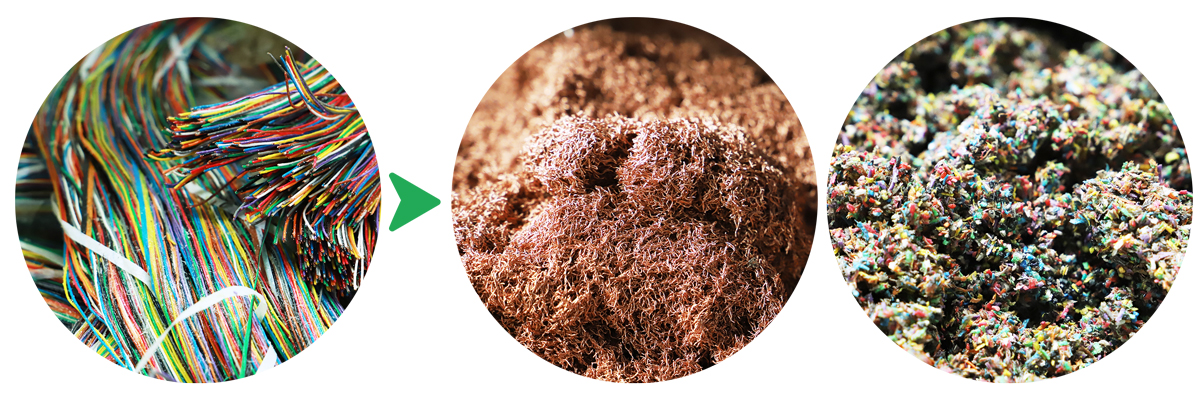
Sources of Scrap Jelly Filled Cables
Waste jelly filled cables mainly come from:
- Old telecommunication network upgrades
- Replacement of copper communication lines
- Demolition projects
- Abandoned underground cables
- Industrial electrical maintenance
- Cable manufacturing waste
- Scrap recycling collection stations
With the rapid development of fiber optic technology, traditional copper communication cables are being replaced in many countries, greatly increasing the amount of scrap jelly filled cables available for recycling.
Why Recycle Jelly Filled Cables?
Recycling jelly filled cables offers both environmental and economic benefits.
Environmental Benefits
- Reduces landfill pollution
- Prevents soil contamination from jelly compounds
- Saves natural copper resources
- Reduces mining-related environmental damage
Economic Benefits
- High-value copper recovery
- Reusable plastic materials
- Stable market demand
- High recycling profit potential
Copper remains one of the most valuable recyclable metals in the global recycling industry.
Mechanical Crushing + Screening + Water Washing Recycling Method
The most advanced recycling method for jelly filled cables combines:
- Mechanical crushing
- Vibrating screening
- Water washing cleaning
- Physical separation technology
This method avoids excessive burning or chemical pollution while achieving high recovery efficiency.
Detailed Jelly Filled Cable Recycling Process
Step 1: Cable Feeding
Scrap jelly filled cables are transported into the recycling system through automatic conveyor equipment.
Step 2: Primary Shredding
A heavy-duty shredder cuts long cables into smaller pieces for easier processing.
Step 3: Mechanical Crushing
A crusher or granulator further crushes the cable pieces, fully separating copper conductors from plastic insulation and jelly materials.
Step 4: Vibrating Screening
The crushed materials pass through vibrating screens to classify different particle sizes and improve separation efficiency.
Step 5: Water Washing System
The water washing unit removes sticky jelly compounds attached to copper and plastic surfaces. This process improves final product purity and cleanliness.
Step 6: Gravity or Air Separation
Different materials are separated according to weight and density differences.
Step 7: Magnetic Separation
Iron and ferrous impurities are automatically removed.
Step 8: Drying System
Cleaned materials are dried to prepare for packaging and sale.
Step 9: Dust Collection
Dust removal equipment keeps the production environment clean and environmentally friendly.
Main Machines in Jelly Filled Cable Recycling Plant
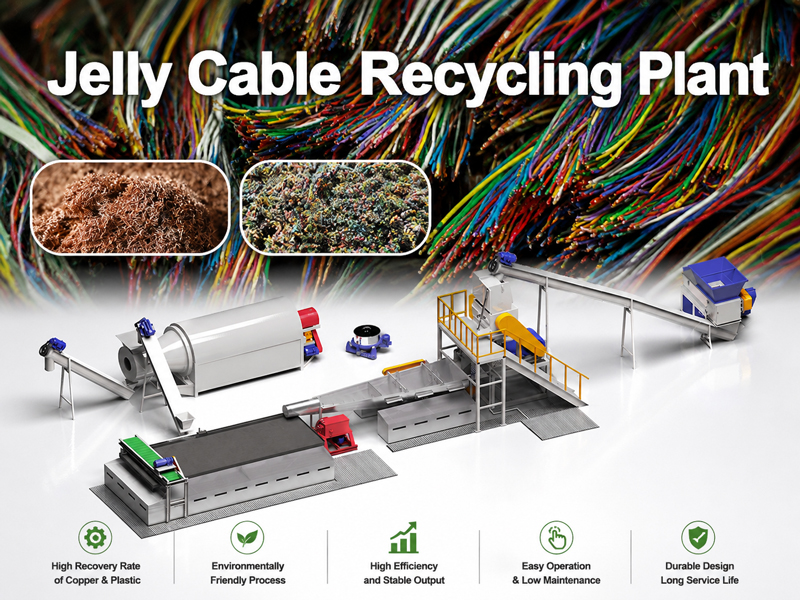
A complete recycling plant usually includes:
- Belt conveyor
- Cable shredder
- Crusher machine
- Vibrating screen
- Water washing tank
- Air separator
- Magnetic separator
- Dewatering machine
- Drying system
- Dust collection equipment
These machines work together to achieve efficient and continuous recycling production.
Final Recycled Materials and Applications
After recycling, the final recovered materials include:
| Recycled Material | Main Applications |
|---|---|
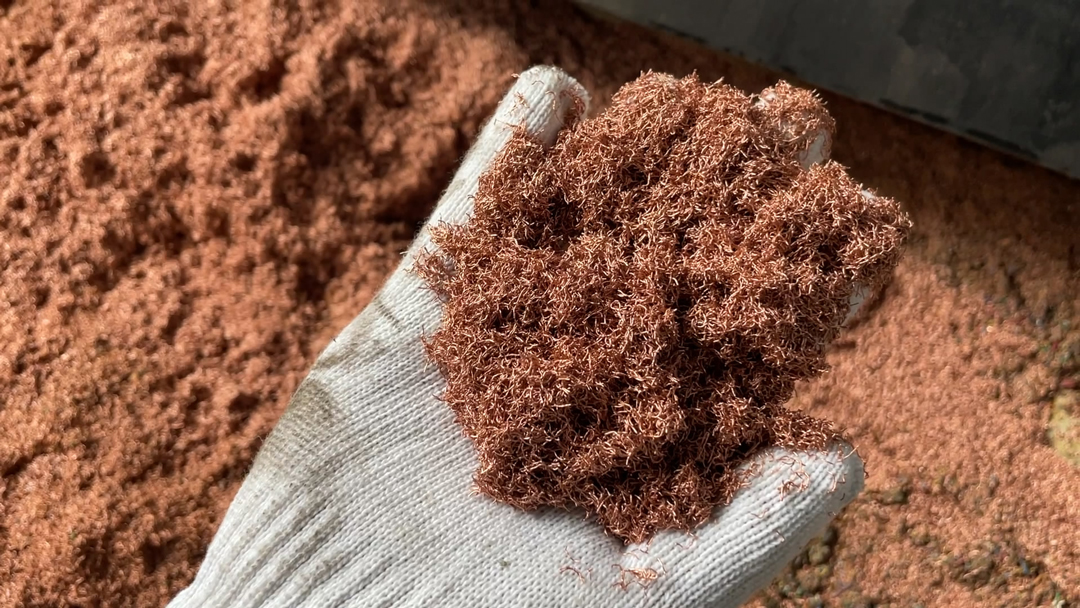
| Copper granules | Electrical wires and electronics |
| Aluminum particles | Metal processing industry |
| Plastic particles | Plastic pipes and industrial products |
| Iron materials | Steel manufacturing |
| Jelly waste residue | Industrial fuel processing |
Among these materials, high-purity copper granules usually provide the highest recycling value.
Advantages of This Recycling Method
Modern jelly filled cable recycling plants offer several advantages:
- High copper recovery rate
- Clean and environmentally friendly process
- Low operating cost
- Automated production
- High product purity
- Stable processing efficiency
- Reduced labor requirements
Mechanical crushing combined with screening and water washing technology can efficiently process many types of communication cables while minimizing environmental pollution.
Jelly filled cable recycling is becoming an increasingly important business in the global metal recycling industry. With the continuous replacement of old communication infrastructure, the supply of scrap jelly filled cables will continue growing rapidly. Advanced recycling systems using mechanical crushing, screening, and water washing technology can efficiently recover valuable copper and reusable plastics, creating strong economic returns while supporting environmental sustainability.