
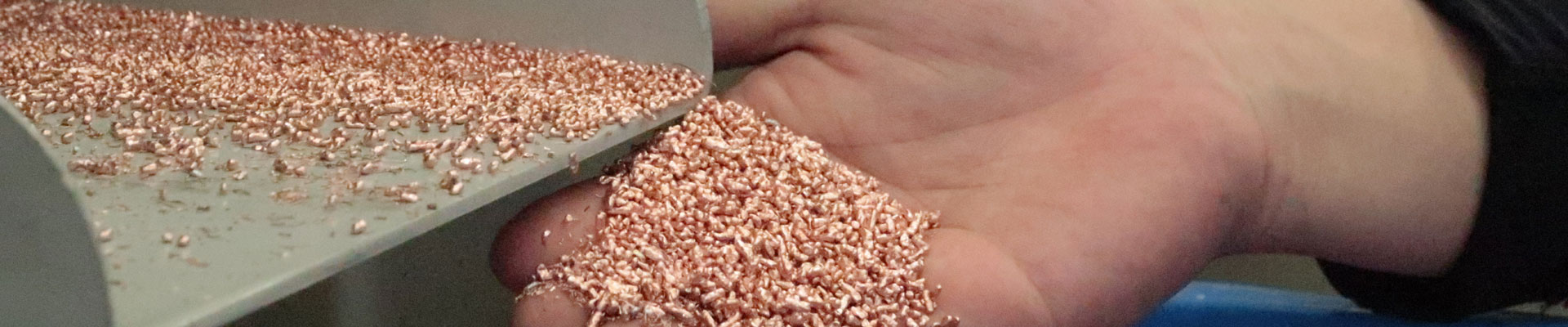
Complete Plant to Extract Precious Metals from E-Waste
The rapid growth of electronic products has created a large amount of E-Waste, including discarded computers, mobile phones, printed circuit boards (PCBs), connectors, communication equipment, and other electronic components. Unlike ordinary waste, E-Waste contains valuable metals that can be recovered and reused. A Complete Plant to Extract Precious Metals from E-Waste combines dismantling, crushing, separation, metal concentration, and refining processes to recover valuable resources while reducing the environmental impact of electronic waste.
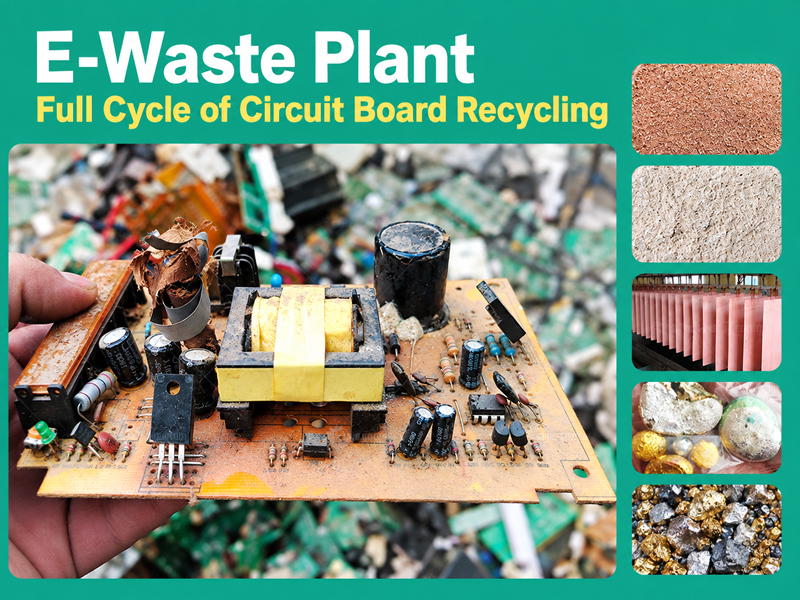
What Precious Metals Are Found in E-Waste?
E-Waste contains several valuable precious and non-ferrous metals. The concentration varies significantly depending on the type and age of the electronic equipment.
The main valuable metals include:
- Gold (Au): Found mainly in PCB contacts, connectors, CPUs, ICs, and other electronic components. Its excellent conductivity and corrosion resistance make it highly valuable.
- Silver (Ag): Commonly found in contacts, switches, solder materials, and some electronic components.
- Palladium (Pd): Present in certain capacitors, connectors, and electronic components, particularly in some older or specialized equipment.
- Platinum (Pt): Usually present in smaller quantities and can occur in specialized electronic components and equipment.
- Copper (Cu): Although not classified as a precious metal, copper is one of the most important recoverable metals in E-Waste and is widely found in PCB tracks, cables, motors, and connectors.
Because precious metals are often present in relatively small quantities, efficient concentration and separation are essential before downstream refining.
Why Extract Precious Metals from E-Waste?
Recovering precious metals from E-Waste can turn discarded electronics into secondary raw materials. Instead of sending valuable components to landfills, recycling plants can recover metals for use in new industrial products.
The main benefits include:
- Resource recovery: Gold, silver, palladium, copper, and other metals can be recovered and reused.
- Reduced mining demand: Secondary metal recovery can provide an alternative source of raw materials.
- Waste reduction: Recycling reduces the volume of electronic waste requiring disposal.
- Higher material value: Proper sorting and concentration can significantly improve the value of recovered fractions.
- Circular economy: Recovered metals can return to manufacturing processes as secondary raw materials.
How to Improve Precious Metal Recovery Efficiency?
A high-efficiency E-Waste recycling plant should be designed according to the material composition, required capacity, and target metals. Several factors can improve recovery performance:
- Accurate pre-sorting: Remove batteries, hazardous components, plastics, and other unsuitable materials before processing.
- Effective size reduction: Use suitable shredding and crushing equipment to liberate metals from PCBs and electronic components.
- Multi-stage separation: Combine magnetic, eddy-current, gravity, or other appropriate separation technologies according to the feed material.
- Controlled particle size: Maintain a suitable particle size for efficient downstream separation.
- Stable feed rate: A consistent feeding system helps maintain stable plant performance.
- Proper refining technology: Select downstream metal recovery and refining methods based on the concentrated material and target metals.
- Dust and emission control: Enclosed conveying, dust collection, and appropriate environmental systems help create a safer production environment.
How to Build a Complete E-Waste Precious Metal Recovery Plant?
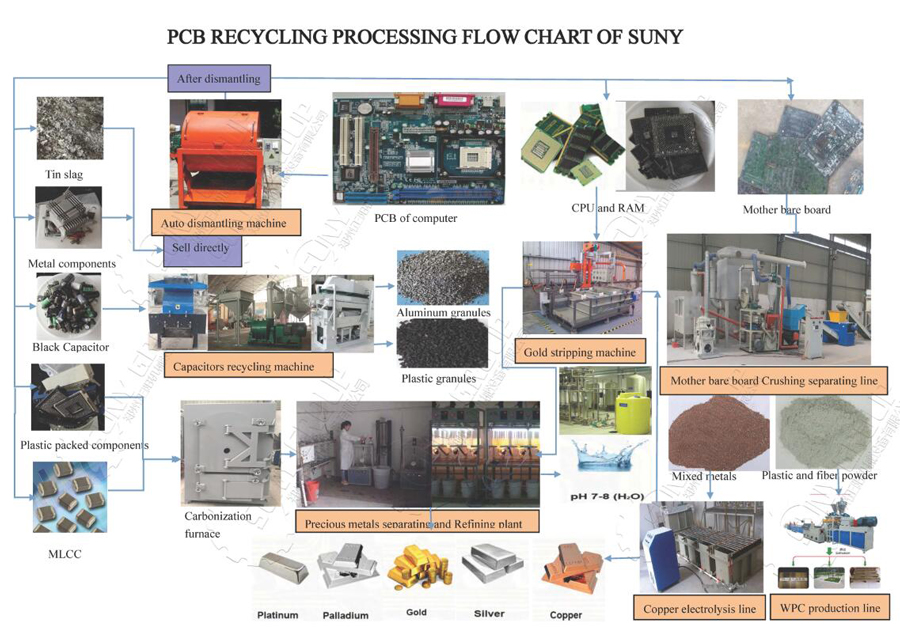
A Complete Plant to Extract Precious Metals from E-Waste should integrate several processing stages instead of relying on a single machine. A typical process can include:
E-Waste → Manual Dismantling → Primary Shredding → Crushing → Fine Grinding → Magnetic Separation → Eddy Current/Other Separation → Metal Concentration → Refining → Final Products
The plant layout should provide separate areas for raw material storage, dismantling, mechanical processing, separation, refining, finished-product storage, and environmental protection. Equipment selection should be customized according to the types of E-Waste, processing capacity, required particle size, and target recovery products.
For plants handling hazardous components or chemical refining, appropriate ventilation, wastewater treatment, emission control, worker protection, and regulatory compliance are also essential.
Final Products and Applications of Recovered Metals
A properly designed E-Waste recycling plant can produce concentrated or refined metal products, depending on the selected process. Gold can be used in electronic contacts, connectors, and high-reliability electronic components. Silver is widely used in electronics, electrical contacts, solar technologies, and industrial applications. Palladium and platinum can be reused in electronics, catalysts, and other specialized industries. Recovered copper can be returned to cable, electrical, construction, and manufacturing applications.
Therefore, a complete E-Waste Precious Metal Recovery Plant provides a systematic way to convert discarded electronics into valuable secondary resources. By combining efficient mechanical processing, accurate separation, suitable refining technology, and environmental protection systems, recyclers can improve resource utilization and establish a more sustainable E-Waste recycling operation.