
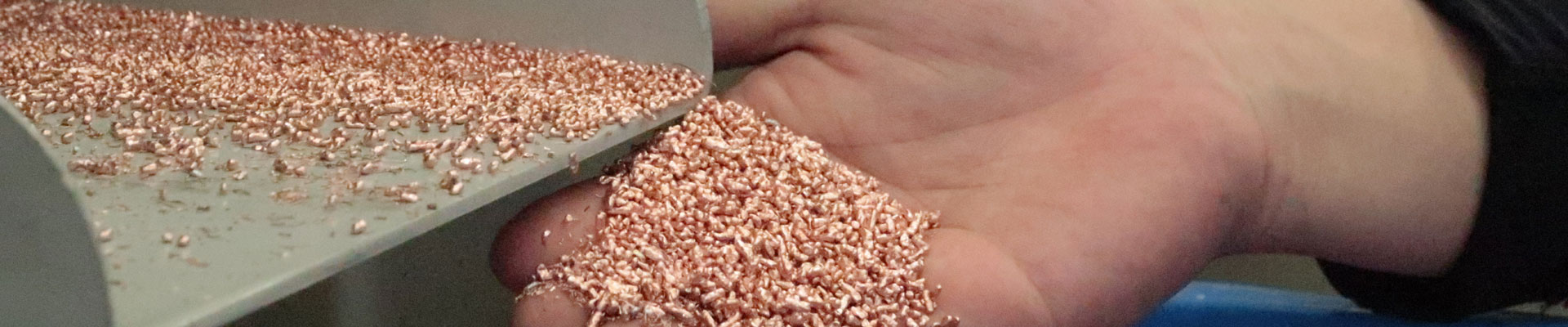
Aluminium and Copper Pieces Separation Machine
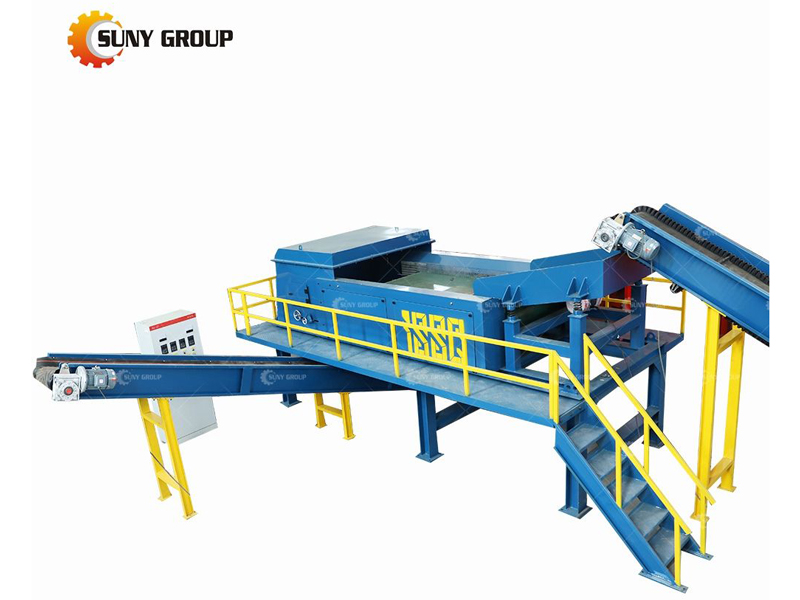
As the amount of scrap metal, e-waste, aluminum cans, electrical cables, automotive components, and industrial waste continues to grow, the efficient recovery of non-ferrous metals has become increasingly important in modern recycling operations. aluminium and copper pieces separation machine provides an effective solution for recovering valuable metals from mixed waste streams. Among various separation technologies, the Eddy Current Separator is widely applied because it can continuously separate non-ferrous metals from non-metallic materials through a contact-free process.
1. Why Are Copper and Aluminum Commonly Recycled?
Copper and aluminum are two of the most common non-ferrous metals found in recycling streams. Their widespread use creates a large and relatively consistent supply of recyclable scrap.
Copper is widely recycled because:
- It is used extensively in electrical wires and cables.
- It is found in motors, transformers, appliances, and electronic equipment.
- It has excellent electrical and thermal conductivity.
- It can be recycled repeatedly without losing its basic material properties.
- Clean copper scrap has significant material value.
Aluminum is widely recycled because:
- It is used in beverage cans, automotive parts, windows, profiles, and packaging.
- It has a low density and is easy to transport.
- Aluminum products generate large volumes of post-consumer and industrial scrap.
- Recycling aluminum requires less energy than producing primary aluminum from bauxite.
- It can be remelted and manufactured into new aluminum products.
Because copper and aluminum frequently appear together with plastics, rubber, paper, glass, and ferrous metals, effective separation equipment is important for improving material recovery.
2. Why Choose an Eddy Current Separator?
The characteristics of the incoming material determine the appropriate separation technology. Eddy Current Separator technology is particularly suitable when a recycling line contains non-ferrous metals mixed with non-metallic materials.
A typical material stream may contain:
- Aluminum pieces
- Copper pieces
- Brass
- Stainless steel
- Plastic
- Rubber
- Paper
- Glass
- Ferrous metals
A magnetic separator can remove ferrous metals such as iron and steel, but ordinary magnetic separation cannot effectively recover copper and aluminum because they are non-ferrous metals.
An Eddy Current Separator uses electromagnetic induction rather than conventional magnetic attraction. It can therefore eject conductive non-ferrous metals from a moving material stream while allowing most non-metallic materials to follow a different trajectory.
3. Working Principle of an Aluminium and Copper Pieces Separation Machine
The working principle is based on eddy currents.
Mixed materials are first delivered evenly onto a conveyor belt. At the discharge end, a high-speed magnetic rotor generates a changing magnetic field. When conductive non-ferrous metals such as aluminum and copper pass through this magnetic field, electrical currents are induced inside the metal pieces.
These eddy currents create a magnetic force that interacts with the rotor’s magnetic field. As a result, conductive metal pieces are deflected away from their normal falling path.
Non-metallic materials do not experience the same repulsive effect. They generally continue along their natural trajectory and fall into a separate collection area.
Therefore, the separation process can be summarized as:
Feeding → Conveying → Magnetic Field Interaction → Eddy Current Generation → Material Deflection → Collection
4. How Does the Separation Process Work?
A complete recycling line can use several stages to improve separation efficiency:
Step 1: Material Feeding
Mixed scrap is continuously fed into the system through a vibrating feeder or feeding conveyor.
Step 2: Size Reduction
A shredder or crusher may be used when oversized materials need to be reduced to a suitable particle size.
Step 3: Ferrous Metal Removal
A magnetic separator can first remove iron and steel materials, reducing interference in the subsequent non-ferrous separation process.
Step 4: Eddy Current Separation
The remaining material enters the Eddy Current Separator. Aluminum, copper, and other conductive non-ferrous metals are repelled by the magnetic rotor and separated from non-metallic materials.
Step 5: Secondary Sorting
If the customer requires separate aluminum and copper products, additional sorting technology may be necessary. An eddy current separator primarily separates non-ferrous metals from non-metallic materials; it does not automatically guarantee a clean copper-versus-aluminum split. Further density, sensor-based, or manual sorting can be incorporated depending on the feed composition and required product purity.
5. Materials After Separation
After processing, the main output streams may include:
- Aluminum pieces – beverage cans, profiles, sheets, and other aluminum scrap
- Copper pieces – copper fragments, electrical components, and copper scrap
- Other non-ferrous metals – brass and other conductive metals
- Non-metallic materials – plastics, rubber, paper, and other residues
- Ferrous metals – iron and steel removed by the magnetic separation stage
The recovered aluminum and copper pieces can then be supplied to downstream metal recyclers, smelters, foundries, or metal-processing facilities.
Aluminium and copper pieces separation machine based on eddy current technology provides an efficient solution for recovering non-ferrous metals from mixed recycling materials. Copper and aluminum are especially important because they are widely used, highly recyclable, and commonly present in industrial and consumer waste. By combining shredding, magnetic separation, conveying, and eddy current separation, recyclers can build an automated system for recovering valuable non-ferrous metals and improving the overall efficiency of metal recycling.