
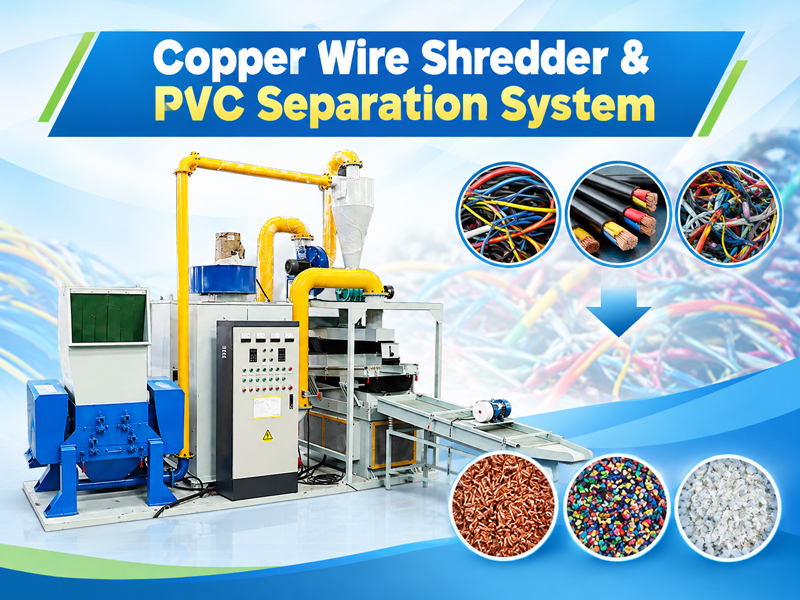
Copper Wire Shredder & PVC Separation System
As the amount of discarded electrical cables, communication lines, automotive wiring, and industrial wires continues to grow, recovering copper from these materials has become increasingly important for the recycling industry. Copper Wire Shredder & PVC Separation System provides an efficient solution for processing waste cables by separating valuable copper conductors from PVC insulation. Through a combination of shredding, granulation, screening, and air or gravity separation, the recycling line can produce cleaner recyclable materials, improve copper recovery, and reduce the need for labor-intensive manual processing.
What Is Copper Wire Made Of?
Most waste copper wire consists mainly of copper conductors and insulating materials. Depending on the cable type, the structure may also contain additional layers or components.
The main materials include:
- Copper – Copper is the primary valuable metal in many electrical wires because of its excellent electrical conductivity, thermal conductivity, and corrosion resistance.
- PVC – Polyvinyl chloride is widely used as cable insulation because it provides electrical insulation, mechanical protection, and chemical resistance.
- PE or Other Plastics – Some cables use polyethylene or other polymers instead of PVC.
- Rubber – Flexible industrial cables may contain rubber insulation or protective layers.
- Metal Shielding – Certain communication and industrial cables can contain aluminum foil, steel wire, or other shielding materials.
The exact composition varies according to cable structure, diameter, insulation type, and application.
Why Recycle Waste Copper Wire?
Copper is a valuable recyclable metal, and recovering it from waste cables can reduce the demand for primary copper resources. At the same time, separating copper from plastic insulation prevents valuable metal from being discarded or mixed with large quantities of waste plastic.
A copper wire recycling plant can provide several benefits:
- Recover high-value copper efficiently
- Reduce landfill waste
- Reuse PVC and other plastic fractions
- Reduce manual stripping requirements
- Improve the purity of recovered materials
- Create recyclable products for downstream manufacturers
How to Separate Copper and PVC?
The core principle of a Copper Wire Shredder & PVC Separation System is to reduce waste wires into appropriately sized particles and then separate materials according to their physical properties.
A typical process includes:
Waste Copper Wire → Pre-Shredding → Granulation → Screening → Air Separation → Copper and PVC Collection
First, large or mixed cables can be processed by a copper wire shredder to reduce their size and make the material suitable for downstream processing. A wire granulator then cuts the material into small copper and plastic particles.
After granulation, the mixture enters a separation system. Because copper has a much higher density than PVC, air separation, vibration screening, and gravity-based separation can be used to separate the heavier copper particles from lighter plastic particles. Additional screening or separation stages can be added when higher purity is required.
How to Build a Copper Wire Recycling Line?
When building a copper wire recycling plant, the equipment configuration should be selected according to cable diameter, insulation type, processing capacity, and required copper purity.
A basic production line may include:
- Feeding System – Provides a continuous and controlled supply of waste cables.
- Copper Wire Shredder – Pre-shreds large cables and difficult wire bundles.
- Wire Granulator – Further cuts copper wire and insulation into small particles.
- Vibrating Screen – Classifies particles by size.
- Air Separation System – Separates lighter PVC from heavier copper.
- Dust Collection System – Collects dust generated during shredding and separation.
- Magnetic or Additional Separation Equipment – Can be added when ferrous or other metal contaminants are present.
- Conveyors and Control System – Connect the machines and enable continuous automated operation.
For a large-scale Copper Wire Shredder & PVC Separation System, the complete layout can be customized according to the customer’s raw materials and target capacity.
What Are the Final Products?
A properly designed copper wire recycling line can produce several useful output materials:
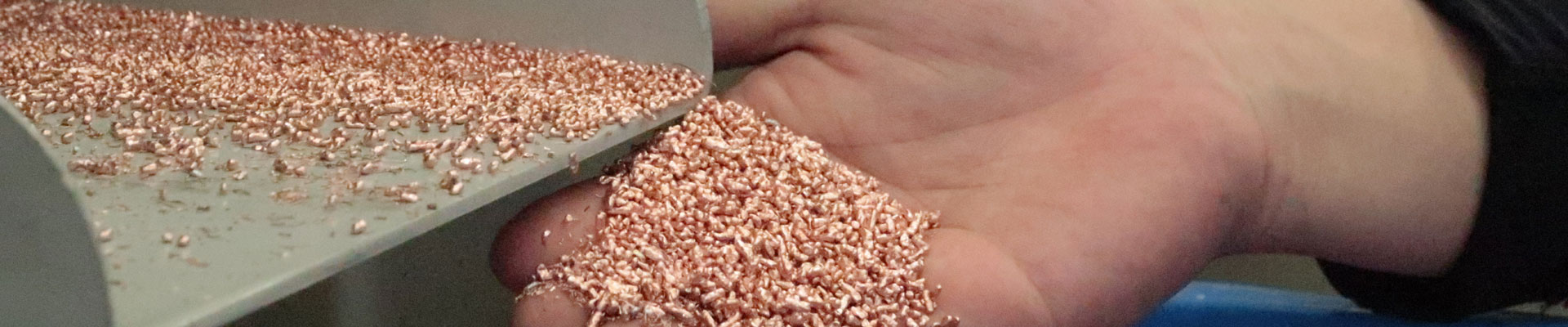
- Recycled Copper: Used for copper wire, electrical components, cables, motors, and other copper products after appropriate refining or processing.
- Separated PVC: Can be collected as a plastic-rich fraction and potentially reused in cable insulation, plastic products, flooring, and other applications, depending on its composition and cleanliness.
- Other Metal Fractions: Aluminum, steel, or shielding materials can be separately recovered when present.
- Dust: Collected through the dust-control system rather than released directly into the working environment.
Copper Wire Shredder & PVC Separation System provides an efficient approach to recovering copper from insulated waste cables. By integrating shredding, granulation, screening, air separation, and dust collection, a complete copper wire recycling line can transform mixed waste cables into valuable copper and recyclable PVC fractions. For investors planning a copper wire recycling plant, analyzing the incoming cable types, processing capacity, required product purity, and downstream markets is essential for selecting the appropriate equipment and designing an efficient recycling process.