
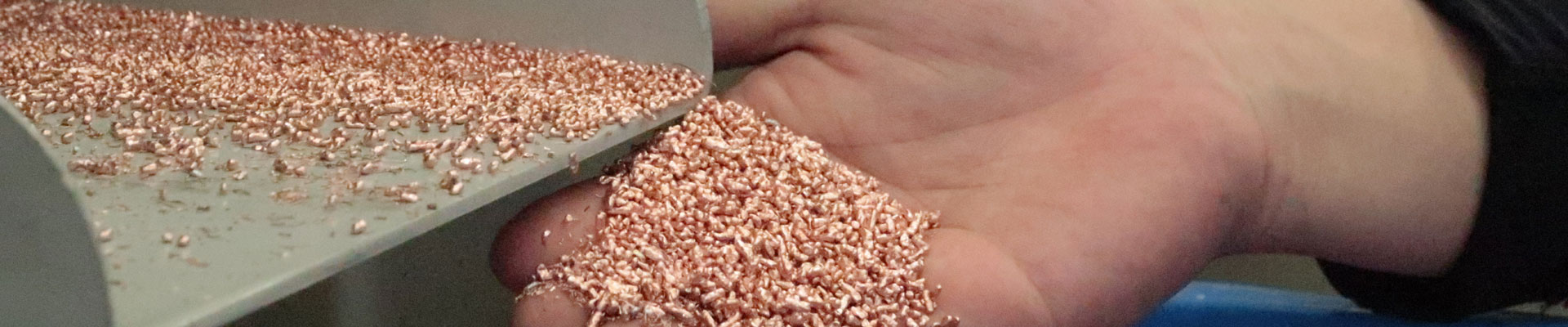
Precious Metal Refining Plant
As the use of computers, smartphones, communication devices, vehicles, and other electronic equipment continues to expand, the volume of discarded printed circuit boards (PCBs) is also increasing. Precious Metal Refining Plant provides an efficient solution for recovering valuable resources from waste PCBs, including gold, silver, and palladium, as well as base metals such as copper. Because waste PCBs contain a significant amount of recoverable metals, they have become an important secondary source of valuable materials for the recycling industry.
1. What Precious Metals Are Contained in PCBs?
Waste PCBs contain several valuable and precious metals. The exact composition varies according to the PCB type, electronic device, manufacturer, and component configuration.
The main precious metals include:
- Gold (Au): Commonly found in connectors, contact surfaces, pins, interfaces, and some electronic components. Gold is valued for its excellent conductivity and corrosion resistance.
- Silver (Ag): Can occur in contacts, component terminals, conductive materials, and other electronic components.
- Palladium (Pd): Found in certain electronic contacts and components and is valued for its electrical and chemical properties.
- Platinum-group metals: Some specialized electronic materials may contain small quantities of platinum-group elements, although their concentrations and occurrence vary significantly.
Research on waste PCBs has identified gold, silver, and palladium as important precious-metal targets, with concentrations varying substantially among different PCB components.
In addition to precious metals, PCBs commonly contain large quantities of copper, tin, iron, nickel, zinc, and aluminum, making comprehensive metal recovery important for overall plant economics.
2. Why Is PCB Precious Metal Recycling Valuable?
The important value of PCB recycling comes from both resource recovery and waste reduction. Precious-metal concentrations in waste PCBs can be much higher than those found in many natural ores. One study reported that the recyclable precious-metal value of one tonne of waste PCBs could reach approximately US$2,293 under the study’s specific material and market assumptions, with gold accounting for the largest share. Actual returns vary with PCB grade, metal prices, recovery efficiency, and processing costs.
PCB recycling also reduces dependence on primary mining and allows valuable metals already present in discarded electronics to return to industrial supply chains. Recent techno-economic research continues to identify gold as an important contributor to PCB recycling revenues.
3. How to Build a Precious Metal Refining Plant?
A complete Precious Metal Refining Plant should be designed according to PCB composition, processing capacity, target metals, local environmental regulations, and the selected refining technology.
Step 1: PCB Collection and Sorting
First, collect waste PCBs from computers, mobile phones, communication equipment, appliances, and other electronic products. Different PCB grades should be sorted because their metal contents can vary considerably.
Step 2: Dismantling and Pretreatment
Electronic components and unwanted materials are removed before further processing. Mechanical pretreatment can include dismantling, crushing, screening, magnetic separation, and other physical separation methods. Research indicates that pretreatment is an important stage for exposing and concentrating metals before subsequent recovery.
Step 3: Metal Enrichment
The processed PCB material is separated into metal-rich and non-metal fractions. Depending on the plant design, equipment such as shredders, crushers, vibrating screens, magnetic separators, and air or electrostatic separation systems can be incorporated.
Step 4: Precious Metal Refining
The concentrated metal fraction can then undergo suitable hydrometallurgical, pyrometallurgical, or electrometallurgical processes. Hydrometallurgical routes use controlled leaching and subsequent purification/recovery stages, while industrial smelting and refining can also be used for appropriate feedstocks. The choice should be based on material composition, capacity, environmental controls, and regulatory requirements.
Step 5: Purification and Final Products
After separation and refining, the recovered metals can be purified into products such as copper products and precious-metal-bearing concentrates or refined metals, depending on the plant configuration and refining technology.
4. Main Equipment for a PCB Refining Plant
A typical plant may include:
- PCB dismantling equipment
- Primary shredder
- Crusher or granulator
- Magnetic separator
- Screening system
- Air/electrostatic separation equipment
- Metal enrichment system
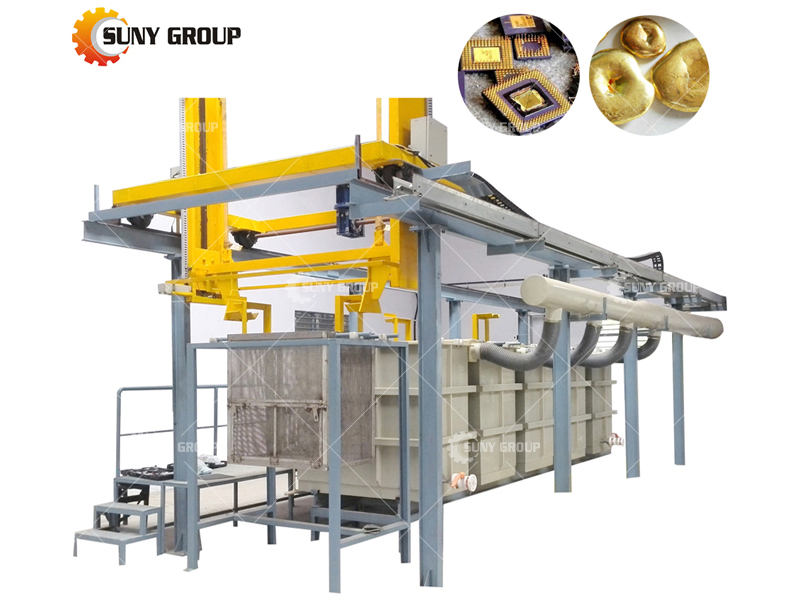
- Leaching and reaction equipment
- Solid-liquid separation equipment
- Purification and recovery equipment
- Wastewater treatment system
- Exhaust-gas treatment system
- Laboratory and metal-analysis equipment
Because waste PCBs can contain hazardous substances as well as valuable metals, environmental protection should be integrated into the plant design rather than added as an afterthought. Improper thermal or chemical processing can create harmful emissions or contaminated wastewater.
5. Applications of Recovered Metals
The recovered materials can re-enter different industrial supply chains:
- Gold: Electronic contacts, connectors, high-reliability electronic components, and jewelry.
- Silver: Electrical contacts, conductive materials, electronics, and industrial applications.
- Palladium: Electronic components, electrical contacts, catalysts, and other specialized applications.
- Copper: Electrical cables, motors, wiring, electronics, construction, and copper products.
- Tin: Solder and various industrial applications.
- Nickel: Alloys, plating, batteries, and industrial components.
Therefore, a well-designed PCB Precious Metal Refining Plant can recover multiple material streams instead of focusing exclusively on gold.
Precious Metal Refining Plant provides a systematic way to recover valuable resources from waste PCBs. Gold, silver, and palladium are the primary precious-metal targets, while copper, tin, nickel, and other metals can provide additional recovery value. A complete plant normally combines PCB sorting, dismantling, mechanical pretreatment, metal enrichment, refining, purification, and environmental protection systems. Because PCB composition varies significantly, the optimal process and equipment configuration should be determined through feedstock testing and a technical feasibility study rather than using one standard plant design.