
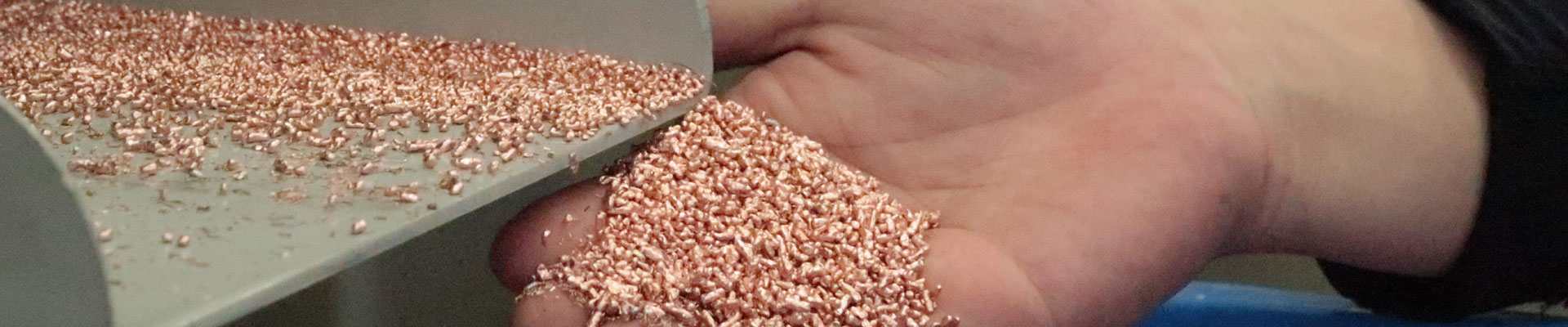
PCB Board Recycling Unit
With the rapid growth of electronic waste, recycling discarded printed circuit boards (PCBs) has become an important part of the resource recovery industry. PCB Board Recycling Unit is a specialized production system designed to dismantle, crush, separate, and recover valuable metals from waste circuit boards. Through mechanical processing and advanced metal extraction technologies, valuable resources such as copper, gold, silver, and palladium can be recovered for reuse.
1. What Are Printed Circuit Boards (PCBs) Made Of?
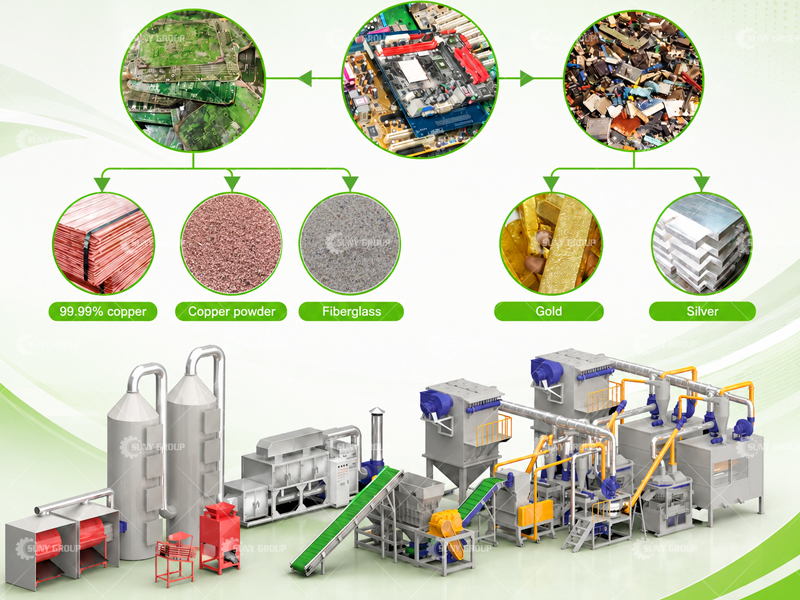
A printed circuit board is an essential component of electronic devices, providing electrical connections and mechanical support for electronic components. It is commonly composed of three main material categories:
- Metals: Copper, aluminum, iron, nickel, tin, lead, gold, silver, and palladium.
- Non-metallic Materials: Fiberglass, epoxy resin, plastic, and ceramic fillers.
- Electronic Components: Capacitors, resistors, integrated circuits, connectors, transistors, and other electronic parts.
The metal content of waste PCBs can account for approximately 30%–50% of their total weight, depending on the board type and source. Precious metals, although present in smaller quantities, contribute significantly to their recycling value.
2. What Is the Recycling Value of Waste PCB Boards?
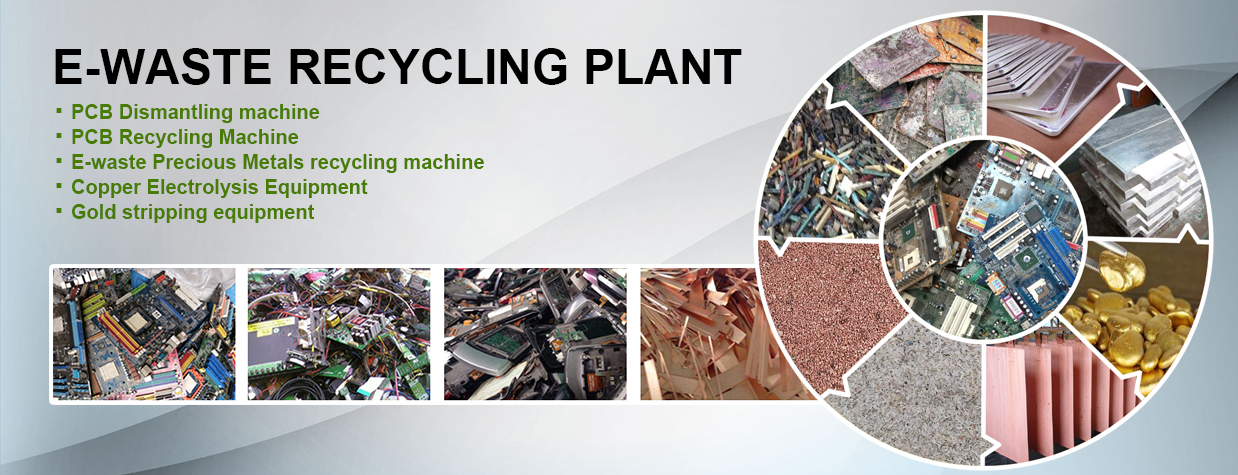
Waste circuit boards are considered valuable secondary resources because they contain various recyclable metals.
The main economic benefits include:
- Copper Recovery: Copper is widely used in PCB conductive layers and accounts for a significant proportion of recoverable metals.
- Gold Recovery: Gold is commonly found in connector pins, contact surfaces, and certain electronic components. Its high market value makes recovery particularly attractive.
- Silver and Palladium Recovery: These precious metals are used in electronic contacts, conductive materials, and components.
- Other Metal Recovery: Tin, nickel, aluminum, and iron can also be recovered through appropriate separation processes.
- Non-metallic Material Utilization: Fiberglass and resin fractions can be collected for further treatment or suitable downstream applications.
PCB recycling reduces electronic waste, conserves natural resources, and creates additional revenue opportunities for recycling businesses.
3. Complete PCB Board Recycling Process
A professional PCB Board Recycling Unit generally combines component dismantling, mechanical separation, and precious metal recovery.
Step 1: Electronic Component Removal
Waste circuit boards are first inspected and sorted according to their types and material characteristics. Electronic components such as capacitors, connectors, and other valuable parts are removed using manual dismantling stations or specialized component removal equipment.
Step 2: Shredding and Crushing
The remaining PCB boards are fed into a double-shaft shredder for preliminary size reduction. A hammer crusher or fine crusher then processes the shredded materials into smaller particles, helping release metal fractions from fiberglass and resin substrates.
Step 3: Screening and Physical Separation
The crushed materials enter a vibrating screening system to classify particles by size. Magnetic separation removes ferrous metals, while air separation, gravity separation, and electrostatic separation help separate copper-rich metal particles from non-metallic materials.
The recovered metal concentrate can then be transferred to further refining processes.
Step 4: Gold Stripping and Precious Metal Extraction
For PCB materials containing recoverable gold, an additional precious metal recovery process can be introduced.
The general industrial process includes:
- Gold Stripping: Gold-bearing materials are treated in specialized, controlled stripping systems to separate gold coatings from their substrates.
- Solid-Liquid Separation: Filtration equipment separates solid residues from the precious-metal-bearing solution.
- Gold Recovery: Industrial chemical recovery or electrochemical systems recover gold from the processed solution.
- Precious Metal Refining: Further refining produces higher-purity gold. Depending on the feedstock, silver and palladium can also be recovered through dedicated refining processes.
These operations require enclosed chemical handling, ventilation, wastewater treatment, and qualified environmental management systems.
4. What Equipment Is Required for a PCB Recycling Unit?
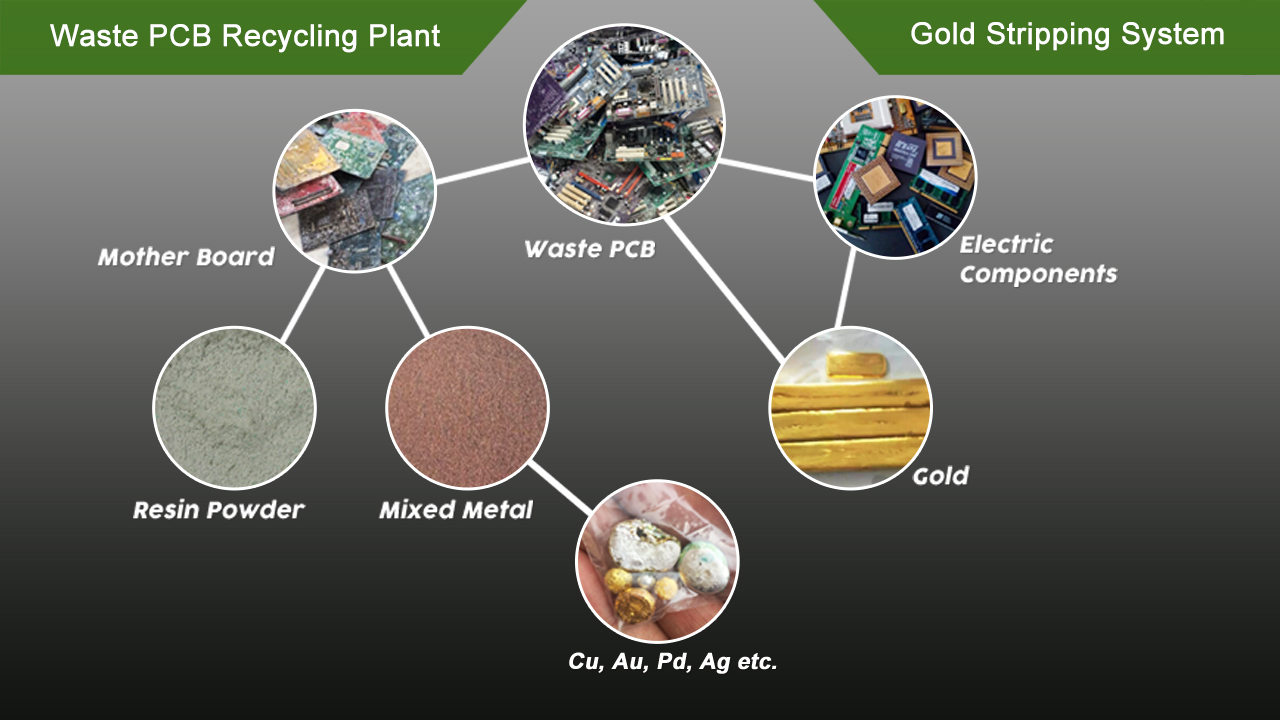
A complete PCB recycling production line may include:
- Manual dismantling workstation.
- Electronic component removal machine.
- Double-shaft shredder.
- Hammer crusher and fine grinder.
- Vibrating screening machine.
- Magnetic separator.
- Air separation machine.
- Gravity separator.
- High-voltage electrostatic separator.
- Dust collection system.
- Gold stripping and precious metal recovery equipment.
- Filtration, electrowinning, and refining systems.
- Wastewater and exhaust gas treatment equipment.
The equipment configuration depends on raw material characteristics, processing capacity, and the required recovery products.
5. What Are the Final Products of PCB Recycling?
After the complete recycling process, the main recovered products include:
- Copper concentrate or recovered copper metal.
- Gold and other precious metal products.
- Silver and palladium-bearing concentrates.
- Iron, aluminum, and other recyclable metals.
- Non-metallic fiberglass and resin fractions.
6. How Profitable Is a PCB Board Recycling Business?
The economic value of a PCB recycling plant depends on raw material purchasing costs, precious metal content, processing capacity, recovery efficiency, energy consumption, labor costs, and refining expenses.
High-grade computer and communication boards generally offer greater precious metal recovery potential than low-grade electronic boards. Therefore, raw material classification and metal content testing are essential before investing in a recycling production line.
PCB Board Recycling Unit provides an integrated solution for processing waste circuit boards and recovering valuable resources. By combining component removal, shredding, crushing, physical separation, gold stripping, and precious metal refining, recycling businesses can recover copper, gold, silver, and other valuable materials while reducing electronic waste and improving resource utilization.