
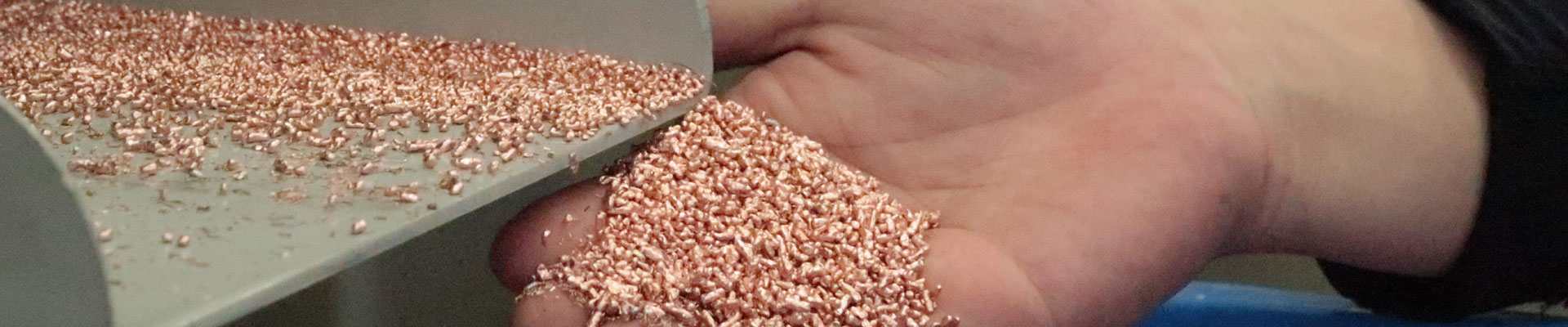
Electric Motor Stator and Rotor Recycling Plant
Electric motor stators and rotors are essential components of motors used in industrial machinery, automobiles, household appliances, pumps, fans, compressors, and electric tools. When equipment reaches the end of its service life, manufacturing facilities and scrap recycling centers generate large quantities of waste motors, stators, and rotors.
A stator is the stationary component of an electric motor, typically consisting of a laminated silicon steel core, copper or aluminum windings, insulating paper, and resin coatings. A rotor is the rotating component, generally containing a steel shaft, laminated iron core, and, depending on the motor design, copper conductors, aluminum sections, or permanent magnets.
These components contain valuable metals that can be recovered through mechanical processing. Their actual composition varies according to motor type, size, and manufacturing technology.
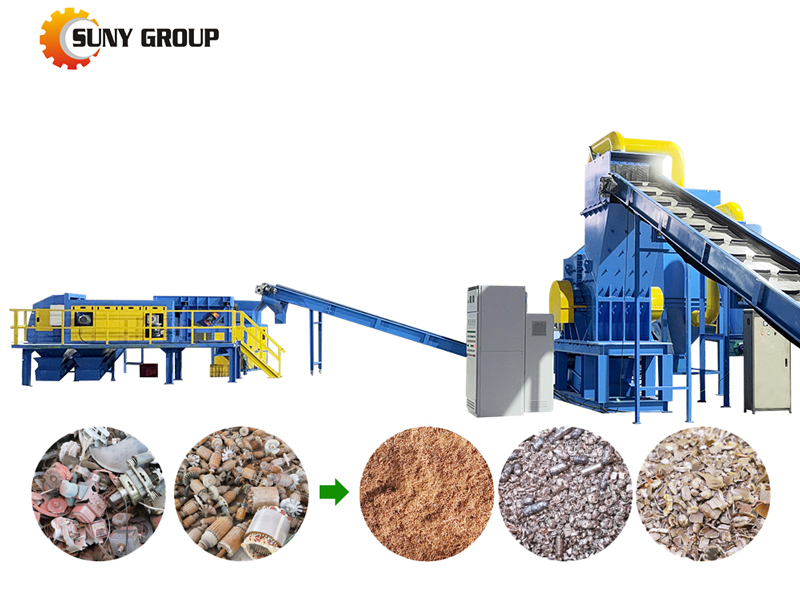
Electric Motor Stator and Rotor Recycling Plant
1. Recycling Value and Recoverable Metals
An Electric Motor Stator and Rotor Recycling Plant helps recyclers recover valuable materials from discarded motor components instead of sending them to landfill or selling them as mixed scrap.
The main recoverable materials include:
- Copper: Found in stator windings and some rotor designs. It is a major source of recycling revenue because of its conductivity and industrial demand.
- Silicon steel and iron: Present in laminated cores, shafts, and other structural components. These materials can be recycled by steelmakers and foundries.
- Aluminum: Found in certain rotor conductors, cast components, and motor housings.
- Permanent magnets: Present in some motor designs and potentially recoverable for specialized reuse or material recovery.
- Insulation and other non-metallic materials: Including varnish, resin, plastic, and insulating paper, which require appropriate separation and management.
Copper recovery often provides a major economic incentive, while separating iron and aluminum creates additional revenue streams. Actual profitability depends on scrap composition, metal prices, processing costs, and recovery efficiency.
2. How to Build a Complete Electric Motor Recycling Plant
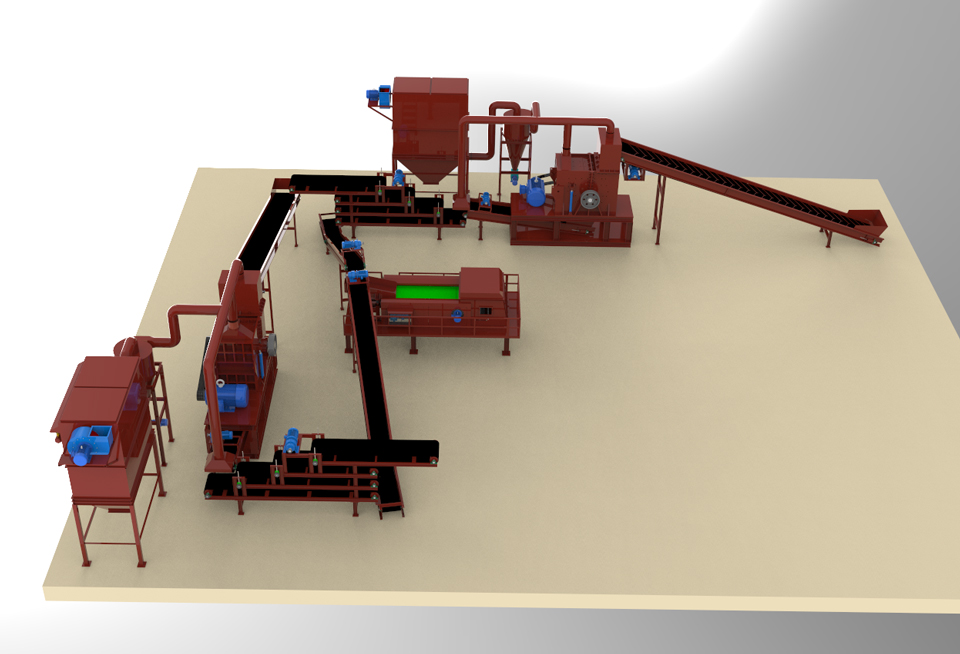
Building a complete recycling plant starts with evaluating the incoming materials, required capacity, available space, and target output quality. A suitable production line may include:
- Feeding conveyor: Transfers sorted stators, rotors, and prepared motor scrap into the processing system.
- Primary shredder or crusher: Reduces material size and opens up tightly assembled metal components.
- Hammer crusher or secondary pulverizer: Further breaks down the material to release copper and other metals from the steel core.
- Magnetic separation system: Removes ferrous materials, including iron and silicon steel.
- Copper separation equipment: Uses additional crushing, screening, and air separation to improve copper purity.
- Non-ferrous separation equipment: An eddy current separator or other suitable sorting equipment can recover aluminum where the feed composition and particle sizes permit.
- Dust collection system: Collects airborne particles generated during crushing and separation.
- Conveyors and collection bins: Transfer and store each recovered material separately.
Equipment selection should match the actual feedstock. A line processing complete motors may require different pretreatment from one designed exclusively for separated stators and rotors.
3. Complete Electric Motor Stator and Rotor Recycling Process
A typical mechanical recycling process follows these stages:
Step 1: Inspection and sorting. Remove unsuitable materials and classify motors, stators, and rotors by size and structure.
Step 2: Crushing and size reduction. Feed the prepared materials into the crushing system to expose the embedded metal components.
Step 3: Magnetic separation. Separate iron and silicon steel from the copper-rich and other non-ferrous fractions.
Step 4: Secondary processing. Crush and screen the remaining mixtures to improve metal liberation and separation.
Step 5: Fine sorting. Use air separation and suitable non-ferrous sorting technologies to remove insulation, dust, and residual mixed metals.
Step 6: Collection and quality inspection. Collect the separated materials, inspect their purity, and prepare them for sale or further refining.
4. Advantages and Final Recycled Products
An automated Electric Motor Stator and Rotor Recycling Plant can reduce manual dismantling, improve processing consistency, increase material recovery, and handle larger quantities of scrap. A properly configured system also helps reduce cross-contamination between recovered metal fractions.
The final products may include copper granules or winding scrap, silicon steel sheets or iron scrap, aluminum fractions, and separated non-metallic residues. Permanent magnets and reusable components may be recovered through additional specialized processes when appropriate.
These materials can return to metal smelting, steel production, foundries, and other manufacturing industries. By selecting suitable equipment and optimizing each separation stage, recyclers can improve resource utilization, reduce waste, and establish a more efficient and sustainable electric motor recycling business.