

Equipment of Lithium Battery Recycling
1. What Is the Recycling Value of Lithium Batteries?
With the rapid growth of electric vehicles, energy storage systems, and portable electronics, lithium battery recycling equipment is becoming increasingly important for resource recovery and sustainable manufacturing.
Lithium-ion batteries contain valuable materials, including lithium, nickel, cobalt, manganese, copper, aluminum, and graphite. Recovering these materials from spent batteries and manufacturing scrap can reduce dependence on newly mined resources and provide secondary raw materials for battery production.
The main economic values of lithium battery recycling include:
- Metal recovery: Extract valuable battery metals for further processing and reuse.
- Resource conservation: Reduce the need for virgin raw materials.
- Material supply security: Support a more diversified battery supply chain.
- Waste reduction: Recover reusable materials instead of sending suitable waste streams to disposal.
The actual profitability depends on battery chemistry, metal prices, feedstock availability, processing costs, and recovery efficiency.
2. Why Is Lithium Battery Recycling Important for the Environment?
Improperly managed lithium batteries can cause fires, release hazardous substances, and contaminate the environment. Damaged batteries may also experience thermal runaway, creating serious safety risks.
A professional lithium battery recycling plant helps address these challenges by:
- Reducing the amount of battery waste sent for disposal.
- Recovering valuable metals and reducing demand for primary mining.
- Supporting circular material flows in the battery industry.
- Separating hazardous components for appropriate treatment.
- Improving resource utilization through mechanical and chemical recovery technologies.
Recycling must include proper battery storage, fire prevention, dust control, and wastewater management where applicable to minimize environmental risks.
3. What Is the Market Demand for Lithium Battery Recycling Equipment?
The demand for lithium battery recycling equipment is driven by the expansion of electric vehicles, renewable energy storage, consumer electronics, and battery manufacturing.
According to the International Energy Agency, global lithium-ion battery deployment across applications increased more than sixfold between 2020 and 2025. However, many electric vehicle batteries remain in service for years, meaning end-of-life battery supply will grow with a delay. Manufacturing scrap is therefore an important feedstock for recyclers today. IEA battery outlook
Key customer groups include:
- Lithium battery recycling companies.
- Electric vehicle battery dismantling businesses.
- Battery manufacturers handling production scrap.
- Electronic waste recycling plants.
- Metal recovery and resource regeneration companies.
As the battery recycling industry develops, businesses need equipment that can handle different battery chemistries, processing capacities, and material recovery requirements.
4. What Are the Main Types of Lithium Battery Recycling Equipment?
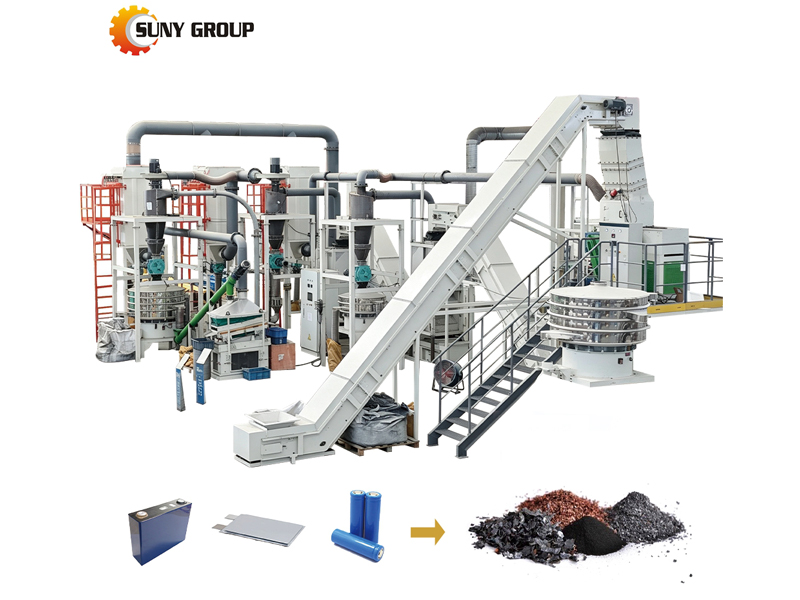
A complete lithium battery recycling line may include the following machines:
- Battery discharge equipment: Reduces electrical energy before downstream processing when required by the selected process.
- Battery dismantling machines: Separate battery packs, modules, housings, and accessible components.
- Shredders and crushers: Reduce suitable battery materials into smaller particles.
- Screening machines: Classify processed materials according to particle size.
- Magnetic separators: Remove ferrous metals from mixed material streams.
- Eddy current separators: Recover suitable non-ferrous metal fractions.
- Air separators and density separators: Separate materials according to physical properties.
- Black mass collection systems: Collect and handle electrode-rich powder generated during processing.
- Hydrometallurgical equipment: Uses controlled chemical leaching and purification to recover metals from suitable feedstocks.
- Environmental protection systems: Include dust collection, gas treatment, fire protection, and wastewater treatment where required.
The equipment configuration depends on battery chemistry, feedstock condition, desired products, and whether the plant produces black mass or refined battery materials.
5. What Is the Complete Lithium Battery Recycling Process?
A typical mechanical recycling line follows these stages:
- Collection and sorting: Identify battery types, chemistry, condition, and source.
- Safety inspection: Isolate damaged batteries and establish appropriate storage and handling procedures.
- Discharging and dismantling: Apply suitable electrical safety measures and dismantle packs or modules where required.
- Shredding and crushing: Process prepared batteries in equipment designed for the specific feedstock and operating conditions.
- Screening and separation: Separate metal foils, steel, plastics, and other fractions using suitable mechanical technologies.
- Black mass recovery: Collect the fine mixture containing electrode materials, including lithium-bearing compounds, graphite, and other valuable constituents.
- Metal extraction: Send black mass for hydrometallurgical leaching, pyrometallurgical treatment, or another suitable recovery process.
- Product purification: Refine recovered materials to meet the specifications of downstream users.
Not every facility performs all stages. Some plants specialize in mechanical pretreatment and sell black mass to downstream refiners.
6. How to Choose Suitable Lithium Battery Recycling Equipment?
Before investing in a recycling plant, evaluate battery chemistry, hourly capacity, automation level, material recovery targets, energy consumption, maintenance costs, and environmental requirements.
A customized system should match the available feedstock and intended output. Equipment suppliers should also provide clear information about safety controls, operating conditions, expected material streams, and commissioning support.
Lithium battery recycling equipment plays a key role in recovering valuable materials, reducing battery waste, and supporting a circular battery economy. By combining safe pretreatment, shredding, screening, separation, and downstream metal recovery, businesses can develop an efficient recycling solution tailored to their operational needs.