
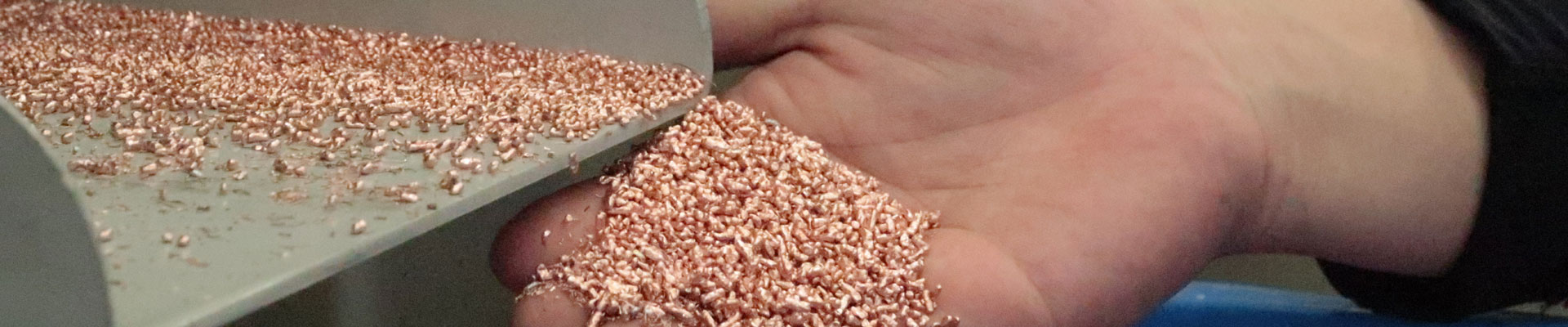
Motor Stator Copper Recycling Equipment
With the rapid growth of electrical equipment, automotive industries, and household appliances, the amount of discarded electric motors is increasing every year. These waste motors contain valuable materials, especially copper windings inside the motor stator. Motor Stator Copper Recycling Equipment is specially designed to efficiently separate copper from stator cores, reduce labor costs, and improve the economic value of scrap motor recycling.
1. Sources of Motor Stators and Copper Content
A motor stator is the stationary part of an electric motor, consisting of a steel core and copper wire windings. When electric motors reach the end of their service life, the stators become important recyclable resources.
Common sources of waste motor stators include:
- Household appliances
- Washing machines
- Air conditioners
- Refrigerators
- Electric fans
- Industrial equipment
- Pumps
- Compressors
- Conveyor motors
- Manufacturing machinery
- Automotive and transportation equipment
- Electric vehicle motors
- Alternators
- Starters
- Scrap electrical equipment
- Waste electrical and electronic equipment (WEEE)
- Old generators and transformers
The main recycling value of motor stators comes from the copper winding. Copper has excellent electrical conductivity and high market value, making it the most important recoverable material. Generally, waste electric motors contain approximately 8%–15% copper by weight, mainly concentrated in the stator windings.
Besides copper, motor stators also contain:
- Silicon steel sheets
- Iron casing
- Aluminum parts
- Insulation materials
Through efficient recycling, these materials can be recovered and reused instead of being discarded.
2. What Is Motor Stator Copper Recycling Equipment?
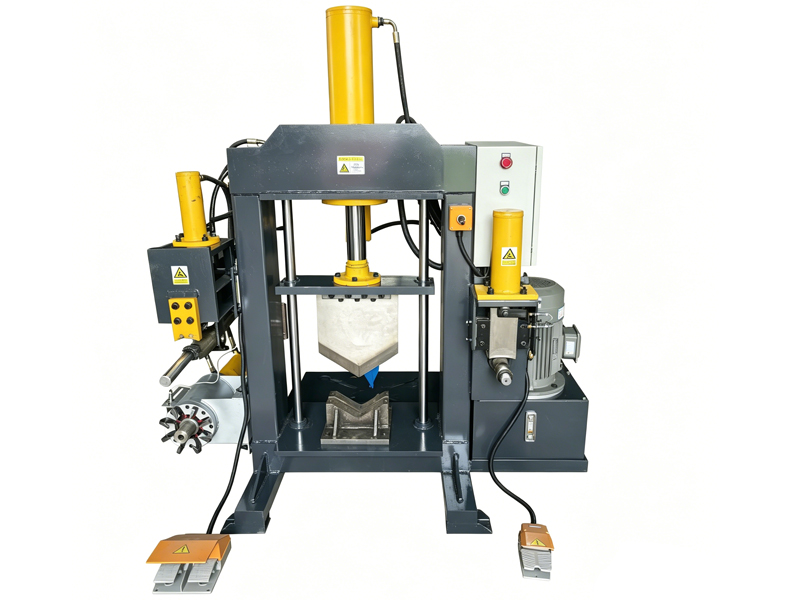
Motor Stator Copper Recycling Equipment is an advanced recycling machine specially designed for recovering valuable copper from waste motor stators. It integrates five functions into one system, including cutting, pulling, crushing, separating, and collecting, which greatly improves the efficiency of motor recycling compared with traditional manual dismantling methods.
Waste electric motors are widely generated from household appliances, industrial equipment, automobiles, generators, pumps, compressors, and other electrical products. Inside these motors, the stator contains copper windings with high recycling value. The 5-in-1 motor stator recycling machine can quickly remove copper wires from stators while separating iron cores and other metals, helping recycling companies obtain higher economic returns.
The equipment mainly consists of a hydraulic cutting system, stator fixing device, copper pulling system, crushing unit, and separation system. Through hydraulic power and mechanical processing, the machine can handle different sizes and types of motor stators with stable performance and high recovery efficiency.
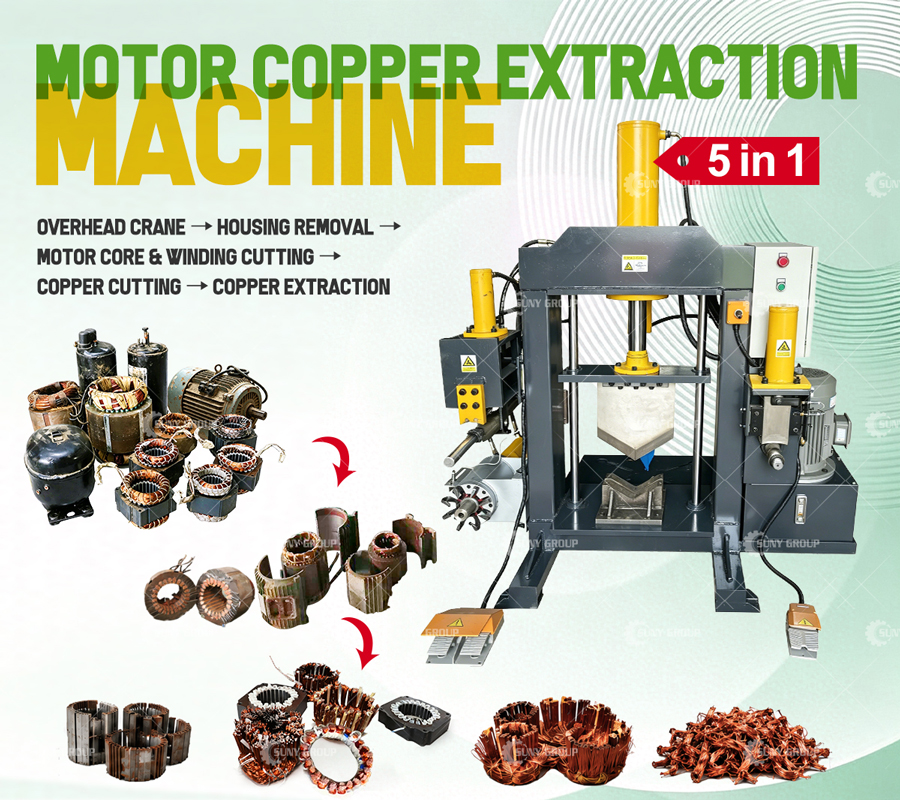
3. Structure and Working Principle of Motor Stator Recycling Equipment
The working process mainly includes the following steps:
1. Motor Stator Feeding and Positioning
The waste motor stator is first placed into the feeding area of the equipment. The hydraulic clamping system fixes the stator firmly to ensure stability during processing. Different sizes of motor stators can be adjusted through the positioning device to achieve accurate operation.
2. Stator Cutting Process
After positioning, the hydraulic cutting system starts working. The high-pressure hydraulic cylinder drives the cutting blade to cut the outer steel shell or stator core, exposing the internal copper winding. Compared with manual cutting, the hydraulic system provides stronger cutting force, higher efficiency, and safer operation.
3. Copper Wire Extraction Process
After the stator is opened, the copper pulling system removes the copper windings from the iron core. The powerful hydraulic pulling mechanism separates the copper wire from the silicon steel sheets while minimizing copper damage and improving recovery purity.
4. Crushing and Separation Process
The removed copper materials and remaining stator components enter the crushing and separation section. The crushing unit breaks large pieces of metal into smaller sizes, while the separation system separates copper, iron, aluminum, and other materials according to their physical properties.
5. Material Collection and Recycling
After separation, the recovered copper wire is collected as a high-value recycling material, while iron cores and other metals can be sold or reused. The entire process forms a continuous recycling operation, improving the economic value of waste motors.
4. Advantages of Motor Stator Copper Recycling Equipment
Using professional recycling equipment provides several benefits:
High Copper Recovery Rate
The machine can separate copper windings efficiently while reducing copper loss, helping recyclers obtain higher-value copper materials.
Reduced Labor Cost
Traditional dismantling requires workers to manually cut and remove copper, which is slow and labor-intensive. Automated equipment significantly improves working efficiency.
Better Working Safety
Mechanical processing reduces risks caused by manual cutting tools, heavy motors, and repetitive operations.
Wide Application Range
The equipment can process different types of motor stators from household appliances, industrial motors, and automotive components.
Environmental Protection
Recycling copper from waste motors reduces the demand for new copper mining and decreases industrial waste.
5. Economic Value of Motor Stator Copper Recycling
Motor stator recycling provides significant economic benefits because copper is a valuable secondary resource.
The main sources of profit include:
- Recovered copper sales
Copper extracted from stators can be sold to copper processing companies or metal recycling markets.
- Steel recovery
After copper removal, the remaining silicon steel and iron components can also be recycled.
- Lower processing costs
Automated equipment reduces labor expenses and increases daily processing capacity.
- Improved recycling efficiency
A higher recovery rate means more valuable materials can be obtained from the same amount of scrap motors.
For recycling companies, investing in Motor Stator Copper Recycling Equipment can transform low-value scrap motors into profitable recyclable resources.
Motor Stator Copper Recycling Equipment is an efficient solution for recovering copper from waste electric motors. With the advantages of hydraulic operation, high recovery efficiency, and reduced labor requirements, this equipment plays an important role in modern metal recycling industries. By separating valuable copper and steel materials from discarded motors, recyclers can achieve higher economic returns while supporting sustainable resource utilization.