
Lithium battery recycling process and machineries
Lithium-ion batteries are widely used in electric vehicles, energy storage systems, smartphones, laptops, power tools, and other electronic devices. As battery consumption continues to increase, the recycling of spent lithium batteries has become important for recovering valuable resources and reducing environmental risks. A complete lithium battery recycling process generally includes collection, sorting, safe discharge, dismantling, crushing, separation, black mass recovery, and further metal refining.
lithium battery recycling process and machineries
1. Where Do Waste Lithium Batteries Come From?
The main sources of waste lithium batteries include:
- Electric vehicle batteries: Used EV battery packs, modules, and cells are one of the fastest-growing recycling sources.
- Consumer electronics: Mobile phones, laptops, tablets, cameras, and power banks generate large quantities of small lithium-ion batteries.
- Energy storage systems: Retired batteries from solar energy storage and other stationary systems can enter recycling plants.
- Battery manufacturing scrap: Defective cells, electrode materials, and production waste can also be recycled.
- Power tools and industrial equipment: Batteries from drills, robots, electric equipment, and other industrial applications are additional feedstocks.
Before recycling, batteries should be identified and sorted according to battery type, chemistry, size, and condition, because different chemistries require different processing conditions.
2. Main Lithium Battery Recycling Methods
There are three major lithium battery recycling methods:
1. Mechanical Recycling
Mechanical recycling uses physical processes to separate battery components. The typical process includes:
Discharging → Dismantling → Shredding → Crushing → Screening → Magnetic Separation → Air Separation → Black Mass Collection
This method is commonly used as the front-end treatment for producing black mass. Shredding releases the cathode and anode materials from copper and aluminum foils, while screening and air classification further separate different fractions.
2. Hydrometallurgical Recycling
Hydrometallurgy uses liquid chemical solutions to recover valuable metals from black mass. The main steps normally include:
Black Mass → Leaching → Filtration → Impurity Removal → Solvent Extraction → Precipitation → Metal Compounds
This method can recover lithium, nickel, cobalt, and manganese in different chemical forms and can achieve high metal recovery when properly controlled.
3. Pyrometallurgical Recycling
Pyrometallurgy uses high-temperature treatment or smelting to recover valuable metals. It is suitable for certain mixed battery feedstocks and can produce metal alloys containing materials such as nickel and cobalt. However, lithium and some other elements generally require additional treatment, and the high-temperature process requires effective gas and emission control.
Direct recycling is another developing technology. Instead of completely breaking down the cathode materials into individual elements, it attempts to preserve and regenerate the cathode structure, potentially reducing energy and processing requirements.
3. What Machinery Is Needed?
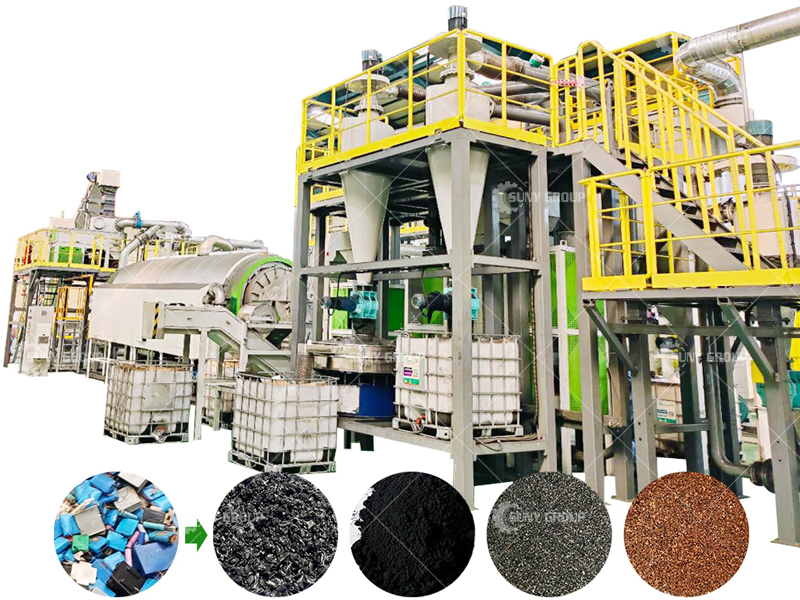
A complete lithium battery recycling plant may contain the following equipment:
- Discharging machine – reduces residual electrical energy and improves processing safety.
- Battery dismantling equipment – separates battery packs, modules, and cells.
- Double-shaft shredder – performs primary size reduction.
- Crusher or hammer crusher – further liberates electrode materials.
- Fine grinder or milling machine – produces a suitable particle size.
- Vibrating screen – separates materials according to particle size.
- Magnetic separator – removes ferrous materials and steel casings.
- Air classifier – separates lightweight materials from heavier metal fractions.
- Dust collector – controls dust generated during mechanical processing.
- Thermal treatment equipment – can remove electrolyte, binder, and other volatile components when required.
- Hydrometallurgical equipment – including leaching tanks, filtration systems, extraction equipment, and precipitation systems for deeper metal recovery.
The exact equipment configuration depends on whether the feedstock consists of LFP, NMC, LCO, cylindrical cells, prismatic cells, pouch cells, EV battery packs, or manufacturing scrap.
4. Environmental Protection
Environmental protection is a critical part of lithium battery recycling. Spent lithium batteries can present fire, reactive, electrolyte, dust, and chemical risks, so recycling plants need controlled storage, safe discharge, enclosed processing, and appropriate pollution-control systems.
During crushing and thermal treatment, dust and potentially hazardous gases must not be released directly into the atmosphere. Therefore, industrial systems can incorporate sealed processing, dust collectors, ventilation, gas treatment, and scrubbers. Mechanical processing also needs careful control because crushing batteries can create short circuits, heat, electrolyte release, and dust.
Recent research also shows that optimized mechanical separation can significantly reduce energy consumption and carbon emissions compared with conventional processing configurations, demonstrating the importance of efficient equipment and process design.
5. What Materials Are Recovered?
The final products depend on the recycling technology and battery chemistry. A mechanical recycling line can typically produce:
- Black mass containing cathode and anode active materials
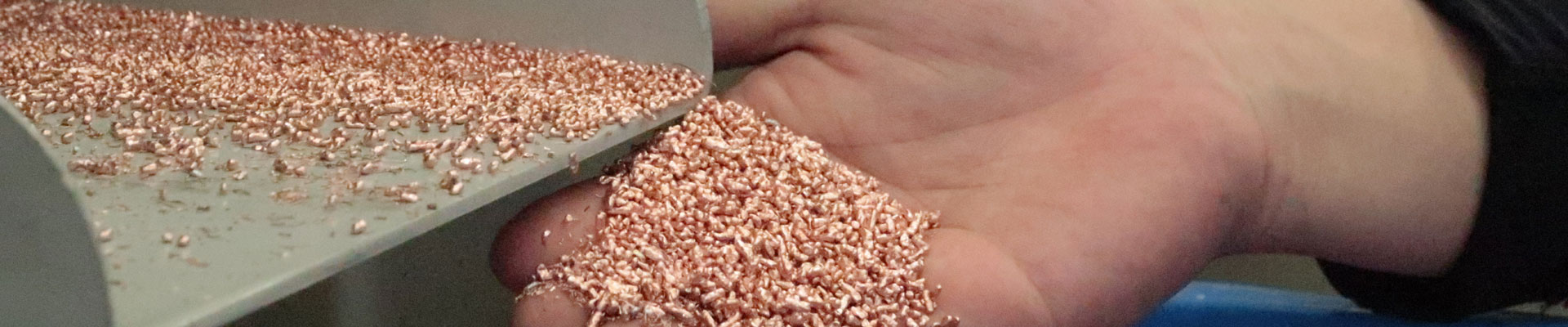
- Copper
- Aluminum
- Steel and iron
- Plastic and separator materials
Black mass is particularly valuable because it contains concentrated battery electrode materials and can be further processed to recover lithium, nickel, cobalt, manganese, and other valuable elements.
After hydrometallurgical or pyrometallurgical treatment, the recovered materials can be converted into suitable metal salts, metal compounds, alloys, or battery-grade raw materials, which can then enter the battery manufacturing supply chain.
A modern lithium battery recycling process is not simply a crushing operation. It is a complete system combining safe pretreatment, mechanical separation, black mass recovery, and metallurgical refining. Mechanical recycling is an important first stage because it separates black mass, copper, aluminum, steel, and other materials. Hydrometallurgy can then recover lithium, nickel, cobalt, and manganese, while pyrometallurgy provides another route for metal recovery. With suitable shredders, crushers, screens, separators, dust-control systems, and downstream refining equipment, lithium battery recycling can recover valuable resources while reducing waste and supporting a more sustainable battery circular economy.