
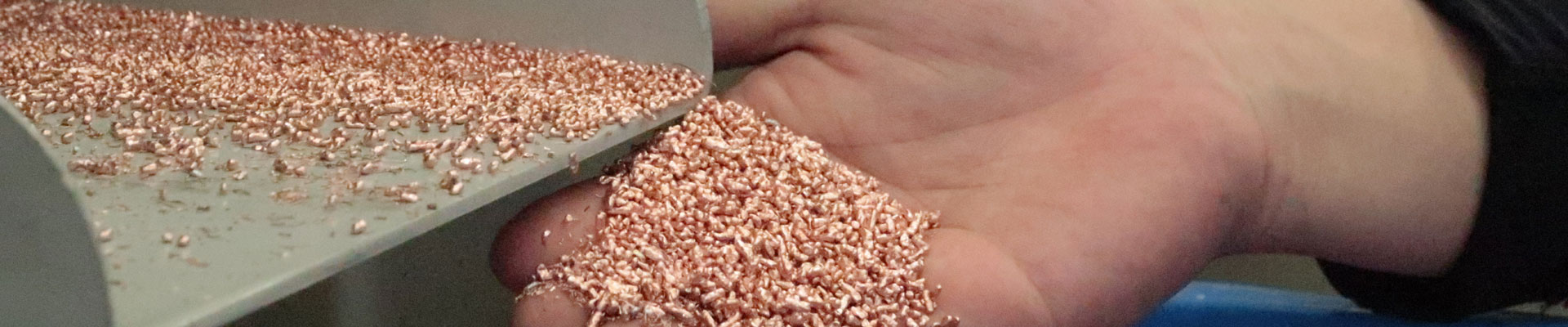
Copper Cable Stripping Machine
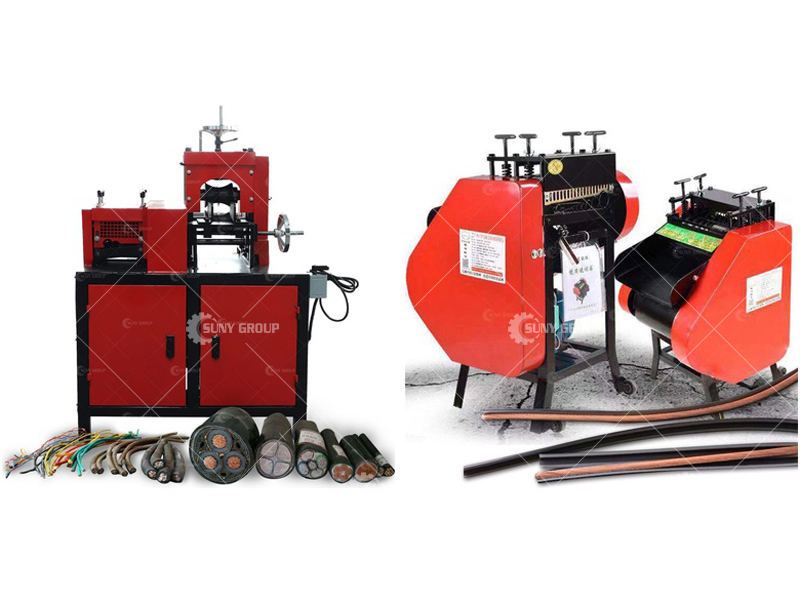
As the amount of discarded electrical equipment, construction materials, automotive wiring, and industrial cables continues to increase, waste copper cables have become a valuable source of recyclable metal. copper cable stripping machine mechanically removes PVC, plastic, rubber, and other insulating materials from copper conductors while minimizing damage to the copper core. Compared with manual stripping, this equipment offers faster processing, more consistent results, and cleaner bare copper for subsequent recycling and reuse.
1. Where Do Waste Copper Cables Come From?
Waste copper cables are generated from many industries and applications. Understanding the source of the raw material is important when selecting suitable cable recycling equipment.
Common sources include:
- Construction and demolition waste: Old buildings, renovation projects, and electrical installations generate large quantities of discarded power cables and household wires.
- Electrical equipment: Motors, transformers, control cabinets, appliances, and industrial equipment may contain insulated copper wires that can be recovered after dismantling.
- Automotive waste: End-of-life vehicles contain wiring harnesses, battery cables, control wires, and other copper-containing electrical connections.
- Communication equipment: Telephone cables, data cables, network cables, and communication systems can become recyclable material after reaching the end of their service life.
- Industrial power cables: Factories, power systems, and infrastructure projects may generate thick copper cables during equipment replacement or electrical system upgrades.
Before processing, the collected cables should be sorted according to diameter, conductor structure, insulation material, and copper content. This improves the performance of the copper cable stripping machine and reduces unnecessary blade adjustment.
2. What Types of Copper Cables Can Be Recycled?
Copper cables have different structures, diameters, and insulation materials, so not every cable is suitable for the same stripping equipment.
Single-Core Cables
Single-core cables have one main copper conductor surrounded by insulation. They are generally easy to feed and strip, making them suitable for mechanical cable stripping.
Multi-Core Cables
Multi-core cables contain several insulated conductors inside one outer sheath. Large and relatively regular multi-core cables can sometimes be processed with specialized stripping equipment, while complicated structures may require additional cutting or separation equipment.
Thick Power Cables
Large-diameter power cables often contain thick insulation and a substantial copper conductor. A heavy-duty copper cable stripping machine can cut the insulation longitudinally and expose the copper core.
Household and Electrical Wires
Household wires are usually smaller in diameter and commonly insulated with PVC or similar materials. Machines with adjustable stripping channels can process different wire sizes.
Automotive and Communication Cables
Automotive harnesses, data cables, and communication wires can contain multiple thin conductors. When the material contains many small or mixed-diameter wires, a copper wire granulator may be more appropriate than a conventional stripping machine.
3. Which Copper Cable Stripping Machine Should You Choose?
The correct machine should be selected according to cable diameter, cable structure, insulation type, processing capacity, and required output quality.
For relatively clean, regular, single-core, and large-diameter cables, a mechanical copper cable stripping machine is usually an effective choice. It directly removes the insulation and produces long, bare copper wire.
For small-diameter wires, tangled cables, multi-core cables, and mixed cable waste, a copper wire granulator and separator may be more suitable. This type of system generally cuts the cables into small pieces and separates copper from insulation using mechanical and air-separation processes.
For heavy industrial cables, selecting a machine with a wider stripping range and stronger feeding system is important. For small recycling workshops, compact or semi-automatic equipment may be sufficient, while larger recycling operations can use automatic models for continuous processing.
4. Working Principle of a Copper Cable Stripping Machine
The working principle of a copper cable stripping machine is based on mechanical cutting and peeling.
First, the waste cable is sorted according to its diameter and inserted into the feeding inlet. The feeding rollers grip the cable and move it forward at a controlled speed.
Next, an adjustable stripping blade cuts through the outer insulation. The cutting depth needs to be adjusted according to the cable diameter so that the insulation is opened without cutting or damaging the copper conductor.
As the cable continues moving forward, the split insulation separates from the copper core. The machine then discharges the bare copper wire and insulation through separate paths. This mechanical process is continuous and can significantly reduce the labor required for manual cable stripping.
For different cable sizes, operators can adjust the blade position or feeding channel. Proper adjustment is essential because excessive cutting depth may damage the copper, while insufficient cutting depth may leave insulation on the recovered wire.
5. Materials Obtained After Cable Stripping
The main outputs of a copper cable stripping machine are bare copper wire and separated insulation.
Bare Copper Wire
The copper conductor retains its original wire form after stripping. Because the insulation has been mechanically removed, the copper can be collected, sorted, baled, sold as recyclable metal, or sent to a downstream melting and refining process.
Recycled copper can be used to manufacture:
- Electrical wires and cables
- Copper tubes and pipes
- Electrical components
- Motors and transformers
- Conductive parts
- Copper alloys
- Various metal products
Mechanical stripping is valuable because it preserves the copper conductor instead of unnecessarily reducing it into small particles. Clean bare copper is therefore convenient for subsequent recycling and processing.
Plastic or Rubber Insulation
The separated insulation may consist of PVC, PE, rubber, or other polymer materials. After sorting and appropriate processing, these materials can potentially be recycled into plastic products, cable compounds, flooring materials, or other secondary applications, depending on their composition and local recycling requirements.
6. Why Use a Copper Cable Stripping Machine?
A copper cable stripping machine provides a simple mechanical solution for recovering copper from suitable waste cables. Its major advantages include efficient insulation removal, relatively simple operation, reduced manual labor, and preservation of the copper conductor.
However, equipment selection should always match the raw material. Regular large-diameter cables are generally suitable for stripping, while fine wires, complicated multi-core cables, and mixed cable waste may require granulation and separation equipment instead.
Copper cable stripping machine is an important piece of equipment for recycling insulated copper cables. Waste cables can come from construction projects, electrical equipment, automobiles, communication systems, and industrial facilities. By identifying the cable structure and diameter first, recyclers can select the appropriate stripping machine or combine stripping with granulation equipment.
The machine works by feeding the cable through adjustable rollers and blades, cutting the insulation, and mechanically separating it from the copper conductor. The resulting bare copper can be reused in electrical, manufacturing, and metal-processing applications, while the separated insulation can enter an appropriate plastic recycling process. Choosing equipment according to cable type, capacity, and desired output is the key to building an efficient copper cable recycling operation.