
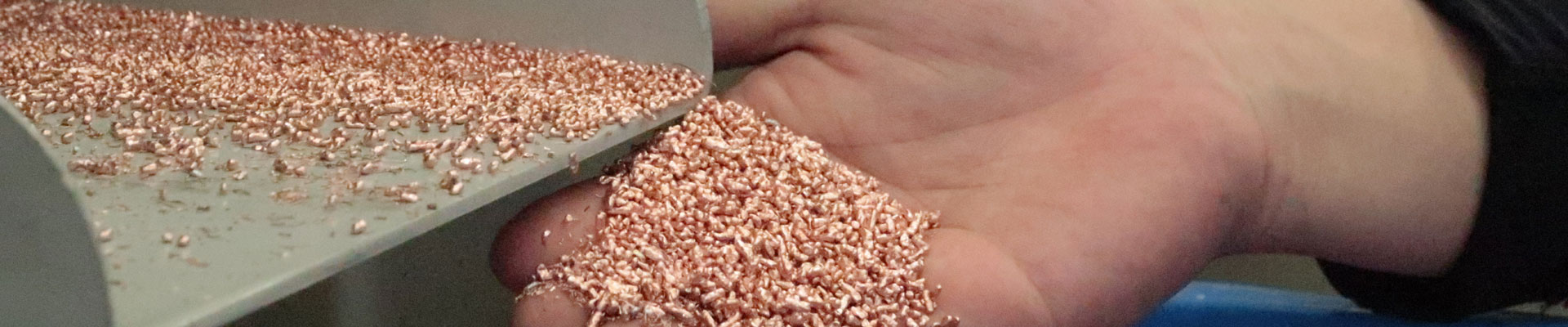
AC Compressor Scrap Cutter Machine
With the rapid growth of air conditioning systems, refrigerators, heat pumps, and other cooling equipment, the amount of discarded AC compressors is increasing every year. For scrap metal recyclers, AC Compressor Scrap Cutter Machine provides an efficient solution for opening and processing waste compressors. By cutting the compressor housing, recyclers can separate valuable metals and improve the recovery value of AC compressor scrap.
1. What Is the Structure of an AC Compressor?
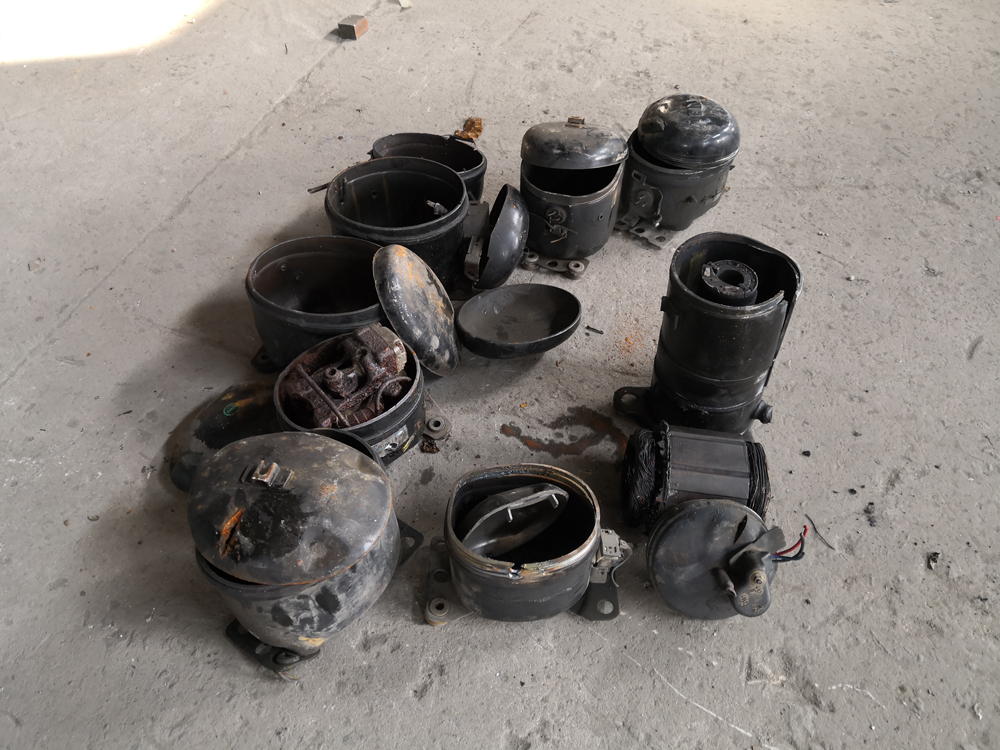
An AC compressor is a key component of an air conditioning or refrigeration system. Although compressor designs vary, most scrap AC compressors contain several major components:
- Steel housing: The outer shell protects the internal components and is usually made of steel.
- Copper motor windings: Copper wire is commonly used in the electric motor because of its excellent electrical conductivity.
- Electric motor: The motor drives the compressor mechanism and normally consists of copper windings, a rotor, and a stator.
- Compressor mechanism: Depending on the compressor type, this may include pistons, cylinders, scroll components, or other mechanical parts.
- Aluminum and steel components: Various internal structural parts may contain aluminum, steel, and other metals.
- Lubricating oil: Used compressors may still contain residual refrigeration oil that should be properly drained and handled.
Therefore, an AC compressor is not simply a piece of steel scrap. It contains a mixture of valuable and recyclable materials.
2. Why Is AC Compressor Scrap Increasing?
The increasing amount of AC compressor scrap is closely related to the expansion of the global HVAC and refrigeration market. More air conditioners, refrigerators, heat pumps, and commercial cooling systems are being installed, while older equipment is continuously replaced.
The main sources of scrap compressors include:
- End-of-life air conditioners
- Waste refrigerators and freezers
- Commercial refrigeration equipment
- HVAC system replacement projects
- Damaged or failed compressors
- Used appliances from demolition and renovation projects
As more cooling equipment reaches the end of its service life, efficient compressor recycling becomes increasingly important.
3. Why Cut Open AC Compressor Scrap?
Before recycling, many compressors have a sealed steel housing that makes it difficult to access the valuable materials inside. Simply crushing the complete compressor may result in inefficient separation and lower-quality recovered materials.
Cutting open the compressor provides several advantages:
- Exposes copper windings for easier recovery.
- Separates the steel housing from internal components.
- Improves material sorting efficiency.
- Reduces the size of bulky compressor scrap.
- Increases the recycling value of copper, steel, and other metals.
- Makes downstream processing easier.
The goal of cutting is not only size reduction but also better liberation and separation of valuable materials.
4. What Can Be Recovered from AC Compressors?
After the compressor housing is opened and the internal components are separated, recyclers can typically recover several useful materials, including:
- Copper: Mainly from motor windings and electrical components.
- Steel: Mainly from the outer compressor shell and structural components.
- Aluminum: Present in some motor and internal components.
- Other ferrous and non-ferrous metals: Depending on compressor design.
- Used compressor oil: This should be collected and handled according to applicable environmental requirements.
The exact material composition depends on the compressor model and manufacturer.
5. What Machine Is Used to Cut AC Compressor Scrap?
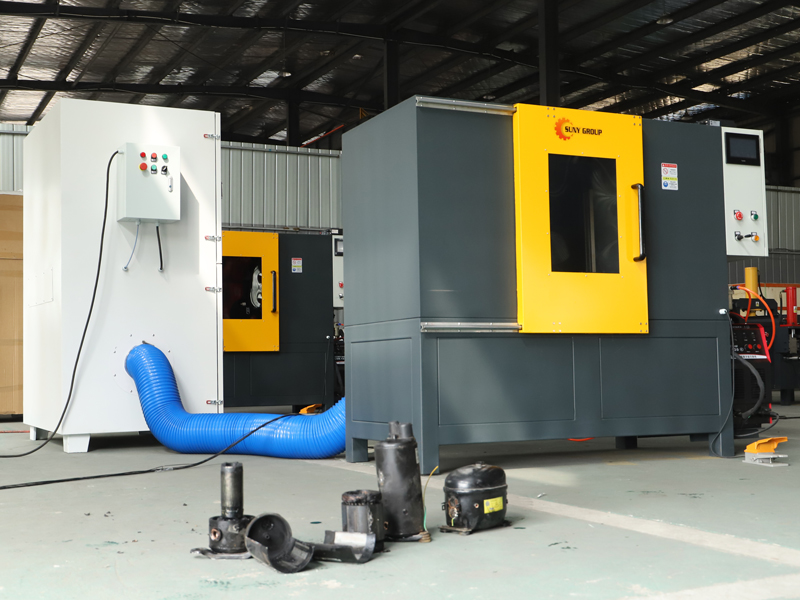
An AC Compressor Scrap Cutter Machine is specially designed to open and cut discarded compressors before further recycling. It generally uses a heavy-duty cutting mechanism, hydraulic power system, feeding area, and reinforced machine frame.
Compared with manual cutting, an industrial compressor cutter offers higher productivity and more consistent processing. The machine can be configured according to compressor size, material thickness, processing capacity, and the required cutting method.
Important features may include:
- Heavy-duty cutting blades
- High-strength machine frame
- Hydraulic or mechanical drive
- Stable feeding system
- Adjustable cutting parameters
- High processing efficiency
- Easy operation and maintenance
For large-scale recycling facilities, the cutter can also be integrated with subsequent sorting and metal recovery equipment.
6. How to Cut AC Compressor Scrap?
A typical AC compressor recycling process can be organized into several steps:
- Collection: Collect waste compressors from discarded air conditioners and refrigeration equipment.
- Inspection: Check the compressor and remove unsuitable materials.
- Oil and refrigerant handling: Properly recover residual oil and refrigerant before mechanical processing.
- Feeding: Place the compressor into the feeding area of the scrap cutter.
- Cutting: The machine cuts through the outer steel housing and opens the compressor.
- Material separation: Remove copper windings and separate steel, aluminum, and other components.
- Further processing: Copper and other metals can be sent to additional shredding, stripping, sorting, or refining equipment.
- Final collection: Collect different materials separately for reuse or sale.
7. Why Choose an AC Compressor Scrap Cutter Machine?
For professional metal recycling companies, an AC Compressor Scrap Cutter Machine can significantly improve the efficiency of compressor dismantling. It reduces manual labor, provides controlled cutting, improves access to valuable metals, and creates better conditions for subsequent sorting.
When choosing a machine, recyclers should consider compressor size, material composition, required capacity, cutting method, automation level, energy consumption, maintenance requirements, and downstream recycling equipment.
With an appropriate cutting and separation system, waste AC compressors can be transformed from difficult mixed scrap into valuable streams of copper, steel, aluminum, and other recyclable materials, supporting both resource recovery and more efficient scrap metal recycling.