

Lithium Ion Battery Recycling Plant Cost
With the rapid growth of electric vehicles, renewable energy storage systems, smartphones, and electronic devices, the demand for lithium ion batteries has increased significantly. At the same time, the number of used and discarded batteries is also rising, creating a strong demand for lithium ion battery recycling plants. A professional recycling facility can recover valuable metals, reduce environmental pollution, and create significant economic benefits.
For investors and manufacturers, understanding lithium ion battery recycling plant cost, battery types, recycling value, and plant construction requirements is essential before entering this growing industry.
Types and Categories of Lithium Ion Batteries
Lithium ion batteries are widely used in different industries, and their chemical compositions determine their performance and recycling value. The main types include:
1. Lithium Cobalt Oxide Battery (LCO)
LCO batteries are commonly used in:
- Smartphones
- Tablets
- Digital cameras
- Small electronic devices
Advantages:
- High energy density
- Stable performance
Recycling value:
LCO batteries contain a high amount of cobalt, making them valuable for metal recovery.
2. Lithium Nickel Manganese Cobalt Battery (NMC)
NMC batteries are one of the most popular lithium ion battery types.
Applications:
- Electric vehicles
- Energy storage systems
- Power tools
Main materials:
- Nickel
- Manganese
- Cobalt
- Lithium
Recycling value:
NMC batteries have high economic value because they contain multiple recoverable metals.
3. Lithium Iron Phosphate Battery (LFP)
LFP batteries are increasingly used in:
- Electric cars
- Solar energy storage systems
- Industrial equipment
Advantages:
- Long service life
- High safety
- Lower cost
Although LFP batteries contain less cobalt and nickel, recycling them can recover lithium, copper, aluminum, and other materials.
4. Lithium Nickel Cobalt Aluminum Oxide Battery (NCA)
NCA batteries are mainly used in:
- Electric vehicles
- High-performance energy storage
Features:
- High energy density
- Excellent power output
They contain valuable nickel, cobalt, and lithium resources.
5. Lithium Manganese Oxide Battery (LMO)
LMO batteries are commonly found in:
- Electric tools
- Medical equipment
- Hybrid vehicles
They provide good safety and thermal stability.
Why Is Lithium Ion Battery Recycling Valuable?
Recycling lithium ion batteries provides both environmental and economic benefits.
1. Recovery of Valuable Metals
Waste lithium batteries contain valuable resources such as:
- Lithium
- Cobalt
- Nickel
- Copper
- Aluminum
- Manganese
These materials can be reused to manufacture new batteries, reducing dependence on mining.
2. Environmental Protection
Improper disposal of lithium batteries can cause:
- Soil contamination
- Water pollution
- Fire risks
A recycling plant safely processes batteries and prevents hazardous materials from entering the environment.
3. Lower Raw Material Costs
Battery manufacturers can reduce production costs by using recycled materials instead of purchasing newly mined metals.
4. Growing Market Demand
The increasing production of electric vehicles and energy storage systems creates a continuous supply of used lithium batteries, making recycling a promising long-term business.
How to Build a Lithium Ion Battery Recycling Plant?
Building a lithium ion battery recycling plant requires careful planning and professional equipment selection.
Step 1: Conduct Market Research
Before investment, analyze:
- Local battery waste supply
- Recycling regulations
- End-product demand
- Competitor conditions
Step 2: Choose the Recycling Process
Common lithium battery recycling technologies include:
Mechanical Recycling
Process:
- Crushing
- Sorting
- Separation
Recovered materials:
- Copper
- Aluminum
- Battery powder
Advantages:
- Lower investment
- Simple operation
Pyrometallurgical Recycling
Process:
- High-temperature treatment
- Metal extraction
Advantages:
- Suitable for large-scale operations
Disadvantages:
- Higher energy consumption
Hydrometallurgical Recycling
Process:
- Chemical leaching
- Metal separation
- Purification
Advantages:
- High recovery rate
- Produces high-quality materials
Step 3: Select Lithium Ion Battery Recycling Equipment
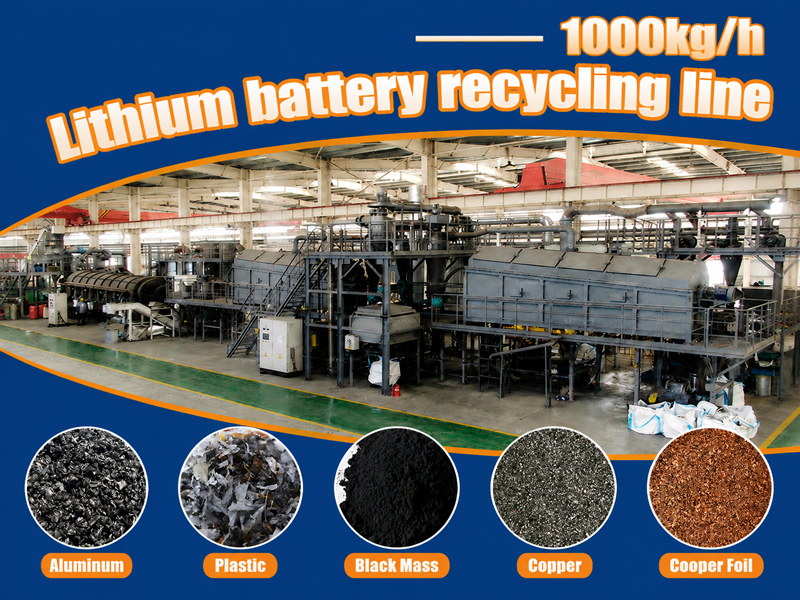
A complete recycling plant usually includes:
- Battery discharging system
- Shredder
- Crusher
- Magnetic separator
- Air separator
- Screening machine
- Powder collection system
- Dust removal system
- Control system
Step 4: Build the Plant Infrastructure
A recycling factory needs:
- Production workshop
- Storage area
- Safety protection system
- Fire prevention equipment
- Waste treatment facilities
Lithium Ion Battery Recycling Plant Cost
The investment cost of a lithium ion battery recycling plant depends on capacity, technology, automation level, and equipment configuration.
Typical costs include:
Small Recycling Plant
Capacity:
- 500–1,000 kg/day
Estimated cost:
- USD 100,000–500,000
Suitable for:
- Small businesses
- Local battery collection companies
Medium Recycling Plant
Capacity:
- 1–5 tons/day
Estimated cost:
- USD 500,000–2 million
Suitable for:
- Regional recycling companies
- Battery manufacturers
Large Industrial Recycling Plant
Capacity:
- More than 10 tons/day
Estimated cost:
- USD 2 million–10 million+
Suitable for:
- Large enterprises
- Electric vehicle supply chains
Factors Affecting Lithium Ion Battery Recycling Plant Cost
The final investment depends on:
- Processing capacity
Higher capacity requires larger equipment and facilities.
- Recycling technology
Hydrometallurgical systems usually require higher investment than basic mechanical recycling lines.
- Automation level
Automatic feeding, sorting, and control systems increase efficiency but raise costs.
- Environmental protection equipment
Dust collection, wastewater treatment, and safety systems are essential investments.
- Factory size and location
Land, labor, and construction costs vary by region.
A lithium ion battery recycling plant is a profitable and environmentally friendly investment opportunity driven by the rapid growth of electric vehicles and energy storage markets. Different battery types, including LCO, NMC, LFP, NCA, and LMO, contain valuable materials that can be recovered and reused.
Although the lithium ion battery recycling plant cost can range from hundreds of thousands to millions of dollars, advanced recycling technology can provide high recovery rates and long-term economic benefits. By selecting the right equipment, recycling process, and plant design, businesses can build an efficient lithium ion battery recycling facility and participate in the future circular economy.