
Lithium-Ion Battery Recycling Facility
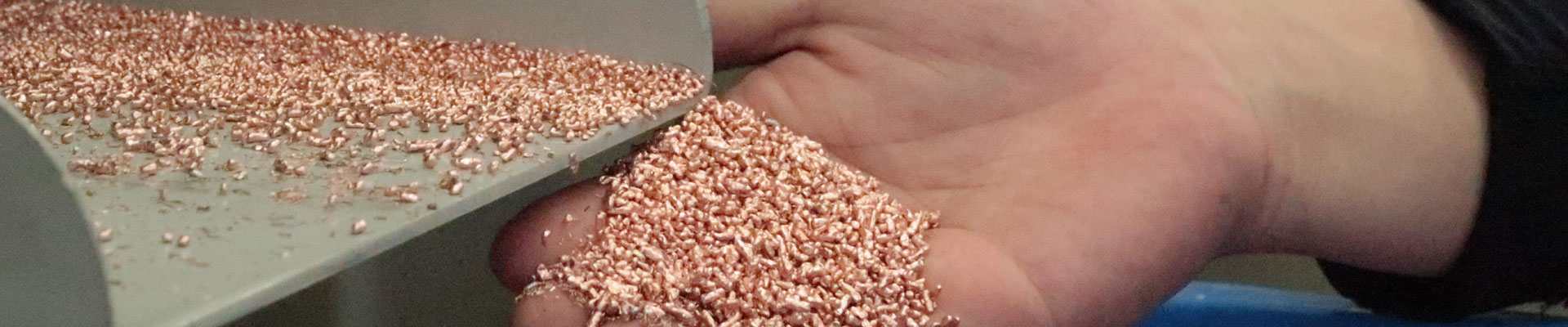
Lithium-ion battery recycling facility recovers valuable materials from end-of-life batteries used in electric vehicles, consumer electronics, and energy storage systems. These batteries contain several reusable resources, including lithium, nickel, cobalt, manganese, graphite, copper, aluminum, steel, and plastics. The exact material composition depends on the battery chemistry and design.
Among these materials, lithium, nickel, and cobalt are particularly important for battery manufacturing. Graphite can be recovered for potential reuse in anode production, while copper and aluminum are valuable conductive materials. Steel casings and plastic components can also enter appropriate recycling streams. Recovering these resources reduces waste and helps conserve raw materials.
2. Main Equipment in a Lithium-Ion Battery Recycling Facility
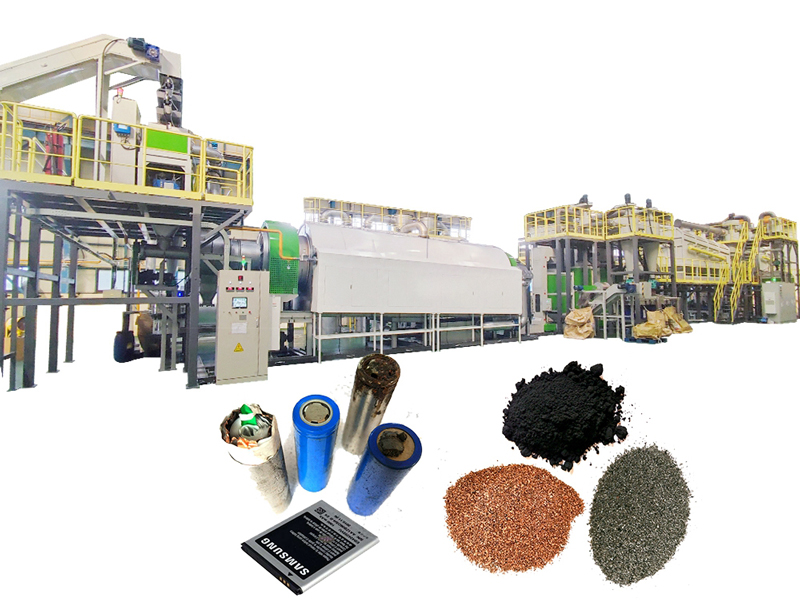
A complete lithium-ion battery recycling facility consists of several interconnected processing systems, each performing a specific function.
- Battery Sorting and Inspection System: Identifies battery types, chemistries, sizes, and conditions to support appropriate processing.
- Discharging and Pretreatment System: Manages residual electrical energy and prepares batteries for downstream operations. Large battery packs may require controlled dismantling.
- Shredding System: Reduces battery materials into smaller pieces, facilitating the separation of metals, electrode materials, and other components.
- Crushing and Grinding Equipment: Further reduces material size to release valuable particles from composite structures.
- Screening System: Separates materials according to particle size and directs different fractions to suitable processing stages.
- Magnetic Separation System: Removes ferrous metals, such as iron and steel.
- Air Classification and Density Separation Systems: Separate lighter plastics and separator films from heavier material fractions.
- Dust Collection and Safety Systems: Capture process dust and support fire prevention, ventilation, temperature monitoring, and emergency response.
For plants seeking higher recovery rates, additional hydrometallurgical equipment can extract lithium, nickel, cobalt, and manganese from black mass.
3. How to Build a Lithium-Ion Battery Recycling Plant
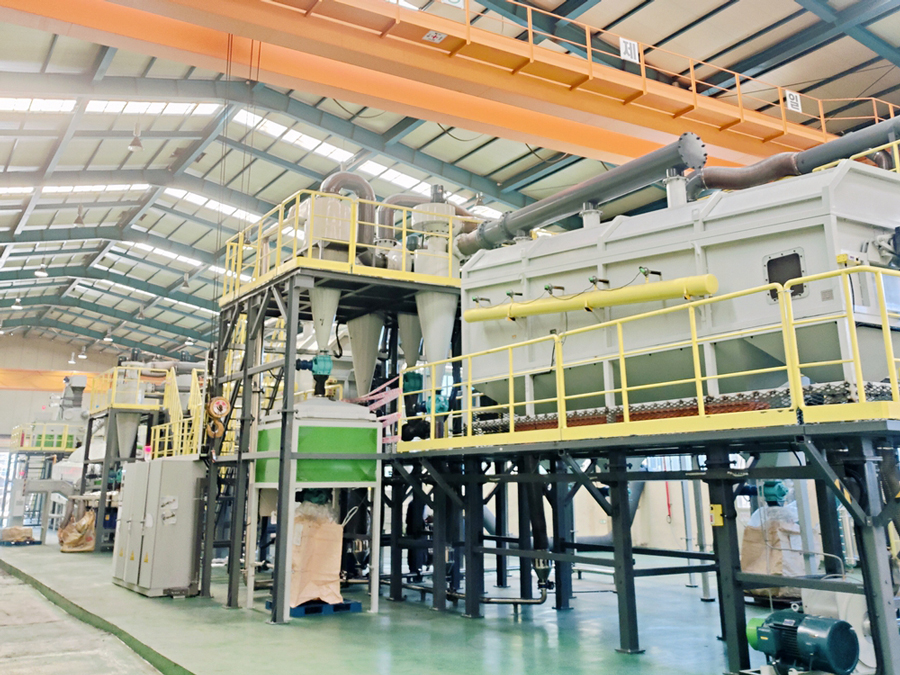
Building a lithium-ion battery recycling plant starts with evaluating battery sources, daily processing capacity, battery chemistry, target products, and local environmental regulations. Investors should determine whether the facility will process consumer batteries, EV battery packs, manufacturing scrap, or mixed feedstocks.
The next step is selecting a suitable plant configuration. A mechanical recycling facility can focus on producing black mass and separating copper, aluminum, steel, and plastics. A more comprehensive facility can integrate chemical recovery equipment to produce battery-grade or industrial-grade metal compounds, subject to purification and quality requirements.
The plant layout should provide separate areas for battery receiving, inspection, safe storage, pretreatment, mechanical processing, material storage, and residue management. Equipment capacity should be matched across the production line to prevent bottlenecks. Before installation, operators should also establish fire protection, ventilation, dust control, wastewater treatment, and emergency procedures.
4. Detailed Lithium-Ion Battery Recycling Process
A typical lithium-ion battery recycling process follows these steps:
- Collection and Sorting: Collect used batteries and separate them by chemistry, size, and condition.
- Safe Pretreatment: Inspect batteries, manage residual energy, and dismantle packs or modules where required.
- Shredding and Crushing: Reduce batteries to smaller fragments using equipment specifically designed for battery processing.
- Screening and Separation: Separate coarse and fine fractions, recover ferrous metals, and use physical separation technologies to isolate copper, aluminum, plastics, and electrode-rich materials.
- Black Mass Collection: Collect the fine fraction containing valuable cathode and anode materials for further processing.
- Metal Recovery and Refining: Use hydrometallurgy, pyrometallurgy, or suitable direct-recycling technologies, depending on the feedstock and target products, to recover valuable battery materials.
The final outputs may include copper, aluminum, steel, plastics, graphite-rich fractions, and black mass. Further refining can recover lithium, nickel, cobalt, and manganese compounds. Actual recovery rates depend on battery chemistry, equipment configuration, process conditions, and product-quality requirements.
5. Improvements and Advantages of Modern Recycling Facilities
Modern lithium-ion battery recycling facilities can improve performance by integrating automated sorting, intelligent process monitoring, optimized shredding, precise particle-size control, and more efficient separation technologies. Closed-loop dust collection, appropriate gas treatment, wastewater management, and advanced fire detection also help improve operational safety and environmental performance.
The main advantages include higher resource recovery, reduced dependence on virgin raw materials, lower waste volumes, and additional revenue opportunities from recovered materials. A well-designed facility can also provide flexible processing configurations for different battery types and future capacity expansion.
In conclusion, investing in a well-engineered lithium-ion battery recycling facility supports circular manufacturing and the sustainable development of the battery industry. Selecting the right equipment, establishing a safe recycling process, and continuously improving material recovery are essential to building an efficient and commercially viable lithium-ion battery recycling plant.