
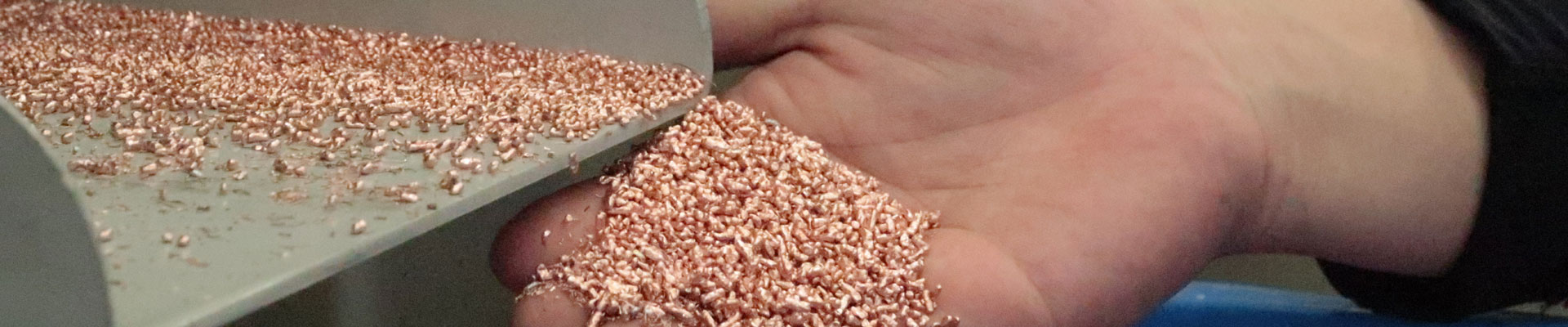
E Waste Recycling With All Types of Metals
E-waste recycling refers to the process of recovering valuable metals and reusable materials from discarded electronic products. With the rapid growth of consumer electronics, electric vehicles, solar systems, and communication equipment, electronic waste has become one of the fastest-growing waste streams worldwide.
Modern e waste recycling with all types of metals focuses on recovering precious metals, base metals, plastics, and rare materials through advanced recycling technologies.
Common e-waste sources include:
- Printed circuit boards (PCB)
- Mobile phones
- Computers and laptops
- Communication cables
- Lithium batteries
- Household appliances
- Solar panels
- Automotive electronics
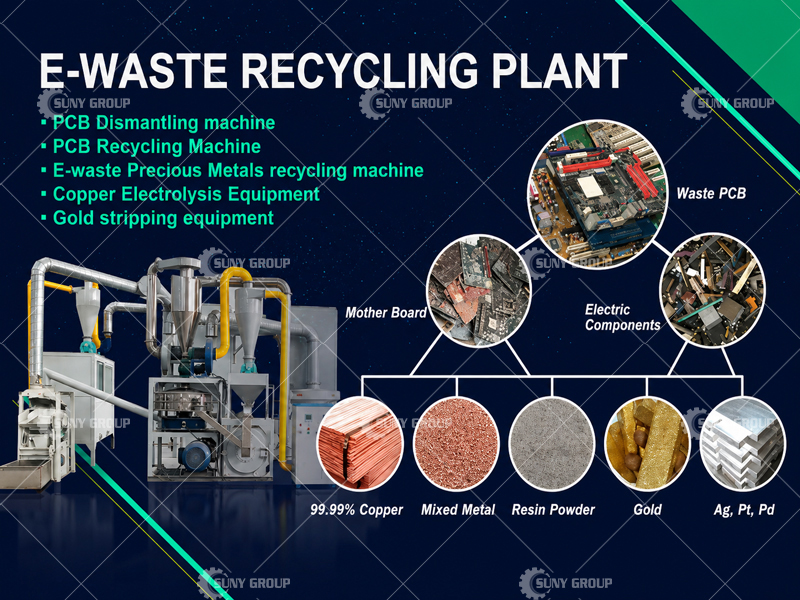
Precious Metals Contained in E-Waste
Electronic waste contains many valuable precious and industrial metals. Some electronic components have higher precious metal content than natural ores.
1. Gold (Au)
Gold is widely used in:
- PCB connectors
- CPU pins
- Memory chips
- Mobile phone circuits
Recycling Value
Gold has excellent conductivity and corrosion resistance, making it highly valuable in the recycling industry.
2. Silver (Ag)
Silver is commonly found in:
- Circuit boards
- Conductive pastes
- Switch contacts
Recycling Value
Silver offers high electrical conductivity and is widely reused in electronics manufacturing.
3. Palladium (Pd)
Palladium exists in:
- Multi-layer ceramic capacitors
- Integrated circuits
- Electronic connectors
Recycling Value
Palladium is extremely valuable due to its rarity and industrial demand.
4. Platinum (Pt)
Platinum is used in:
- Sensors
- Hard disks
- Catalytic electronic components
Recycling Value
It has high market value and strong industrial demand.
5. Copper (Cu)
Copper is the largest recoverable metal in e-waste.
Main sources include:
- Cables and wires
- Transformers
- Motors
- PCB boards
Recycling Value
Copper recycling reduces mining costs and energy consumption significantly.
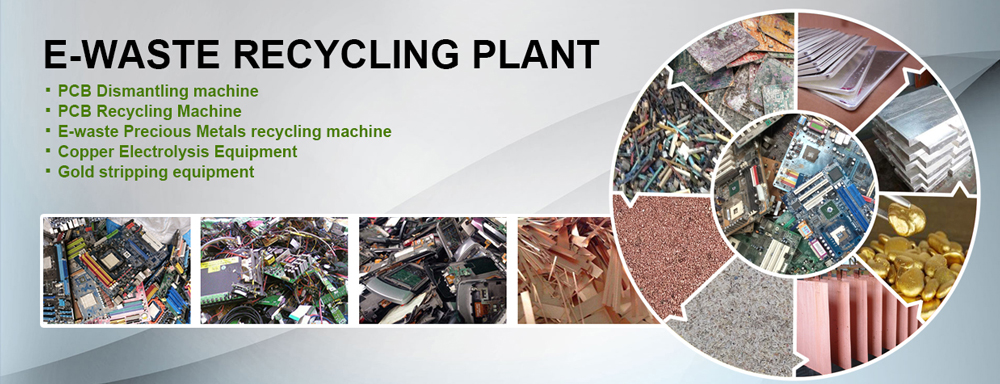
Other Valuable Materials in E-Waste
Besides precious metals, e-waste also contains:
- Aluminum
- Iron
- Nickel
- Lithium
- Cobalt
- Plastic
- Glass fiber
These materials can also be reused in multiple industries.
Main E-Waste Recycling Methods
Different electronic waste materials require different recycling technologies.
Mechanical Recycling Method
This is the most common recycling process.
Main Steps
- Shredding
- Crushing
- Grinding
- Magnetic separation
- Airflow separation
- Electrostatic separation
Advantages
- High automation
- Environmental protection
- Suitable for large-scale production
This method is widely used for PCB recycling and cable recycling.
Pyrolysis Recycling Method
Pyrolysis uses high temperatures to separate metals and organic materials.
Suitable Materials
- Lithium batteries
- PCB boards
- Plastic-containing electronic waste
Advantages
- High metal recovery rate
- Reduces hazardous substances
- Improves separation efficiency
Hydrometallurgical Method
This process uses chemical solutions to extract precious metals.
Commonly Recovered Metals
- Gold
- Silver
- Palladium
- Platinum
Advantages
- High purity recovery
- Suitable for precious metal refining
Manual Dismantling Method
Some large appliances are dismantled manually before machine processing.
Typical products include:
- Refrigerators
- Air conditioners
- Televisions
Manual sorting improves recycling efficiency and material classification.
Main E-Waste Recycling Machines
Professional recycling plants usually include several machines.
PCB Recycling Machine
Main configuration:
- Double-shaft shredder
- Hammer crusher
- Grinder
- Electrostatic separator
- Dust collector
This system separates metal and resin powder efficiently.
Copper Wire Recycling Machine
Used for recycling:
- Automotive cables
- Communication wires
- Mixed copper cables
The machine separates copper granules and plastic automatically.
Lithium Battery Recycling Plant
Main process includes:
- Discharging
- Crushing
- Pyrolysis
- Airflow separation
Recovered materials include:
- Black mass
- Copper
- Aluminum
Final Uses of Recycled Metals
Recovered metals can be reused in many industries.
Electronics Manufacturing
Recovered gold, silver, and copper are reused in:
- PCB production
- Semiconductor manufacturing
- Electronic connectors
Renewable Energy Industry
Recycled metals are widely used in:
- Solar panels
- Wind turbines
- Energy storage systems
Automotive Industry
Copper, aluminum, and lithium materials are reused in electric vehicle production.
Construction and Industrial Applications
Recovered steel and aluminum can be used for:
- Building materials
- Industrial equipment
- Machinery manufacturing
Future of E-Waste Recycling Industry
Global demand for e-waste recycling is increasing because of:
- Rising electronic consumption
- Electric vehicle expansion
- Environmental regulations
- Resource shortages
Modern recycling plants are becoming more intelligent, automated, and environmentally friendly. Advanced sorting technologies and AI-based separation systems are improving metal recovery rates significantly.
For recycling companies and investors, e waste recycling with all types of metals offers huge business opportunities and long-term sustainable value.