
E Waste Recycling Machine Cost
Electronic waste, also called e-waste, is one of the fastest-growing waste streams in the world. Old computers, mobile phones, televisions, circuit boards, cables, printers, and household appliances contain valuable metals and reusable materials. With the rapid replacement of electronic products, the demand for professional e-waste recycling machines is increasing globally.
What Does E-Waste Mainly Include?
E-waste covers a wide range of discarded electronic and electrical products, including:
- Computers and laptops
- Mobile phones and tablets
- Printed circuit boards (PCB)
- TV sets and monitors
- Refrigerators and washing machines
- Power cables and chargers
- Household appliances
- Communication equipment
- Industrial electronic devices
These materials contain both valuable metals and hazardous substances, making proper recycling extremely important.
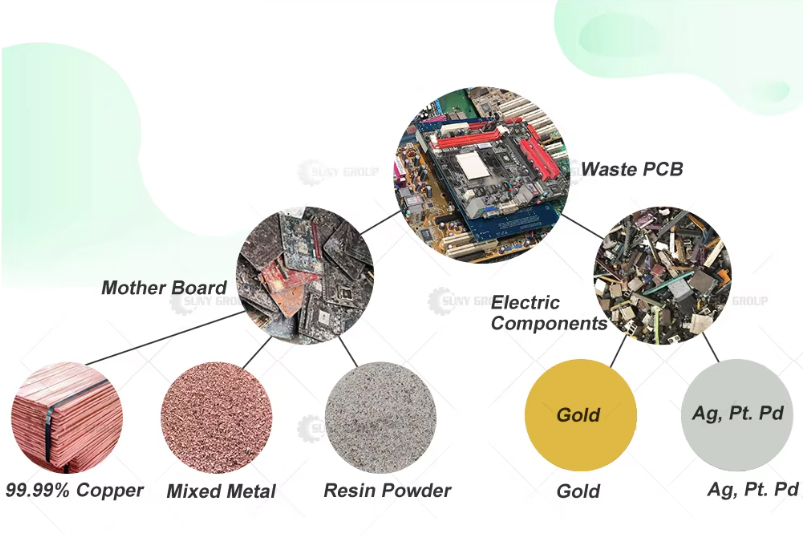
What Materials Can Be Recovered From E-Waste?
Professional e-waste recycling plants can recover many reusable materials, such as:
- Copper
- Aluminum
- Iron
- Gold
- Silver
- Palladium
- Plastics
- Glass fiber
- Tin powder
Among them, copper and precious metals have the highest recycling value. PCB boards are especially valuable because they contain high concentrations of metal materials.
Main Machines Used in E-Waste Recycling
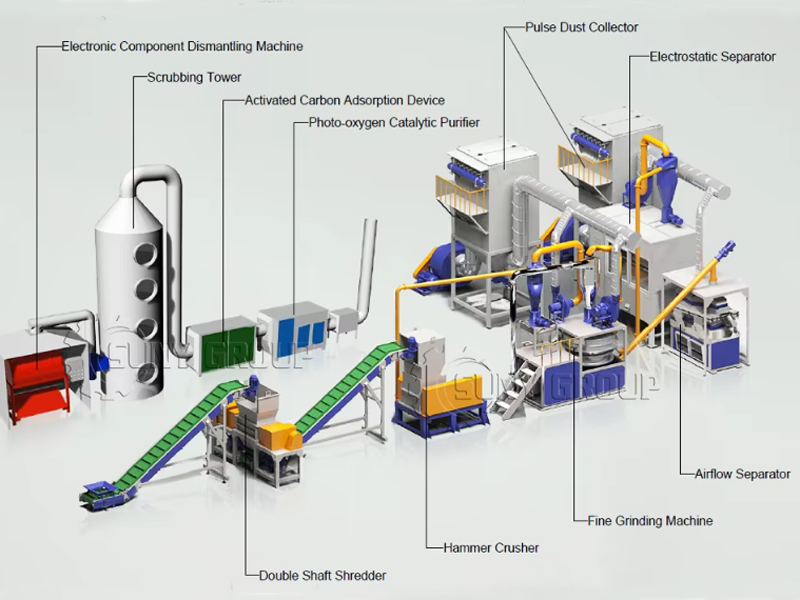
A complete e-waste recycling production line usually includes the following equipment:
1. Shredder Machine
The shredder reduces large electronic waste into smaller pieces for easier processing.
2. Hammer Crusher
The crusher further crushes materials into fine particles or powder.
3. Magnetic Separator
This machine separates iron and ferrous metals from mixed materials.
4. Airflow Gravity Separator
Used to separate light plastics from heavy metals according to density differences.
5. Electrostatic Separator
Separates conductive metals and non-metal materials with high precision.
6. Vibrating Screen
Classifies materials by particle size to improve separation efficiency.
7. Dust Collection System
Collects dust and harmful particles to ensure environmental protection and worker safety.
Modern e-waste recycling systems usually adopt modular designs for easier installation and expansion.
Typical E-Waste Recycling Process
The standard e-waste recycling workflow includes:
- Collection and sorting
- Manual dismantling
- Shredding
- Crushing
- Magnetic separation
- Airflow separation
- Electrostatic separation
- Final material collection
After processing, metals, plastics, and fibers are separated into different categories for resale or reuse.
E Waste Recycling Machine Cost
The cost of an e-waste recycling plant depends on plant capacity, automation level, and machine configuration.
| Plant Type | Capacity | Estimated Cost |
|---|---|---|
| Small E-waste Recycling Line | 100–300 kg/h | USD 20,000–50,000 |
| Medium Recycling Plant | 300–800 kg/h | USD 50,000–150,000 |
| Large Automatic Plant | 1–3 tons/h | USD 150,000–500,000+ |
Additional costs may include:
- Factory construction
- Labor
- Installation
- Environmental protection systems
- Power supply
- Transportation
- Maintenance
Factors Affecting E-Waste Recycling Machine Cost
Several important factors influence the final investment cost:
Production Capacity
Higher processing capacity requires larger and more powerful machines.
Automation Level
Fully automatic systems cost more but reduce labor expenses.
Raw Material Type
PCB boards, cables, and household appliances require different recycling technologies.
Separation Accuracy
Advanced electrostatic and sensor sorting systems increase recovery purity and profitability.
Environmental Standards
Dust collection and pollution control systems may increase equipment cost.
Machine Quality and Brand
High-quality machines generally offer longer service life and better recycling efficiency.
Advantages of Investing in E-Waste Recycling
E-waste recycling offers many business benefits:
- High recovery value of metals
- Growing global recycling demand
- Environmental protection
- Reduced landfill pollution
- Support for circular economy
- Long-term business profitability
Global e-waste generation continues to rise rapidly, creating strong demand for advanced recycling technologies and equipment.
E-waste recycling machines play a vital role in recovering valuable resources from discarded electronics. A complete recycling line usually includes shredding, crushing, magnetic separation, airflow sorting, and electrostatic separation equipment. The investment cost ranges from small manual systems to fully automatic industrial plants depending on capacity and technology requirements. Choosing the right e-waste recycling solution can help businesses achieve both environmental protection and profitable metal recovery.