
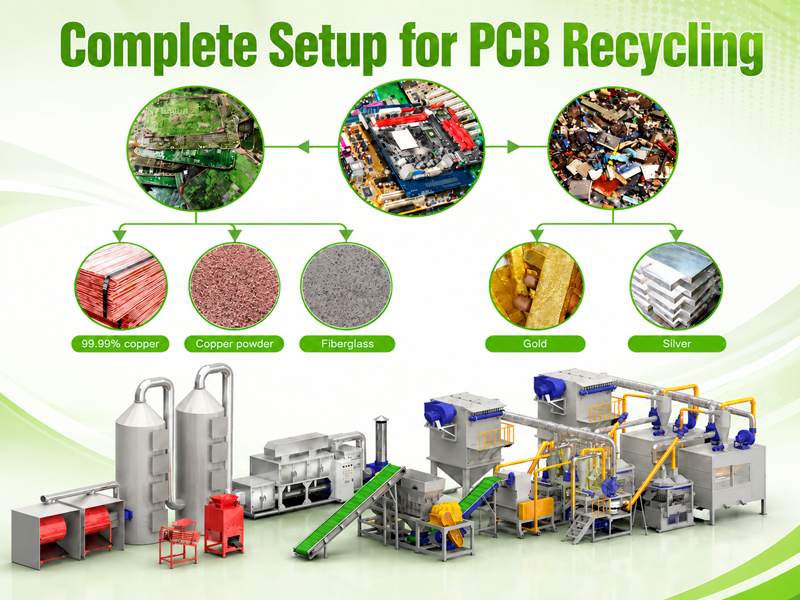
Complete Setup for PCB Recycling
With the rapid growth of electronic products, waste printed circuit boards (PCBs) have become one of the most valuable parts of electronic waste (e-waste). PCB recycling is an advanced process designed to recover valuable metals and reusable materials from discarded circuit boards while reducing environmental pollution. PCBs contain high-value resources such as copper, gold, silver, palladium, and other metals, making them an important secondary resource for the recycling industry.
A complete setup for PCB recycling usually includes collection, dismantling, crushing, separation, metal recovery, and purification systems. A well-designed PCB recycling plant can achieve high recovery efficiency and create significant economic benefits.
Types and Sources of PCBs
PCBs are widely used in almost all electronic and electrical equipment. Different PCB types have different metal contents and recycling values.
Common Types of PCBs:
- Single-Sided PCB
Single-sided PCBs are commonly used in low-cost electronic products such as simple household appliances, LED lights, and basic control systems. They contain lower amounts of precious metals but can still provide recoverable copper.
- Double-Sided PCB
Double-sided PCBs are widely used in industrial equipment, computers, and electronic devices. They contain more copper layers and electronic components compared with single-sided boards.
- Multi-Layer PCB
Multi-layer PCBs are high-value recycling materials because they contain multiple copper layers and high-density electronic components. They are commonly found in servers, communication equipment, medical devices, and advanced electronics.
- High-Grade PCB
High-grade PCBs, such as computer motherboards, mobile phone boards, and CPU boards, contain higher concentrations of gold, silver, and palladium, making them highly profitable recycling materials.
Main Sources of Waste PCBs:
- Computers and laptops
- Mobile phones and tablets
- Televisions and monitors
- Printers and scanners
- Industrial control equipment
- Communication devices
- Household electrical appliances
- Automotive electronic systems
Value of PCB Recycling
PCB recycling has both environmental and economic value. Traditional mining requires large amounts of energy and causes environmental damage, while recycling PCBs provides a sustainable source of metals.
The main values include:
1. Recovery of Precious Metals
Waste PCBs contain valuable metals including:
- Gold (Au)
- Silver (Ag)
- Palladium (Pd)
- Platinum (Pt)
These metals are widely used in electronic manufacturing and have high market value.
2. Recovery of Base Metals
Copper is the main recyclable metal in PCBs. Recovered copper can be reused in cables, electrical products, and industrial applications. Other metals such as aluminum, nickel, tin, and iron can also be separated and recycled.
3. Environmental Protection
PCB recycling reduces landfill waste, prevents harmful substances from entering the environment, and decreases dependence on mineral mining. Modern recycling systems combine mechanical, physical, and chemical technologies to improve resource recovery efficiency.
Complete Setup for PCB Recycling Plant
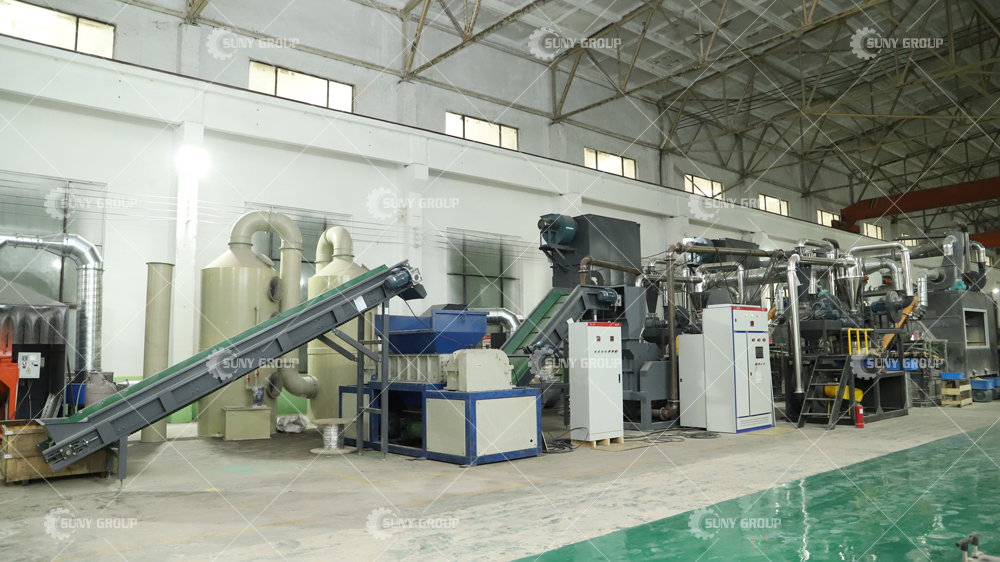
A complete PCB recycling plant normally includes the following equipment:
1. Dismantling and Pre-Processing System
The first step is removing valuable components and separating PCBs from electronic equipment.
Main equipment:
- Manual dismantling stations
- Wire cutters
- Component separators
- Magnetic separators
This process removes batteries, steel parts, and other unwanted materials.
2. Primary Crushing System
The PCB crusher breaks large circuit boards into smaller pieces, improving the liberation of metals and non-metal materials.
Equipment includes:
- Primary shredder
- Hammer crusher
- Dust collection system
3. Fine Crushing and Grinding System
After primary crushing, materials are further reduced into fine particles to improve separation efficiency.
Equipment:
- Hammer mill
- Pulverizer
- Grinding machine
4. Separation System
The crushed PCB materials are separated into different fractions.
Common separation equipment:
- Magnetic separator for iron removal
- Eddy current separator for non-ferrous metals
- Air separator for plastic and fiberglass separation
- Vibrating screen for particle classification
5. Metal Recovery System
Advanced plants use additional technologies for recovering copper and precious metals.
Recovery methods include:
- Gravity separation
- Hydrometallurgical processing
- Pyrometallurgical processing
- Electrochemical recovery
Industrial PCB recycling often combines mechanical separation with chemical or metallurgical processes to maximize metal recovery.
Materials Recovered After PCB Recycling
A complete PCB recycling line can produce various valuable materials:
1. Copper
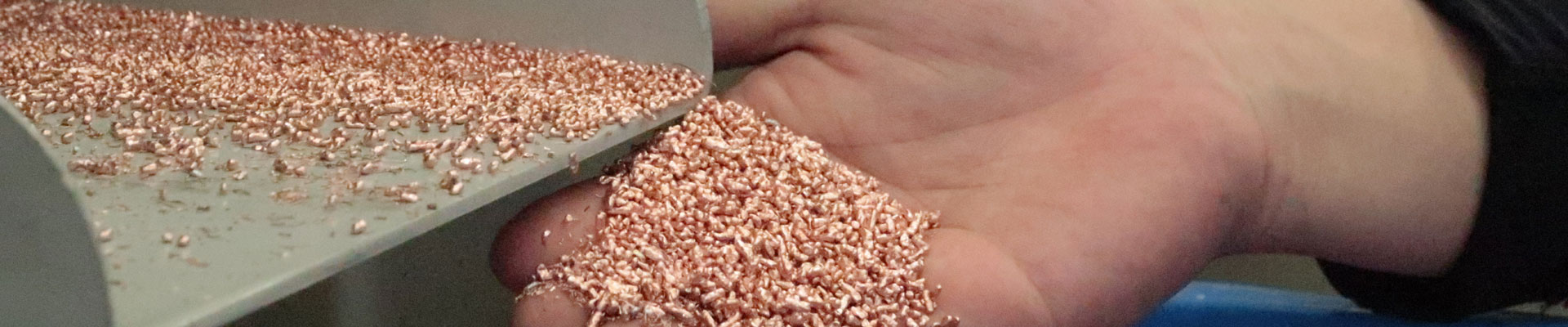
Copper is the largest valuable metal recovered from PCBs. It can be reused for electrical cables, copper products, and manufacturing industries.
2. Gold
Gold is mainly found in connectors, IC chips, and gold fingers. Due to its high value, gold recovery is one of the main profit sources of PCB recycling.
3. Silver and Palladium
Silver and palladium are commonly found in electronic contacts and ceramic capacitors. They can be recovered for reuse in electronics and industrial applications.
4. Plastic and Fiberglass Powder
The non-metallic fraction can be processed into reusable materials for construction materials, composite products, and other applications.
5. Other Metals
Additional recoverable materials include:
- Aluminum
- Iron
- Nickel
- Tin
- Lead
Complete setup for PCB recycling provides an efficient solution for recovering valuable resources from electronic waste. By combining shredding, crushing, separation, and metal recovery technologies, recycling plants can transform waste PCBs into valuable secondary raw materials such as copper, gold, silver, palladium, and fiberglass.
With increasing global e-waste production and growing demand for metal resources, PCB recycling has become a profitable and sustainable business opportunity for investors, recycling companies, and electronic waste processors.