
Cable Recycling Machine
With the rapid development of the power, communication, automotive, and electronics industries, millions of tons of waste cables and wires are discarded every year. Scrap cable recycling has become one of the most profitable businesses in the metal recycling industry because copper and aluminum prices remain high worldwide. A professional cable recycling machine can efficiently separate valuable metals from plastic insulation, helping recycling companies achieve high economic returns while protecting the environment.
According to industry reports, copper recycling demand continues to grow as global electrification increases. Recycled copper is now an important raw material source for manufacturers worldwide.
Sources of Scrap Cables
Waste cables mainly come from:
- Construction demolition projects
- Power transmission systems
- Automotive wiring harnesses
- Communication and internet cables
- Household electrical appliances
- Industrial equipment
- Data cables and computer wires
- Cable manufacturing factory scraps
Most waste cables contain copper or aluminum conductors wrapped in PVC, rubber, or PE insulation materials. These materials all have recycling value.
Why Cable Recycling Is Highly Profitable
1. High Copper Value
Copper is one of the most valuable recyclable metals. Recycled copper can be reused many times without losing performance quality.
2. Large Market Demand
The global demand for copper continues to rise due to renewable energy systems, electric vehicles, communication infrastructure, and smart grids.
3. Environmental Benefits
Cable recycling reduces landfill waste and minimizes environmental pollution caused by improper disposal or cable burning.
4. Additional Plastic Recovery
Modern cable recycling lines also recover plastic particles, creating additional revenue streams.
How to Choose a Cable Recycling Machine
Choosing the right cable recycling machine depends on several factors:
Processing Capacity
Small recycling plants may choose machines with capacities of 100–300 kg/h, while large recycling factories may require systems exceeding 1000 kg/h.
Cable Types
Different machines process different materials:
- Household wires
- Automotive cables
- Communication cables
- Aluminum wires
- Armored power cables
- Mixed scrap wires
Separation Efficiency
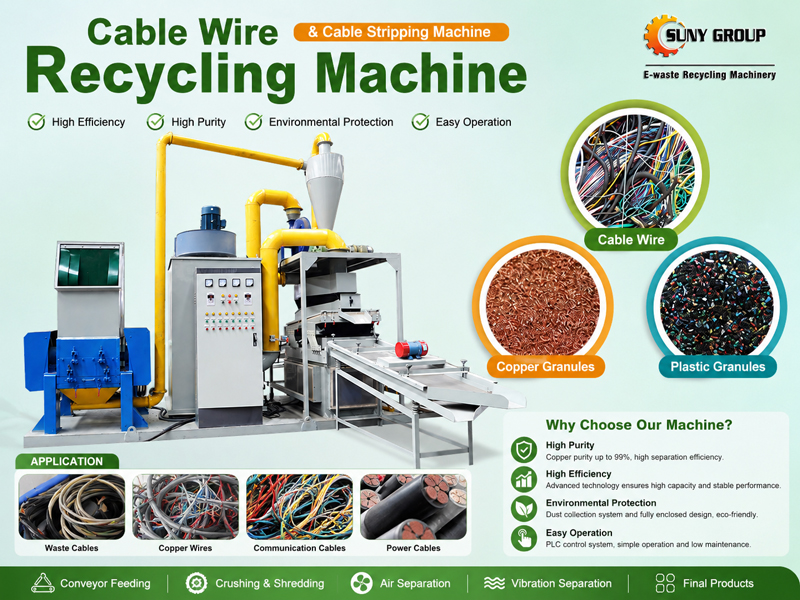
A high-quality cable recycling machine should achieve copper purity above 99% through air separation and electrostatic separation systems.
Automation Level
Modern recycling systems use PLC intelligent control systems, automatic feeding conveyors, and dust collection systems to improve efficiency and reduce labor costs.
Cable Recycling Machine Configuration
A complete cable recycling production line usually includes:
- Conveyor Feeding System
- Double Shaft Shredder
- Crusher or Granulator
- Magnetic Separator
- Airflow Separation System
- Electrostatic Separator
- Vibrating Screen
- Dust Collection System
- PLC Control Cabinet
These machines work together to separate metal conductors from plastic insulation efficiently.
How Does a Cable Recycling Machine Work?
The cable recycling process mainly includes the following steps:
Step 1: Shredding
Waste cables are cut into small pieces by the shredder.
Step 2: Crushing and Granulating
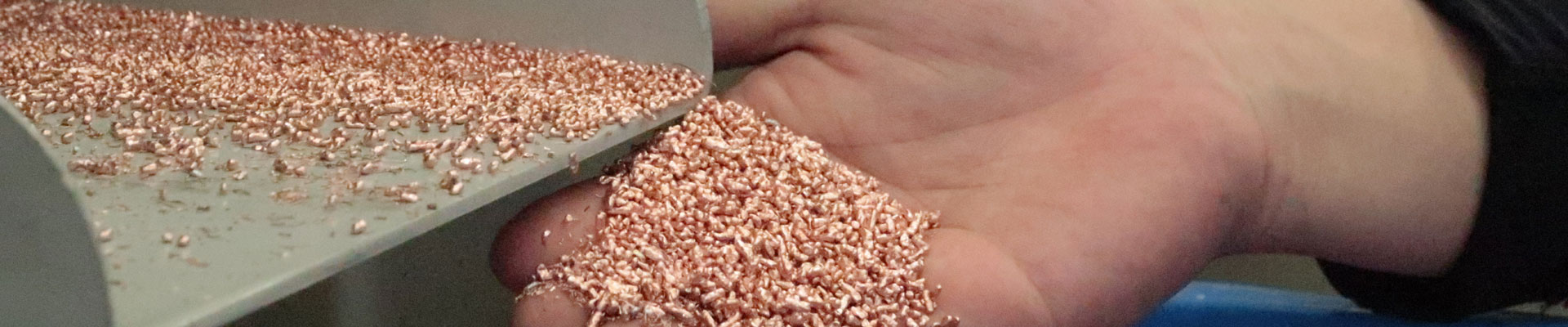
The crusher further processes the material into small particles similar to rice grains, which is why the equipment is also called a “copper rice machine.”
Step 3: Magnetic Separation
Iron impurities are removed using magnetic separators.
Step 4: Airflow Separation
The airflow separator separates copper and plastic according to density differences.
Step 5: Electrostatic Separation
For mixed fine particles, electrostatic separators improve purity and recovery efficiency.
Final Recycled Materials and Their Applications
Copper Granules
Recovered copper granules can be used for:
- New electrical wires
- Copper rods
- Electrical components
- Brass and bronze alloy production
Aluminum Granules
Recycled aluminum can be reused in:
- Automotive manufacturing
- Aluminum products
- Electrical industries
Plastic Particles
Recovered plastic materials are widely used for:
- Plastic pipes
- Garden hoses
- Plastic pallets
- Construction products
- Automotive parts
Modern recycling systems can produce high-purity copper and plastic materials with recovery rates reaching around 99%.
Advantages of Investing in a Cable Recycling Plant
- High profit margins
- Continuous raw material supply
- Strong copper market demand
- Environmental protection benefits
- Automated operation
- Low labor costs
- Fast return on investment
Cable recycling machine is an essential solution for modern scrap metal recycling businesses. By efficiently separating copper, aluminum, and plastic from waste cables, recycling companies can generate significant profits while supporting sustainable resource recovery. As global copper demand continues to rise, investing in a high-efficiency cable recycling plant offers excellent long-term business opportunities for recycling industries worldwide.