
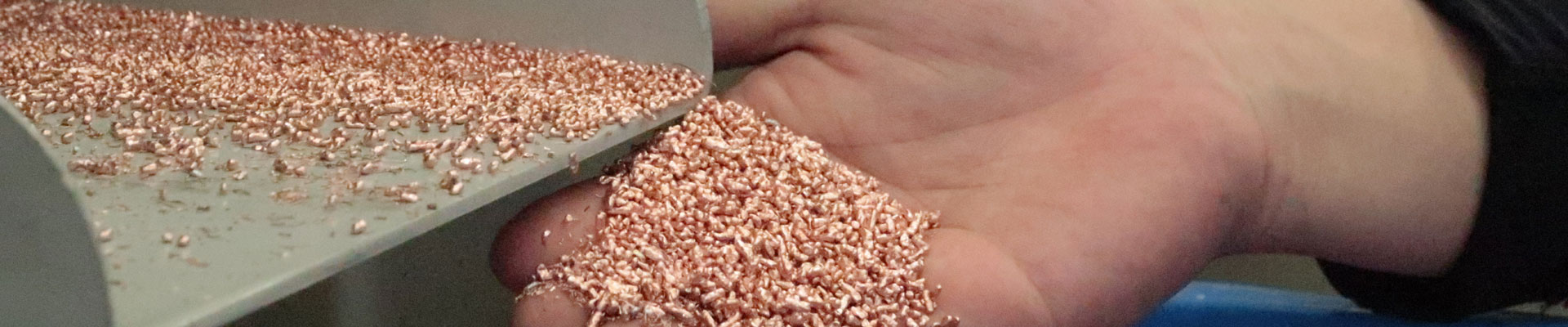
The Price for PCB Recycling Setup
With the rapid growth of electronic waste, waste printed circuit boards (PCBs) have become an important source of secondary metals. Many investors searching for the price for PCB recycling setup are interested not only in the equipment cost, but also in what materials can be recovered, how to build a complete PCB recycling plant, and whether the investment can generate long-term value. A properly designed PCB recycling plant can recover copper and concentrate valuable precious metals while reducing the amount of electronic waste sent to landfill.
What Materials Can Be Recovered from Waste PCBs?
Waste PCBs are valuable because they contain a mixture of base metals, precious metals and non-metallic materials. The main recoverable materials include:
- Copper – Usually the most important metal recovered from PCB scrap and a major source of revenue.
- Gold – Found mainly in connectors, contacts, chips and plated surfaces.
- Silver – Present in some contacts, solder materials and electronic components.
- Palladium – Can be found in certain electronic components and specialized contacts.
- Aluminum and iron – These can be separated during the pretreatment and sorting stages.
- Resin and fiberglass – These form the non-metallic fraction after metal liberation.
The exact metal content varies considerably depending on the PCB type. High-grade computer and telecommunications boards can have a very different composition from low-grade consumer electronics boards, so raw-material testing is important before purchasing equipment.
How Does a PCB Recycling Plant Work?
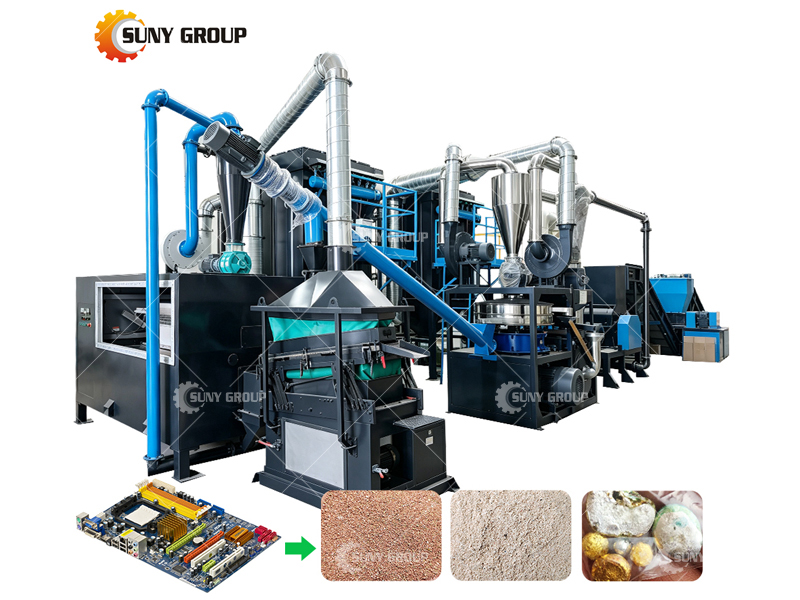
A complete PCB recycling plant normally combines dismantling, crushing, grinding, classification and separation equipment. A typical mechanical recycling process is:
PCB Feeding → Dismantling → Primary Shredding → Crushing → Fine Grinding → Magnetic Separation → Air Separation → Electrostatic Separation → Copper Collection
1. PCB Dismantling
Waste electronic equipment is first dismantled to remove PCBs, batteries, steel parts and other unsuitable materials. Valuable components such as CPUs, IC chips and connectors can also be collected separately for additional processing.
2. Crushing and Grinding
The PCBs are gradually reduced in size using shredders, crushers and pulverizers. Multi-stage size reduction is important because copper tracks and other metals are bonded to resin and fiberglass. Proper liberation improves subsequent separation efficiency.
3. Metal Separation
After grinding, different separation technologies can be combined. Magnetic separation removes ferrous materials, while air classification separates lightweight materials. Electrostatic or gravity separation can then concentrate non-ferrous metals and improve copper recovery.
A dust collection system should also be integrated into the production line because fine PCB particles can be generated during crushing and grinding.
What Is the Price for PCB Recycling Setup?
The price for PCB recycling setup depends mainly on plant capacity, automation, PCB grade and the required recovery technology.
For a standard mechanical PCB recycling line, published equipment estimates can range from approximately US$20,000 to US$76,500, depending on processing capacity and configuration. This should be regarded as an equipment-level reference rather than a complete project cost.
A complete investment may also include:
- Factory construction or rental
- Electrical installation
- Conveyors and storage systems
- Dust collection
- Water-treatment equipment if wet processing is used
- Installation and commissioning
- Labor and training
- Spare parts
- Environmental and safety systems
- Working capital for purchasing PCB scrap
If the project includes chemical or hydrometallurgical recovery of copper, gold and silver, the investment can become substantially higher. One published research-scale plant design for 350 tonnes of PCB feed per year estimated approximately €3.52 million in direct fixed capital, including major processing equipment, installation, engineering and related costs.
Therefore, investors should not judge a project simply by asking for the price of one PCB recycling machine.
How to Build a PCB Recycling Plant?
Before construction, investors should follow several important steps:
- Analyze the raw materials – Determine PCB types, metal content and daily supply.
- Select the processing capacity – Match equipment capacity with available feedstock.
- Choose the recycling technology – Mechanical separation is suitable for producing metal-rich fractions, while further refining may be required for high-purity precious metals.
- Design the complete process flow – Connect shredding, grinding, separation, dust collection and product collection into one system.
- Plan environmental protection – Control dust, noise, wastewater and chemical emissions where applicable.
- Establish sales channels – Identify buyers for recovered copper, metal concentrates and other products before production begins.
Importantly, a mechanical PCB recycling plant does not automatically produce pure gold or silver. Precious metals may remain concentrated in a metal-rich fraction that requires specialized downstream refining.
What Is the Investment Value of a PCB Recycling Plant?
For customers, the investment value comes from several sources. First, PCB scrap contains valuable metals that can be returned to the material supply chain. Second, mechanical recycling can reduce dependence on manual sorting and improve processing consistency. Third, a properly designed plant can process different grades of electronic board waste and generate multiple saleable fractions.
The business case, however, depends heavily on PCB purchase price, metal recovery rate, electricity consumption, labor costs, plant capacity and final product prices. Investors should therefore conduct a raw-material assay and financial feasibility analysis before placing an equipment order.
The price for PCB recycling setup cannot be represented by one fixed number. A small mechanical PCB recycling line may require tens of thousands of US dollars for core equipment, while a large integrated plant with advanced metal refining can require millions. For most investors, the best approach is to begin with the available PCB supply, determine its metal composition, select an appropriate processing capacity and then design a customized recycling plant. With the right feedstock and process, PCB recycling can turn electronic waste into valuable copper and precious-metal resources while creating long-term environmental and economic benefits.