
Small Copper Wire Granulator
As the amount of waste generated from electrical appliances, vehicles, communication equipment, and construction projects continues to increase, scrap copper wire recycling has become an essential process for recovering valuable metal resources. Small Copper Wire Granulator offers a space-saving and efficient way to process limited volumes of waste copper wire. Unlike large-scale recycling systems, small-capacity equipment occupies less floor space and is relatively simple to operate, making it well suited for small workshops, recycling centers, scrap dealers, and businesses that are just entering the recycling industry.
Where Does Scrap Copper Wire Come From?
Copper wire is widely used because of its excellent electrical conductivity, durability, and flexibility. After products reach the end of their service life, their wires and cables become valuable recyclable materials. Common sources include household electrical wires, communication cables, automotive wiring harnesses, construction waste, discarded appliances, computer cables, electronic equipment, industrial cable offcuts, and mixed e-waste.
For example, automotive wiring harnesses contain large amounts of insulated copper wire, while discarded computers, electrical appliances, and communication equipment can generate considerable quantities of small-diameter cables. Construction and demolition projects may also produce waste electrical cables that need to be separated before further recycling. A Japanese recycling case study describes the recovery of insulated wires from construction waste and discarded office equipment by shredding and separating copper from insulation.
Why Should Copper Wire Be Granulated?
The main purpose of a copper wire granulator machine is to efficiently separate copper from plastic insulation. Manual stripping can be practical for certain large cables, but it becomes inefficient when dealing with large quantities of thin or mixed wires. Burning insulation is also unsuitable because it can generate harmful emissions and reduce the quality of the recovered materials.
A small copper wire granulator normally uses mechanical crushing followed by air-flow or density-based separation. The waste wire is first cut into small particles, allowing the copper conductor and plastic insulation to become physically separated. The mixture then enters the separation system, where differences in weight and density help separate heavier copper granules from lighter plastic particles.
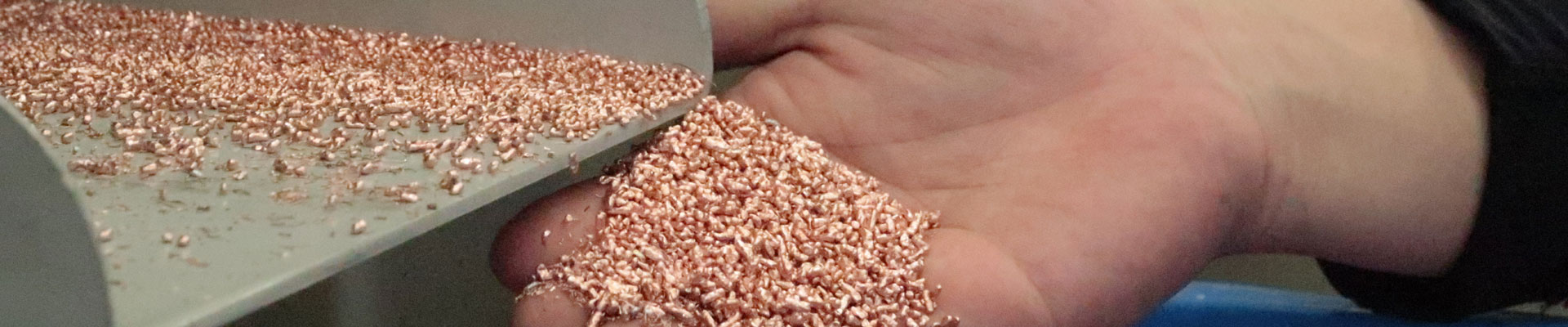
The final products are generally clean copper granules and separated plastic, both of which can enter subsequent recycling or resale channels.
Who Needs a Small-Capacity Copper Wire Granulator?
A small-capacity machine is particularly suitable for businesses that do not generate enough feedstock to justify a large industrial recycling line. Typical users include:
- Small Scrap Recycling Stations – Local recycling stations can process collected wires directly instead of selling unsorted cables to larger recyclers.
- Electrical Contractors – Installation and renovation projects generate cable offcuts and discarded wires that can be recovered for additional material value.
- Automotive Repair and Dismantling Workshops – Old wiring harnesses from vehicles can become a consistent source of copper-containing scrap.
- E-Waste Recycling Businesses – Small electronic recycling companies can process wires recovered from computers, appliances, and other electrical equipment.
- Startup Recycling Companies – Entrepreneurs entering the copper recycling industry can begin with a compact machine and expand capacity as their material supply increases.
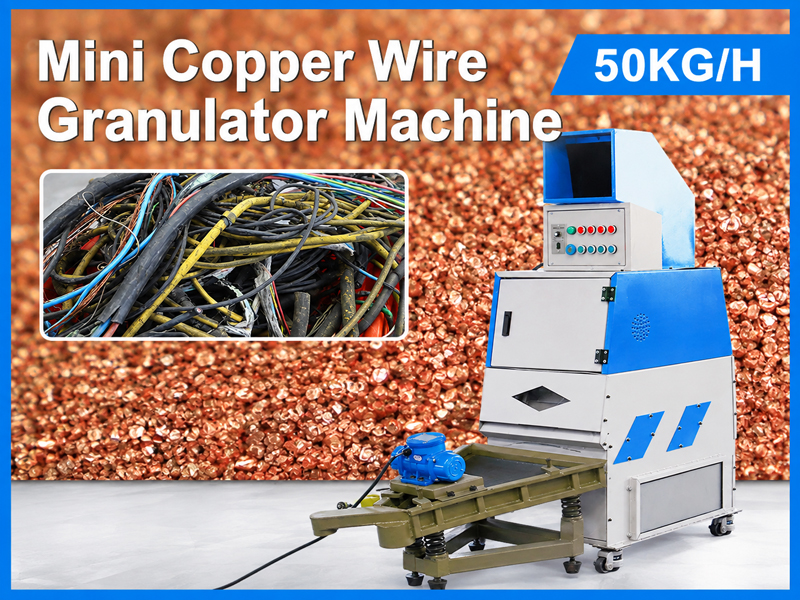
Commercial small machines are available in different capacities. For example, some mini models are designed for roughly 30–60 kg/h, while other small models can handle around 90–120 kg/h, depending on the design and material characteristics.
Advantages of Small Copper Wire Granulator
The biggest advantage of a Small Copper Wire Granulator is that its capacity is matched to a limited material supply. Its compact structure requires less installation space, while the integrated crushing and separation process can simplify operation. Some compact systems are specifically designed for household wires, communication cables, automotive harnesses, and mixed scrap wires.
Other important advantages include:
- Compact footprint: Suitable for workshops and small recycling facilities.
- Lower investment requirement: More accessible for startups and small businesses than large processing lines.
- Simple operation: Crushing and separation can be integrated into one recycling process.
- Dry separation: Many systems separate copper and plastic without water or chemical additives.
- Flexible applications: Suitable for different types of insulated copper wires within the machine’s recommended feed-size range.
- Easy capacity expansion: Businesses can start with small equipment and upgrade to larger systems when feedstock increases.
Small Copper Wire Granulator is a practical choice for businesses with limited quantities of scrap copper wire. By processing electrical cables, automotive harnesses, communication wires, appliance cables, and other insulated wires, the machine can separate valuable copper from plastic insulation and prepare both materials for further recycling. For small recycling stations, electrical contractors, e-waste processors, and new recycling businesses, choosing equipment according to actual feedstock volume can help avoid unnecessary investment while creating an efficient path for small-scale copper wire recycling.