
Small Capacity Cable Wire Granulator
As waste electrical wires, automotive cables, communication wires, and household cables continue to accumulate, recovering valuable copper from these materials has become increasingly important in the recycling industry. Small Capacity Cable Wire Granulator offers an efficient and compact option for businesses with a relatively small volume of scrap cables. It separates copper from plastic insulation while requiring less installation space, lower investment, and simpler operation than a large-scale cable recycling plant.
What Is a Cable Wire Granulator?
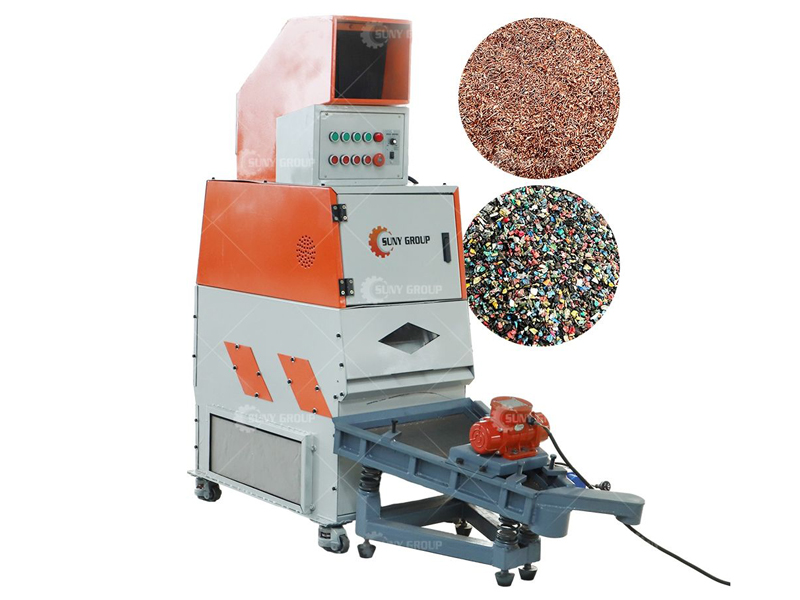
A Cable Wire Granulator is a recycling machine designed to process insulated waste wires and cables. Its main purpose is to separate the valuable metal core, usually copper, from the surrounding plastic or rubber insulation.
The basic process is:
- Feeding: Waste cables are placed into the machine.
- Crushing and granulating: Rotating blades cut the cables into small particles.
- Air-flow separation: The crushed copper and plastic mixture enters a separation system.
- Density separation: Because copper is much denser than plastic, airflow and vibration can separate the two materials.
- Collection: Copper granules and plastic particles are discharged through different outlets.
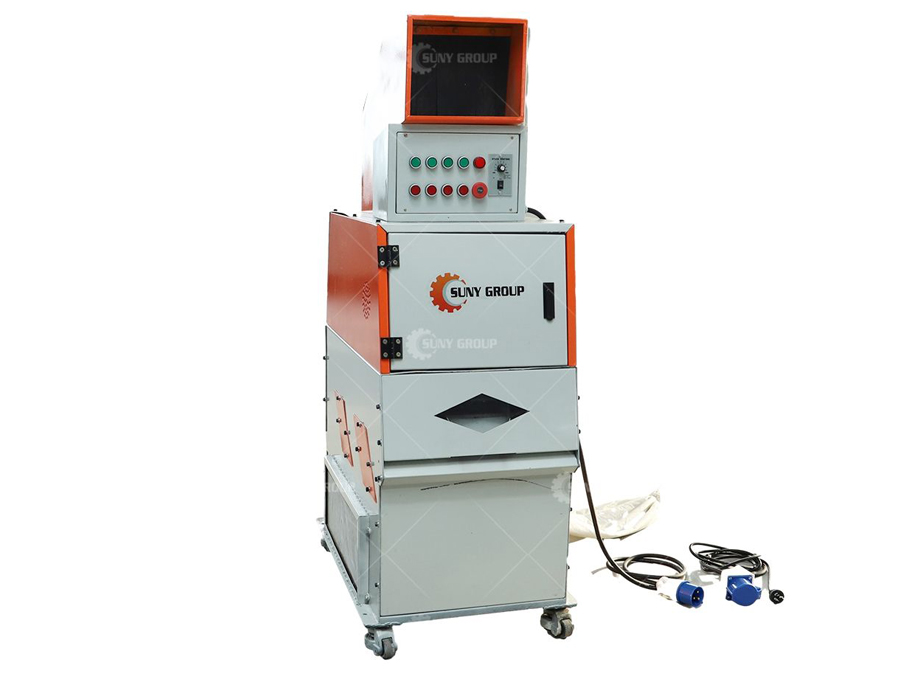
Some small machines integrate crushing, separation, and dust collection into one compact unit, reducing the amount of auxiliary equipment required.
Who Needs a Small Capacity Cable Wire Granulator?
A Small Capacity Cable Wire Granulator is particularly suitable for customers who generate or collect relatively small quantities of scrap wire rather than operating a large recycling plant.
Typical users include:
- Small cable recycling businesses with limited daily feedstock.
- Electricians and electrical contractors who accumulate waste installation cables.
- Automotive repair and dismantling workshops handling vehicle wiring harnesses.
- Scrap yards that want to increase the value of collected cables.
- Small metal recycling workshops that need copper-plastic separation.
- Start-up recyclers testing the cable recycling market before expanding production.
For example, available small cable granulators on the market commonly cover capacities from approximately 30–150 kg/h, depending on machine design and configuration.
What Cables Can It Process?
The exact feedstock range depends on the model, but typical applications include automotive wires, motorcycle wires, computer cables, communication cables, household electrical wires, and mixed scrap cables. Some compact machines are designed for cables below approximately 20–25 mm in diameter.
Before purchasing, customers should confirm the cable diameter, insulation type, copper content, and whether the feedstock contains plugs, terminals, steel wires, or other contaminants.
Main Configuration of a Small Capacity Cable Wire Granulator
A compact machine generally includes several key systems:
1. Crushing and Granulating System
The cutting chamber uses wear-resistant blades to reduce cables into small copper-plastic particles. Smaller and more uniform particles generally make subsequent separation easier.
2. Air-Flow Separation System
The separator uses airflow, vibration, and differences in material density to separate heavier copper from lighter plastic. This is one of the most important parts of the machine because separation performance directly affects product quality.
3. Dust Collection System
Crushing and granulating can generate dust and fine plastic particles. A dust collector helps capture these particles and maintain a cleaner working environment.
4. Electrical Control System
Depending on the model, the machine can use a simple electrical control cabinet or a more automated control system. Voltage and power configuration can also be customized for different markets.
What Are the Final Products Like?
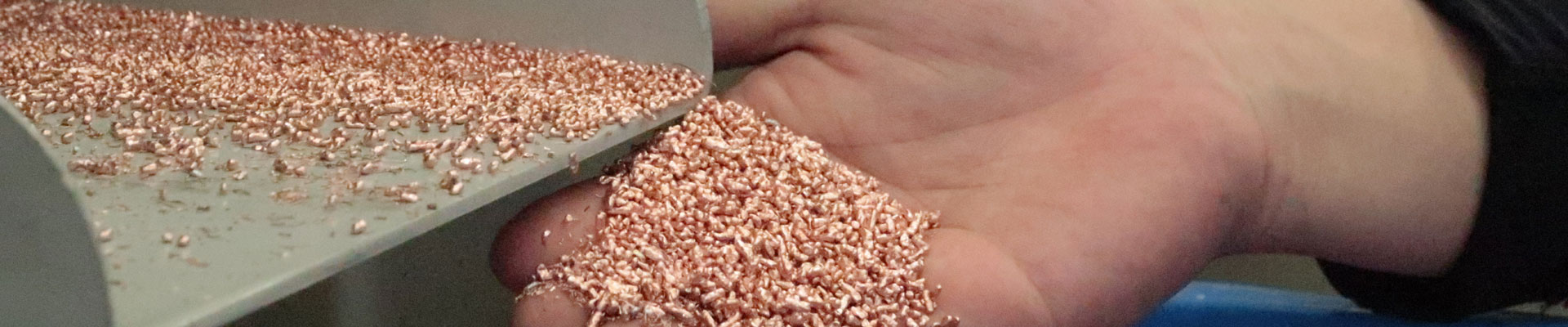
The main outputs are copper granules and plastic granules. After successful separation, the copper is discharged separately from the plastic, allowing the two materials to be collected and sold or further processed.
Copper particles are often described as “copper rice” because of their small granular appearance. Some compact machines produce particles in the range of approximately 1–3 mm, although the exact particle size depends on the cutting system and screen configuration.
The recovered copper can enter downstream metal processing or be sold as a recycled copper feedstock, while separated PVC or other plastics may be collected for further recycling.
Why Choose a Small Capacity Cable Wire Granulator?
The biggest advantages are compact structure, relatively low energy consumption, simple operation, and flexible installation. A small machine can allow a recycler to process cables directly instead of manually stripping every wire.
For businesses with limited feedstock, choosing an appropriately sized machine is also important. An oversized cable recycling line may increase unnecessary equipment and operating requirements, while an undersized machine can limit production efficiency.
Therefore, customers should select the Small Capacity Cable Wire Granulator according to their daily cable supply, cable diameter, required output, available space, and desired copper purity. With the right configuration, a compact cable granulator can efficiently turn low-value scrap cables into separately recovered copper and plastic products, creating a practical entry point into cable wire recycling.