
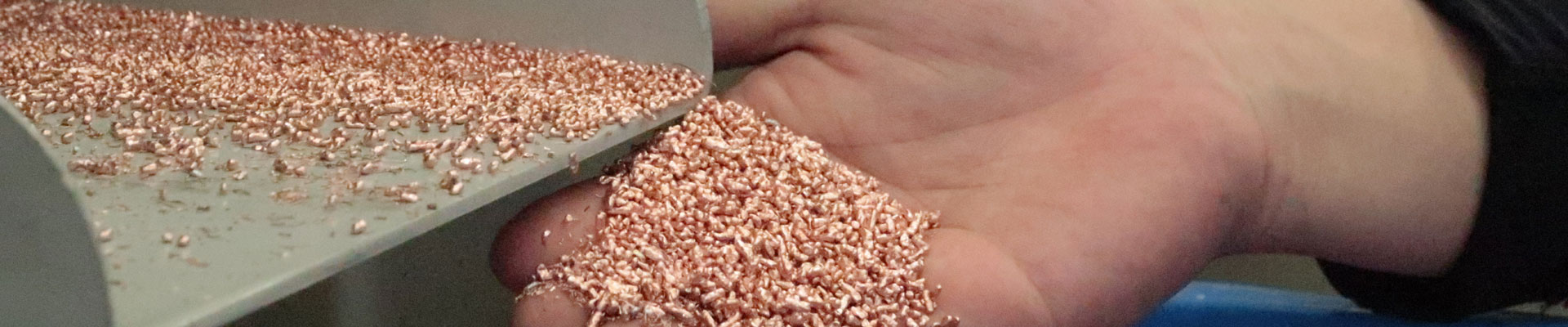
Li-ion Battery Recycling Unit
Lithium-ion (Li-ion) batteries are widely used in electric vehicles (EVs), consumer electronics, and energy storage systems due to their high energy density and long lifespan. However, discarded batteries pose environmental risks and contain valuable materials. Li-ion battery recycling units play a crucial role in recovering resources, reducing waste, and supporting the circular economy.
Types of Li-ion Batteries
Li-ion batteries come in various chemistries, including:
- Lithium Cobalt Oxide (LCO) – Common in smartphones and laptops.
- Lithium Iron Phosphate (LFP) – Widely used in electric buses and energy storage.
- Lithium Nickel Manganese Cobalt Oxide (NMC) – Popular in EVs for high energy and safety.
- Lithium Nickel Cobalt Aluminum Oxide (NCA) – Used in high-performance EVs.
- Lithium Titanate (LTO) – Applied in fast-charging and long-life batteries.
Sources of Li-ion Batteries
Li-ion batteries are primarily collected from:
- Electric vehicles (EVs) – EV battery packs at end-of-life or damaged.
- Consumer electronics – Mobile phones, laptops, tablets, and power tools.
- Energy storage systems (ESS) – Residential and industrial batteries.
- Industrial applications – Forklifts, medical equipment, and robotics.
Importance of Recycling
Recycling Li-ion batteries is essential because:
- It prevents environmental pollution from toxic metals like cobalt, nickel, and lithium.
- It recovers valuable metals for reuse, reducing the need for mining.
- It supports sustainable manufacturing and reduces energy consumption in battery production.
Economic Value and Benefits
Recycling Li-ion batteries provides significant economic advantages:
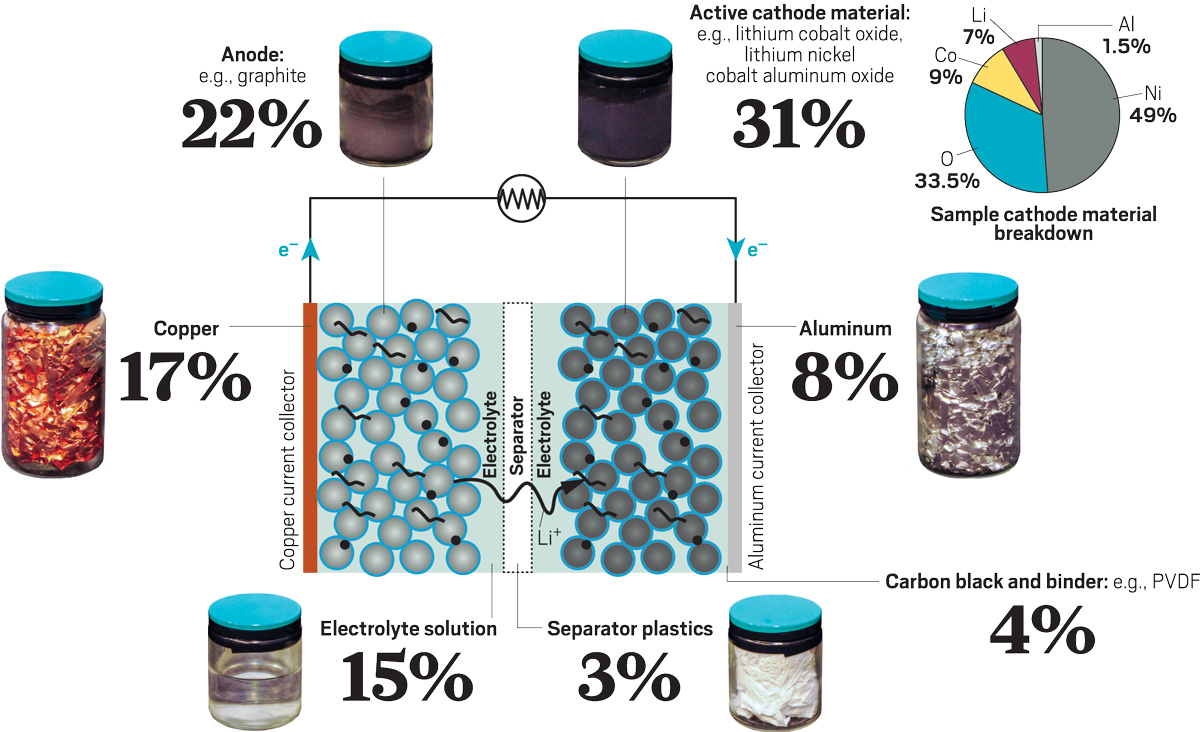
- Material recovery – Cobalt, nickel, lithium, and copper can be reused in new batteries.
- Cost savings – Recovered metals are cheaper than newly mined materials.
- Job creation – Recycling plants generate skilled employment opportunities.
- Sustainability – Promotes a circular economy, enhancing brand and regulatory compliance.
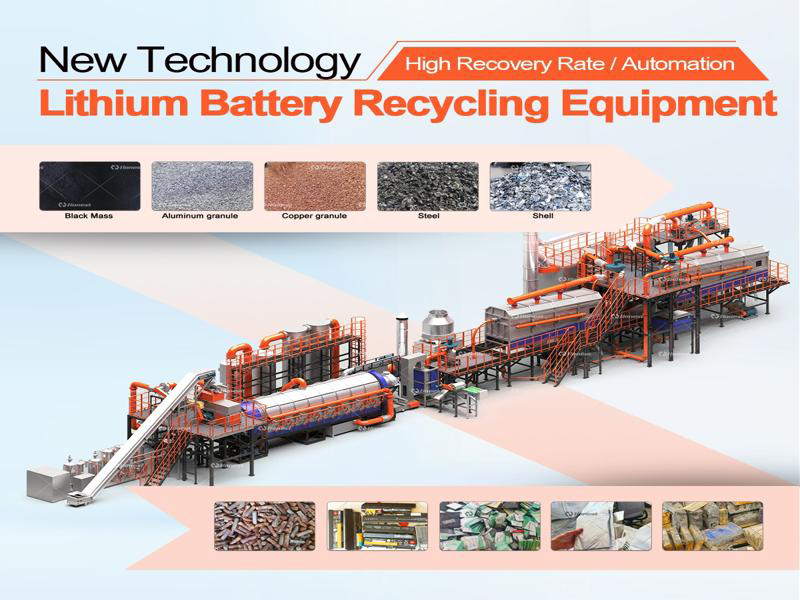
Li-ion Battery Recycling Unit Overview
A modern Li-ion battery recycling unit typically includes:
- Disassembly Line – Manual or automated separation of battery packs and modules.
- Shredding and Crushing – Breaking batteries into smaller pieces for easier material recovery.
- Mechanical Separation – Using sieving, magnetic separation, and air classification to separate metals, plastics, and active materials.
- Hydrometallurgical / Pyrometallurgical Processing – Chemical leaching or high-temperature smelting to extract lithium, cobalt, nickel, and copper.
- Material Refining – Purifying recovered metals for reuse in battery production or other industries.
Recycling Process Step-by-Step
- Collection & Sorting – Batteries are collected and categorized by type and condition.
- Discharge & Dismantling – Batteries are safely discharged and dismantled into cells and components.
- Crushing & Grinding – Cells are crushed to release internal materials.
- Separation & Extraction – Metals, plastics, and electrolytes are separated.
- Recovery & Purification – Valuable metals are refined to high purity.
- Reuse & Application – Recovered materials are reintroduced into battery manufacturing or other sectors.
Recovered Materials and Applications
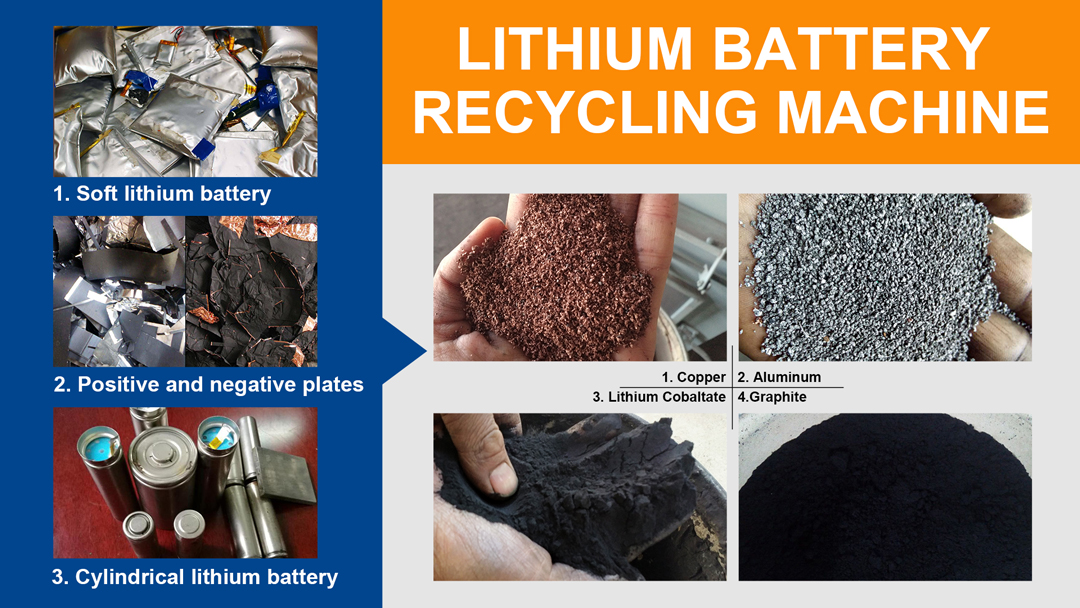
- Lithium – Used in new Li-ion batteries and ceramics.
- Cobalt & Nickel – Reused in EV batteries and stainless steel.
- Copper – Applied in electronics and electrical wiring.
- Aluminum – Used in packaging, electronics, and batteries.
- Plastics – Recycled for casings and insulation materials.
Industries Benefiting from Recycling
Li-ion battery recycling supplies key industries:
- Electric vehicle manufacturers – For new battery production.
- Electronics manufacturers – Recovered metals for device components.
- Energy storage providers – To produce sustainable ESS units.
- Metal and chemical industries – For raw material supply and refining.
Li-ion battery recycling units are vital for environmental protection, resource recovery, and economic sustainability. By efficiently recycling different types of batteries from EVs, electronics, and energy systems, these units reduce waste, recover valuable materials, and support a circular economy across multiple industries.