
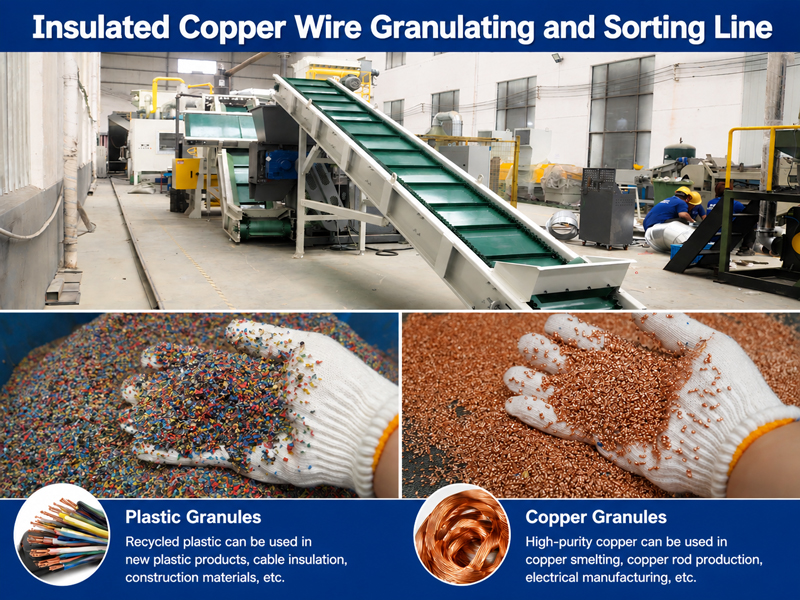
Insulated Copper Wire Granulating and Sorting Line
With the fast expansion of electrical equipment, automotive applications, communication networks, and electronic products, the volume of waste insulated copper wire is constantly growing. Insulated copper wire is composed of valuable copper conductors covered with plastic, rubber, or other insulating materials. Recycling these wires can effectively recover high-purity copper resources while minimizing waste pollution.
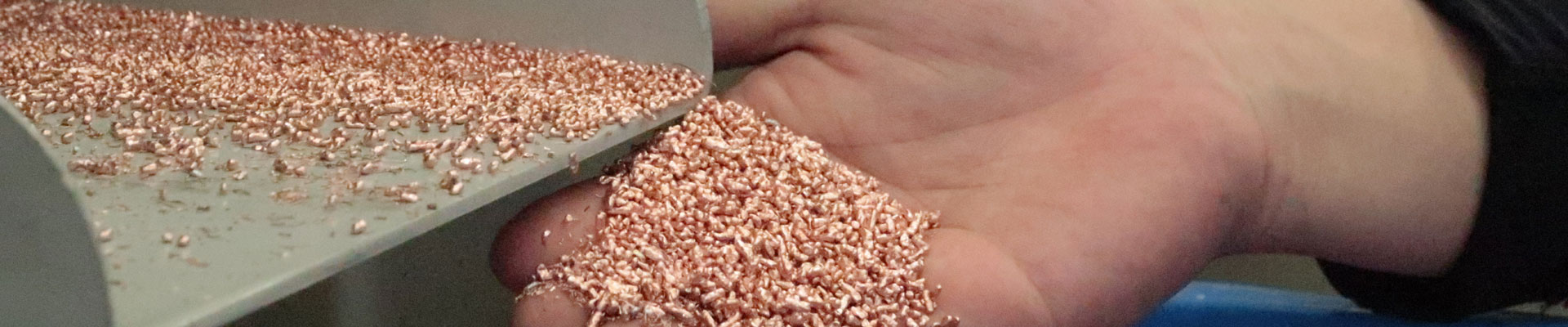
An Insulated Copper Wire Granulating and Sorting Line is a professional recycling system that uses crushing, granulating, air separation, vibration sorting, and other technologies to separate copper conductors from insulation materials. The final products are clean copper granules and recyclable plastic materials.
1. Common Types of Insulated Copper Wire
Insulated copper wire has different structures and applications. According to the source and insulation material, it can be divided into the following types:
1. Household Electrical Wires
Household wires are mainly collected from:
- Old buildings
- Electrical renovation projects
- Waste appliances
- Residential electrical systems
These wires usually contain copper conductors covered with PVC insulation. They are one of the most common materials processed by copper wire recycling equipment.
2. Automotive Copper Wires
Automotive wires come from:
- Cars
- Trucks
- Electric vehicles
- Automotive wiring harnesses
They usually contain multiple thin copper wires with plastic insulation. Because of their complex structure, efficient granulating and sorting equipment is needed.
3. Communication Cables
Communication cables include:
- Telephone cables
- Network cables
- Data cables
- Signal cables
These cables usually have small copper diameters and require precise separation technology to avoid copper loss.
4. Power Cables
Power cables are widely used in:
- Power transmission systems
- Industrial equipment
- Construction projects
They normally have thicker insulation layers and larger copper cores, requiring strong crushing and granulating systems.
5. Electronic Waste Wires
E-waste wires come from:
- Computers
- Printers
- Home appliances
- Electronic devices
These materials often contain mixed wires with different sizes and insulation types, making automatic sorting technology important.
2. Introduction of Insulated Copper Wire Granulating and Sorting Line
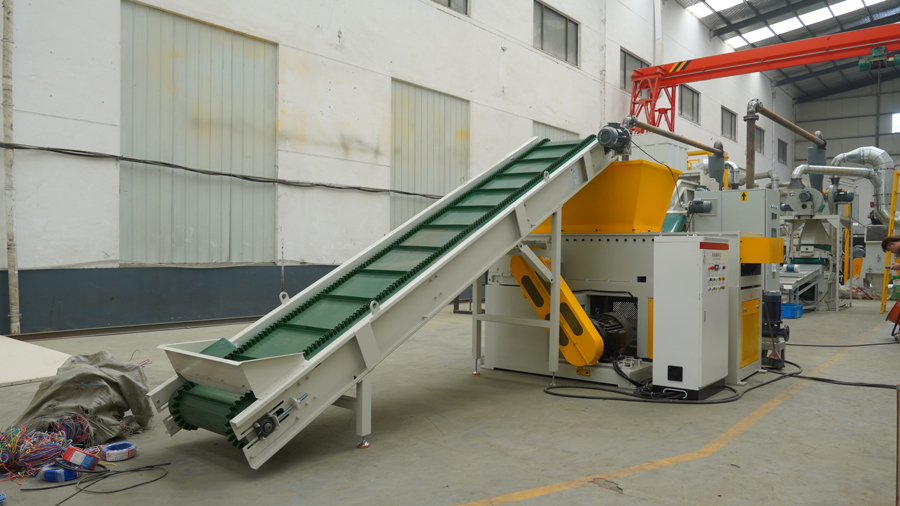
The Insulated Copper Wire Granulating and Sorting Line is an automated recycling system designed to process waste cables and separate copper from plastic insulation.
The main working process includes:
1. Feeding System
Waste insulated copper wires are continuously fed into the recycling line through a conveyor or feeding machine.
2. Crushing and Granulating
The crusher and granulator cut waste wires into small particles, allowing copper conductors to completely separate from plastic insulation.
3. Air Separation
Because copper has a higher density than plastic, an airflow separator can separate heavy copper particles from lightweight plastic materials.
4. Vibration Sorting
The vibration sorting system improves separation accuracy and removes remaining impurities.
5. Dust Collection System
A dust collector collects fine plastic dust generated during processing, creating a cleaner and safer working environment.
3. Advantages and Features of Insulated Copper Wire Granulating and Sorting Line
1. High Copper Recovery Rate
The production line can efficiently separate copper and plastic, producing high-purity copper granules suitable for direct reuse or sale.
2. Environmentally Friendly Recycling
Compared with traditional cable burning methods, mechanical recycling avoids harmful smoke emissions and improves resource utilization.
3. Automatic Operation
The complete system integrates feeding, crushing, sorting, and dust collection, reducing manual labor and improving production efficiency.
4. Wide Application Range
The equipment can process different types of insulated copper wires, including household cables, automotive wires, communication cables, and industrial cables.
5. High Economic Value
Copper is a valuable recyclable metal. Recovering copper granules from waste wires can create additional profits for recycling companies.
6. Flexible Capacity Options
According to different investment requirements, the line can be designed for small recycling workshops or large industrial recycling plants.
4. Applications of Separated Materials
After processing through the insulated copper wire granulating and sorting line, two valuable materials are obtained.
1. Recovered Copper Granules
The separated copper granules can be used for:
- Copper smelting plants
- Copper rod production
- Electrical wire manufacturing
- Metal recycling industries
High-quality copper granules can directly enter the copper manufacturing chain.
2. Recycled Plastic Granules
The separated plastic materials can be used for:
- Plastic products manufacturing
- Cable insulation production
- Plastic recycling industries
- Construction materials
This creates a complete recycling cycle and reduces raw material consumption.
The Insulated Copper Wire Granulating and Sorting Line is an efficient solution for recovering valuable copper resources from waste insulated wires. With advanced crushing, granulating, and sorting technology, it can achieve high copper purity, reduce environmental pollution, and improve recycling profits. As global demand for copper continues to grow, insulated copper wire recycling equipment will play an increasingly important role in the metal recycling industry.