
Industrial Wire Stripper Machine
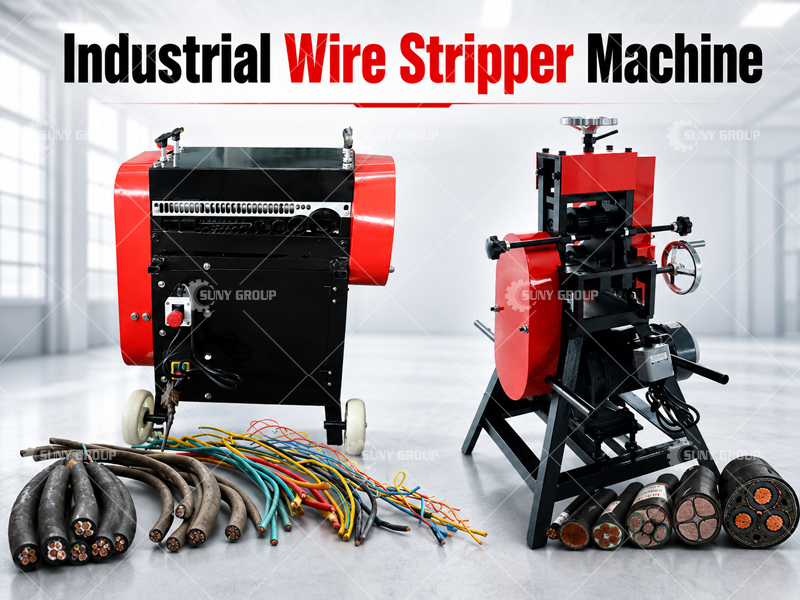
Industrial Wire Stripper Machine is specialized equipment used to remove insulation, plastic, rubber, or other outer coverings from electrical wires and cables. Unlike manual wire stripping tools, an industrial wire stripper machine can process large quantities of scrap wire quickly and consistently. It is widely used in cable recycling plants, metal recycling facilities, electrical manufacturing factories, and scrap metal processing businesses.
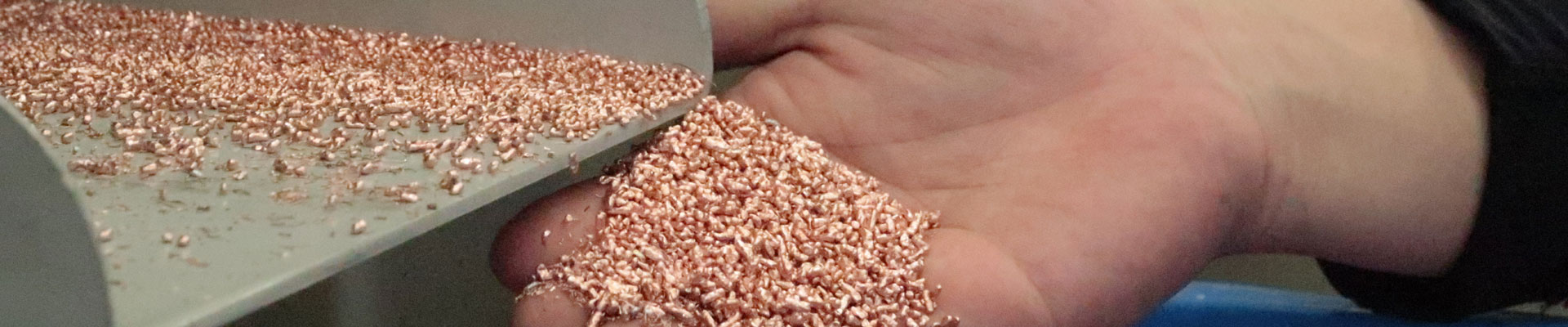
The main purpose of a wire stripping machine is to separate the valuable metal conductor, such as copper or aluminum, from the insulation. The recovered metal can then be collected for further processing and recycling, while the separated plastic insulation can also be recycled or reused.
Key Features of an Industrial Wire Stripper Machine
Industrial wire stripping equipment is designed for continuous and high-volume operation. Its main features generally include:
- High processing capacity – It can continuously process large quantities of wires and cables, making it suitable for commercial recycling operations.
- Adjustable stripping diameter – The stripping mechanism can usually be adjusted according to different wire diameters and insulation thicknesses.
- High stripping efficiency – Sharp stripping blades can remove insulation efficiently while minimizing damage to the copper or aluminum conductor.
- Stable operation – A robust frame, reliable transmission system, and durable components allow the machine to operate for extended periods.
- Simple operation – Operators can adjust the feeding and stripping system according to the cable specifications.
- Low labor requirements – Compared with manual stripping, the machine significantly reduces labor intensity and processing time.
Types of Wire Stripper Machines
Different types of wire stripper machines are available according to cable size, structure, and application.
1. Manual Wire Stripping Machine
Manual models are compact and economical. They are suitable for small recycling workshops or businesses processing relatively small quantities of scrap wire.
2. Automatic Wire Stripping Machine
An automatic wire stripping machine uses a motor-driven system to feed and strip cables continuously. It is suitable for medium- and large-scale recycling operations that require higher productivity.
3. Multi-Channel Wire Stripper Machine
A multi-channel machine can process different wire diameters through multiple feeding or stripping channels. This design improves flexibility when a recycling plant handles various cable specifications.
4. Heavy-Duty Industrial Wire Stripper
Heavy-duty models are designed for thick and tough cables, including industrial power cables, communication cables, and larger copper or aluminum cables. They generally feature stronger frames, larger motors, and more durable cutting components.
What Wires Can an Industrial Wire Stripper Process?
The appropriate machine depends mainly on the wire diameter, insulation material, cable structure, and conductor type. Common applications include:
- Scrap copper wires
- Aluminum wires
- Electrical cables
- Power cables
- Communication cables
- Automotive wires
- Household electrical wires
- Industrial cables
- Multi-core cables
- PVC-insulated wires
For thin wires and complicated multi-core cables, a cable granulator may sometimes be more suitable than a conventional stripping machine. For thick single-core cables, however, a wire stripping machine can provide an efficient method for separating metal from insulation.
Advantages of Using an Industrial Wire Stripper Machine
The biggest advantage of an industrial wire stripper machine is its ability to improve the efficiency and profitability of wire recycling. Valuable copper and aluminum can be recovered with less manual labor and shorter processing times.
Other important advantages include:
- Higher productivity: Continuous mechanical stripping is much faster than manual processing.
- Better metal recovery: Proper adjustment helps separate insulation while preserving valuable conductors.
- Reduced labor costs: One operator can manage a substantial amount of processing work.
- Consistent stripping quality: Mechanical operation provides more uniform results.
- Easy maintenance: Many industrial machines use simple mechanical structures that are convenient to maintain.
- Improved recycling value: Clean copper and aluminum generally have greater value than insulated scrap wire.
How to Choose the Right Wire Stripping Machine?
When selecting an industrial wire stripping machine, buyers should first determine the type and size of cables they need to process. Important factors include wire diameter, insulation thickness, daily processing capacity, conductor material, machine power, number of stripping channels, and required automation level.
For small-scale operations, a compact machine may be sufficient. For large recycling plants, a high-capacity automatic wire stripper machine or a complete wire recycling system can provide better productivity.
Industrial Wire Stripper Machine is an important piece of equipment for efficient copper and aluminum wire recycling. By mechanically removing insulation from scrap cables, it reduces labor requirements, increases processing efficiency, and improves the recovery value of recyclable metals. Choosing the correct machine according to cable size, material, capacity, and application is essential for achieving stable performance and long-term economic benefits.