
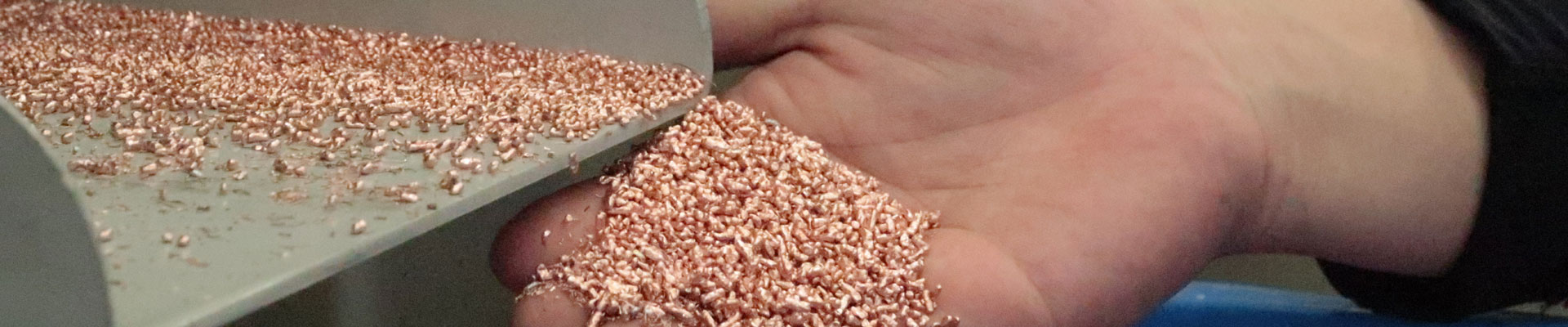
How to Recycle Lithium Ion Batteries Effectively
As electric vehicles, portable electronics, power tools, and energy storage systems become more widely used, the demand for lithium ion battery recycling is increasing. A complete recycling system can recover valuable materials from spent batteries while reducing waste and supporting the circular battery supply chain. The International Energy Agency notes that battery recycling technologies are developing rapidly for recovering materials such as lithium, nickel, cobalt, and copper.
1. What Materials Can Be Recovered from Lithium Ion Batteries?
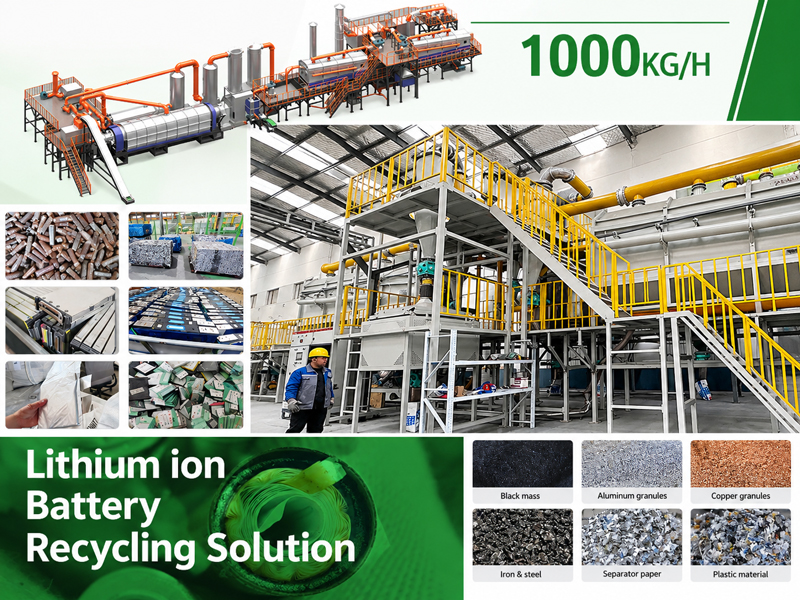
A lithium-ion battery contains several valuable materials, and the exact composition depends on its chemistry. Common battery chemistries include NMC, NCA, and LFP. NMC batteries contain lithium, nickel, manganese, and cobalt, while LFP batteries contain lithium, iron, and phosphorus. Graphite is commonly used as an anode material.
The main recyclable materials include:
- Lithium – Can be recovered as lithium carbonate, lithium hydroxide, or other lithium compounds.
- Nickel – An important cathode material that can be returned to battery-material production.
- Cobalt – A valuable cathode metal used in many lithium-ion battery chemistries.
- Manganese – Recovered mainly from manganese-containing cathode materials.
- Copper – Mainly obtained from current collectors, cables, and other electrical components.
- Aluminum – Found in current collectors, battery casings, and structural components.
- Graphite – The most common anode material and a potential secondary battery raw material.
- Iron and phosphorus – Particularly relevant when processing LFP batteries.
2. How to Build a Lithium Ion Battery Recycling Plant?
An effective lithium ion battery recycling plant should be designed according to battery chemistry, feedstock type, capacity, and the required purity of the recovered products.
A typical recycling system can include:
Battery Receiving → Sorting → Discharging/Safe Handling → Dismantling → Crushing → Screening → Separation → Black Mass Collection → Metal Recovery → Product Refining
First, incoming batteries should be classified according to type, chemistry, size, and condition. Battery packs can then be dismantled to remove housings, cables, electronic components, and other materials. Mechanical processing can subsequently separate battery components and produce a concentrated black mass, which contains valuable cathode and anode materials. Commercial recycling models already use mechanical processing to produce black mass before further material recovery.
3. How to Increase Recycling Efficiency and Recovery Rate?
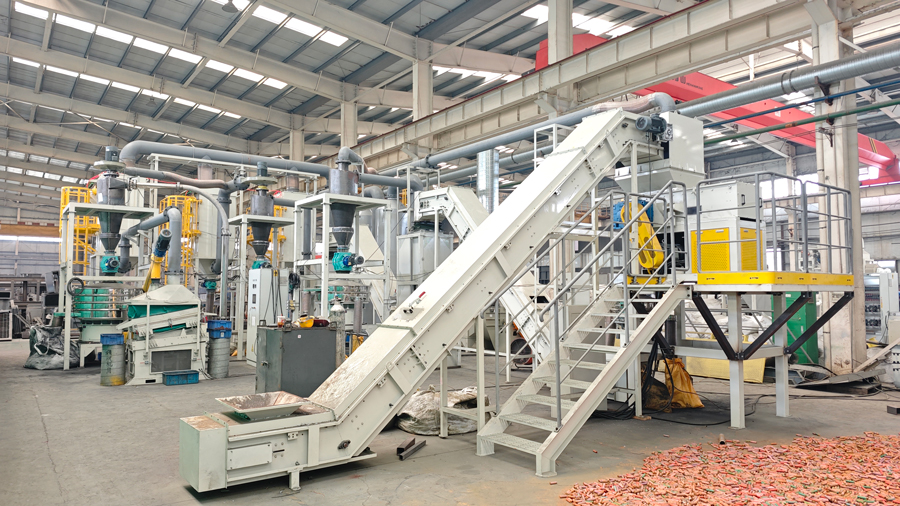
Improving the lithium ion battery recycling process requires optimization at every stage rather than relying on a single machine. Key measures include:
- Improve battery sorting: Separate NMC, NCA, LFP, and other chemistries before processing.
- Optimize dismantling: Recover aluminum, copper, steel, plastics, and electronic components before crushing.
- Control crushing conditions: Use suitable shredding and crushing equipment to liberate valuable battery materials without unnecessary contamination.
- Improve screening and separation: Proper particle-size classification helps concentrate black mass and metal fractions.
- Use suitable downstream recovery technology: Hydrometallurgical, pyrometallurgical, or direct-recycling processes can be selected according to the target materials.
- Monitor product quality: Regular chemical and physical analysis helps maintain stable recovery performance.
DOE research has specifically identified improved collection, sorting, processing, and recovery of lithium, cobalt, nickel, and graphite as important objectives for battery recycling.
4. Applications of Recovered Battery Materials
Recovered materials can have significant applications in the battery and manufacturing industries. Recovered lithium, nickel, cobalt, and manganese can be processed into battery-material feedstocks. Recovered copper and aluminum can enter conventional metal recycling streams, while graphite may potentially be upgraded for reuse as anode material. DOE has investigated recovering graphite and converting it into battery-grade graphite for potential use in new batteries.
This creates a closed-loop opportunity in which materials from spent batteries become secondary resources for new battery production.
5. Economic Value of Lithium Ion Battery Recycling
The economic value of a lithium ion battery recycling plant depends on feedstock cost, battery chemistry, material composition, processing capacity, recovery efficiency, product purity, energy consumption, labor, environmental controls, and the market prices of recovered materials.
NMC batteries may contain valuable nickel and cobalt, while LFP batteries generally have a different recycling economics because they contain fewer high-value metals. The IEA highlights this difference and notes that the increasing share of LFP batteries makes chemistry-specific recycling strategies increasingly important.
Therefore, an effective recycling business should test the incoming batteries first and design the equipment around the actual feedstock.
An efficient lithium ion battery recycling plant combines safe collection, battery sorting, dismantling, mechanical processing, separation, black mass production, and downstream material recovery. By optimizing feedstock classification, equipment configuration, particle size, separation efficiency, and product purity, recyclers can increase material recovery and improve the economic value of the plant. More importantly, recycling provides a secondary source of critical battery materials and can reduce dependence on newly mined resources.