
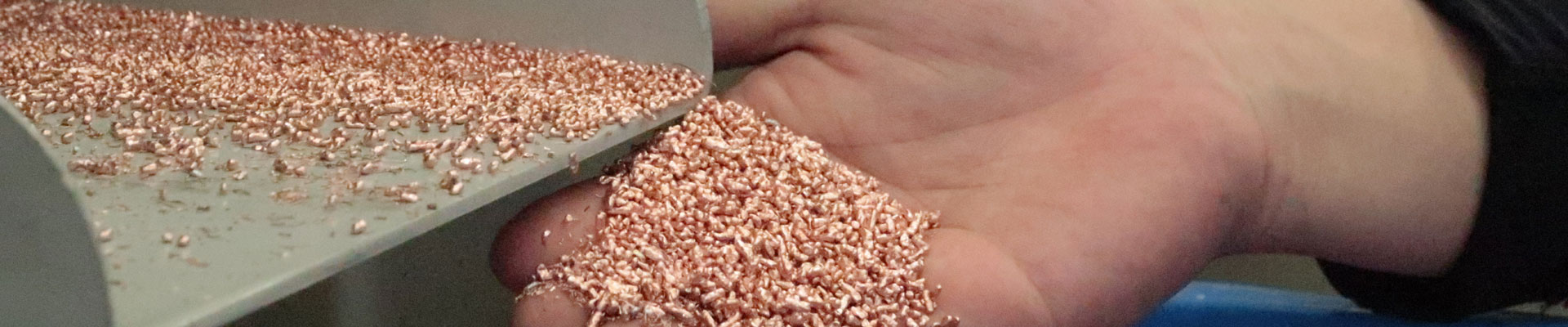
Heavy Duty PCB Electronic Components Dismantling Machine
With the rapid development of computers, communication equipment, household appliances, industrial electronics, and consumer devices, the amount of waste printed circuit boards (PCBs) continues to increase. PCBs contain not only valuable metals but also large quantities of electronic components. Heavy Duty PCB Electronic Components Dismantling Machine is designed to efficiently remove electronic components from waste PCBs, making subsequent crushing, sorting, and metal recovery more efficient.
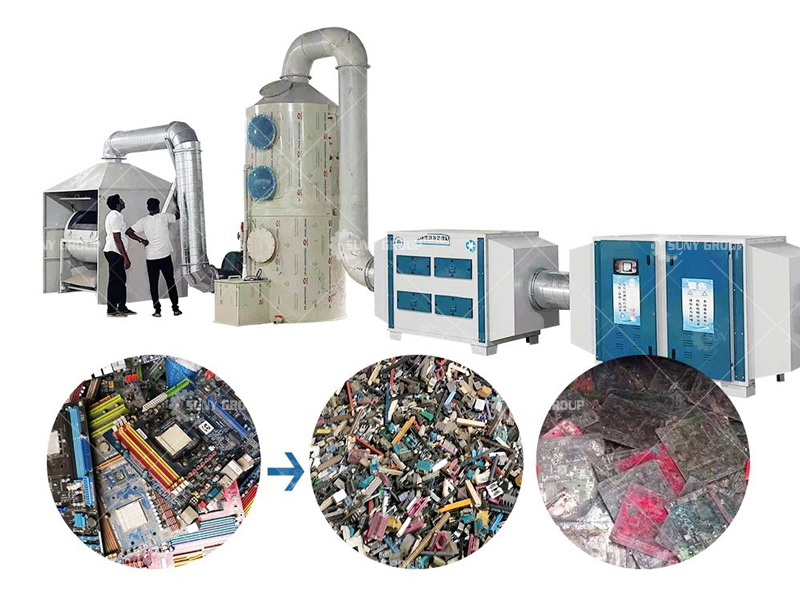
What Electronic Components Are Found on PCBs?
Different types of PCBs contain different components depending on their applications. Common PCB electronic components include:
- Resistors – Used to control current and voltage.
- Capacitors – Used for energy storage, filtering, and voltage stabilization.
- Integrated Circuits (ICs) – Used for signal processing, control, and computing.
- Diodes – Used to control the direction of electrical current.
- Transistors – Used for switching and signal amplification.
- Relays and Connectors – Used for electrical connection and switching.
- Transformers and Inductors – Used for power conversion and electromagnetic applications.
- Crystals and Oscillators – Used for generating stable frequency signals.
- LEDs and Other Semiconductor Components – Commonly found in electronic control and display systems.
These components are usually mounted on the PCB through through-hole technology (THT) or surface-mount technology (SMT).
What Metals Are Contained in PCB Electronic Components?
Waste PCBs are valuable secondary resources because they contain various metals. Depending on the PCB type, the recovered materials may include:
- Copper: Mainly found in conductive tracks, copper layers, wires, and connectors.
- Iron and steel: Common in certain components, terminals, and structural parts.
- Aluminum: Found in some capacitors, heat sinks, and electronic housings.
- Tin: Commonly used in solder materials.
- Nickel: Often used as a protective coating and in some components.
- Gold: May be present in connectors, contact surfaces, and high-quality electronic components.
- Silver: Can be found in certain contacts, solder materials, and components.
- Palladium: Present in some electronic components, particularly certain ceramic capacitors.
The exact metal content varies significantly according to PCB grade, component type, manufacturing technology, and equipment source.
What Is a Heavy Duty PCB Electronic Components Dismantling Machine?
A Heavy Duty PCB Electronic Components Dismantling Machine is specialized equipment used to separate electronic components from waste circuit boards before further recycling. Compared with manual dismantling, a heavy-duty machine can process larger quantities of PCB scrap with more consistent operating efficiency.
The equipment is generally designed around mechanical impact, vibration, friction, or controlled separation. Depending on the PCB type and processing requirements, the system may incorporate a feeding mechanism, dismantling chamber, conveying system, screening unit, and dust collection system.
How Does the PCB Components Dismantling Machine Remove Components?
The basic working process can be summarized as:
PCB Feeding → Mechanical Dismantling → Component Separation → Screening → Collection
First, waste PCBs are continuously fed into the dismantling machine. Inside the working chamber, mechanical forces loosen or separate components from the circuit board. The separated components and PCB base materials are then discharged and screened according to their physical characteristics.
For larger or heavier PCB components, a Heavy Duty PCB Electronic Components Dismantling Machine can provide stronger mechanical processing capacity. The specific dismantling method should be selected according to PCB thickness, component size, mounting method, and processing capacity.
Why Remove Electronic Components from Waste PCBs?
Removing electronic components before further PCB recycling provides several important advantages:
1. Improve Metal Recovery
Components may contain copper, aluminum, precious metals, and other valuable materials. Separating them first can improve the efficiency of subsequent sorting and recovery.
2. Improve Crushing Efficiency
Large components can interfere with downstream shredders, crushers, and grinding machines. Pre-dismantling helps create a more uniform feedstock.
3. Improve Material Separation
After components are removed, the remaining PCB material can be processed more effectively by crushing, screening, magnetic separation, air separation, and other technologies.
4. Increase Recycling Value
Separating different material fractions allows recyclers to produce more concentrated and higher-value output streams.
How to Choose the Right PCB Components Dismantling Machine?
Before purchasing equipment, customers should consider:
- PCB type and dimensions
- Electronic component size and quantity
- Required processing capacity
- Desired separation efficiency
- Downstream recycling process
- Automation requirements
- Dust and environmental control
- Equipment durability and maintenance
- Supplier technical support and after-sales service
Heavy Duty PCB Electronic Components Dismantling Machine is an important part of an efficient PCB recycling system. By removing electronic components before further processing, recyclers can improve crushing and separation efficiency while recovering valuable material streams more effectively. The ideal machine should be selected according to the PCB feedstock, component characteristics, processing capacity, recycling process, and final recovery requirements. A properly designed PCB recycling line can maximize resource recovery while reducing waste and improving overall operating efficiency.