
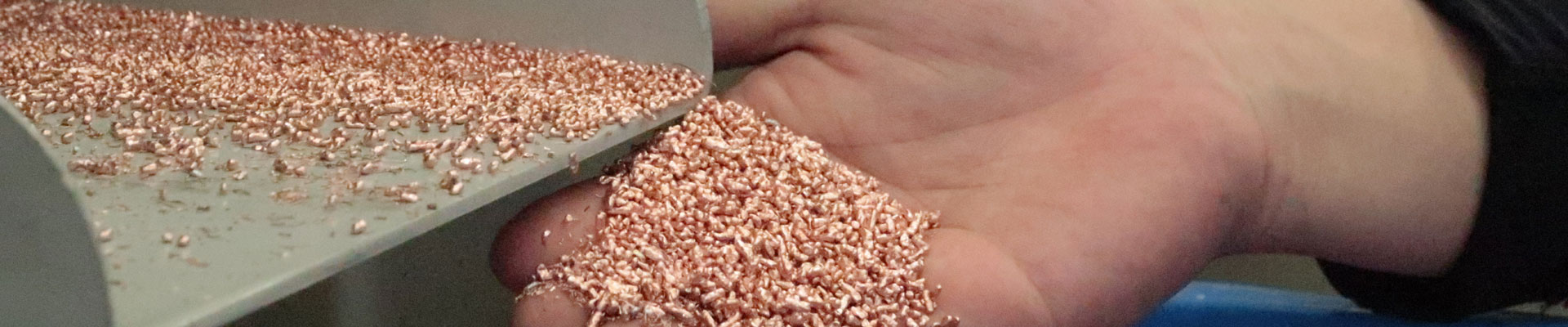
Fully Automated E-Waste Recycling Plant
As the electronics industry continues to grow rapidly, the volume of electronic waste (e-waste) produced around the world is rising year by year. Discarded computers, smartphones, televisions, circuit boards, cables, and other electronic devices contain valuable resources such as copper, aluminum, precious metals, and recyclable plastics. However, if e-waste is not properly treated, harmful substances including heavy metals and toxic chemicals may pollute the environment. To solve these problems, building an e waste recycling plant fully automated line has become an efficient way to recover valuable materials, reduce environmental risks, and promote sustainable resource utilization.
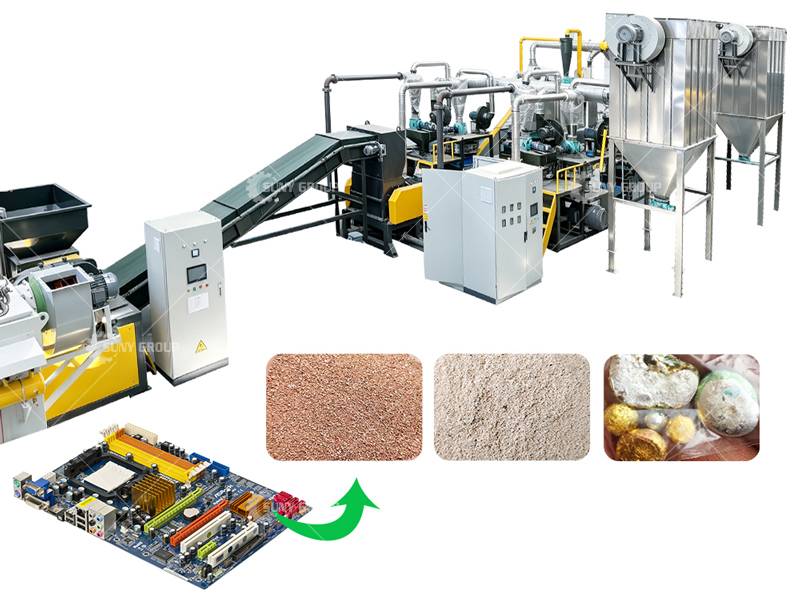
Why Is E-Waste Recycling Necessary?
E-waste recycling is not only an environmental requirement but also a profitable resource recovery business. Electronic waste contains large amounts of valuable materials, including copper, aluminum, iron, plastics, gold, silver, and other precious metals. Recovering these materials can reduce dependence on natural mining and improve resource utilization.
The main benefits of e-waste recycling include:
- Reducing environmental pollution
Landfilling or burning electronic waste may release harmful substances into soil, water, and air. Professional recycling plants use controlled processing methods to safely handle e-waste. - Recovering valuable resources
Waste circuit boards, cables, and electronic components contain high-value metals. Through crushing and separation technologies, these materials can be recovered and reused. - Creating economic value
Recycled metals and plastics can be sold as secondary raw materials for industries such as electronics manufacturing, metal processing, and plastic production. - Supporting the circular economy
E-waste recycling helps transform discarded products into reusable resources and promotes sustainable industrial development.
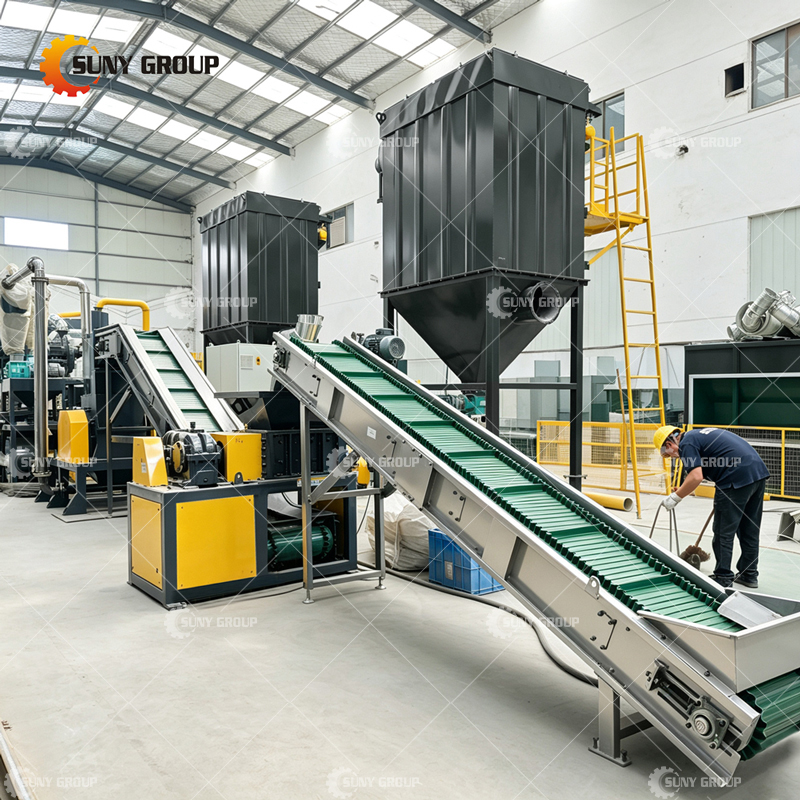
How to Build an E-Waste Recycling Plant?
Building a complete e waste recycling plant fully automated line requires selecting suitable equipment according to the types of e-waste, processing capacity, and final product requirements.
A typical fully automated e-waste recycling plant includes the following systems:
1. Automatic Feeding System
The waste electronic materials are continuously transported into the recycling line through conveyor systems. Automatic feeding improves production efficiency and reduces manual labor requirements.
2. Primary Shredding System
A heavy-duty double shaft shredder is usually used for the first crushing stage. It breaks large electronic products, circuit boards, cables, and appliances into smaller pieces for further processing.
3. Crushing and Grinding System
After primary shredding, materials enter crushers and grinders for further size reduction. Fine crushing improves the liberation of metals and plastics, making separation more efficient.
4. Automatic Sorting and Separation System
The sorting system is the core part of an automated e-waste recycling plant. Different technologies are combined to separate valuable materials:
- Magnetic separator: separates iron and steel materials.
- Eddy current separator: separates non-ferrous metals such as aluminum.
- Air separator: separates lightweight plastics and fibers.
- Electrostatic separator: separates metal powder from non-metal materials.
- Screening system: classifies materials according to particle size.
Advanced recycling lines can integrate multiple separation technologies to achieve high recovery rates and product purity.
5. Dust Collection and Environmental Protection System
During crushing and grinding, dust is generated. A fully automated plant should include a negative pressure dust collection system and filtration equipment to reduce dust emissions and improve workplace safety.
6. PLC Automatic Control System
The entire production line can be controlled through a PLC system. Operators can monitor feeding, crushing, separation, and alarm functions through an intelligent control interface.
Advantages of Fully Automated E-Waste Recycling Line
Compared with traditional manual recycling methods, a fully automated e-waste recycling plant has many advantages:
1. Higher Production Efficiency
Automation enables continuous operation, allowing large quantities of electronic waste to be processed quickly and consistently.
2. Lower Labor Cost
Automatic feeding, crushing, sorting, and collection systems reduce dependence on manual workers and improve workplace safety.
3. Higher Recovery Rate
Precise mechanical separation technologies can effectively recover valuable metals and improve material purity.
4. Stable Product Quality
The automated control system ensures stable operation and consistent output quality.
5. Better Environmental Performance
Closed processing systems, dust collectors, and intelligent controls help reduce secondary pollution.
Recovered Materials and Their Applications
After processing through a fully automated e-waste recycling line, various valuable materials can be obtained.
1. Copper
Copper is mainly recovered from:
- Waste cables
- Circuit boards
- Electrical components
Applications:
- Power cables
- Electrical equipment
- Copper products manufacturing
2. Precious Metals
Electronic waste may contain:
- Gold
- Silver
- Palladium
Applications:
- Electronics manufacturing
- Jewelry industry
- Precious metal refining
3. Aluminum
Recovered aluminum can be used for:
- Automotive parts
- Construction materials
- Aluminum products
4. Iron and Steel
Ferrous metals are widely used in:
- Steel production
- Machinery manufacturing
- Construction industries
5. Plastic Materials
Separated plastics can be recycled into:
- Plastic products
- Packaging materials
- Industrial components
A fully automated e waste recycling plant is an advanced solution for handling increasing electronic waste volumes while recovering valuable resources. By combining shredding, crushing, sorting, dust collection, and PLC control technologies, the recycling line can achieve efficient, safe, and environmentally friendly operation. The recovered copper, precious metals, plastics, aluminum, and iron provide significant economic value and support the development of a sustainable circular economy.
For recycling companies, investing in a fully automated e-waste recycling system is an effective way to reduce pollution, improve resource recovery, and build a profitable long-term recycling business.