
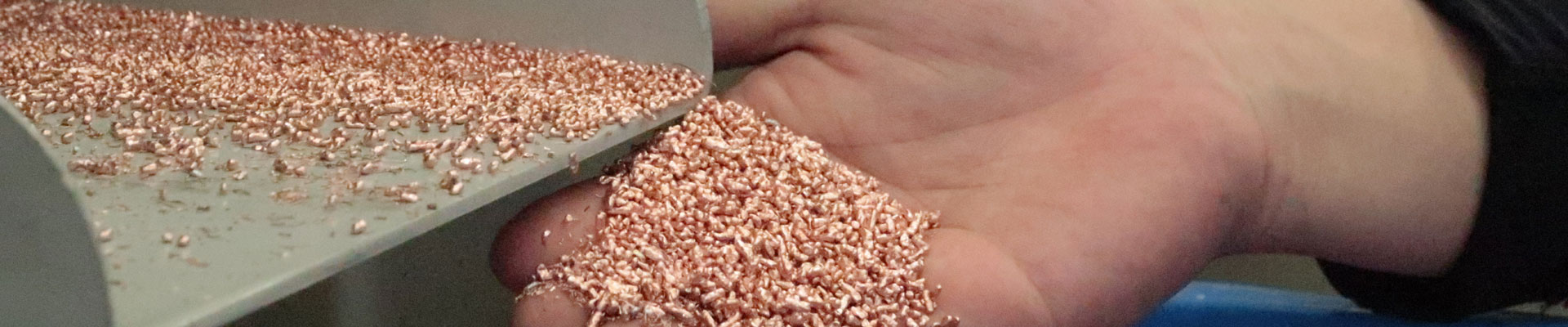
E-Waste Dismantling and Recycling Line
As electronic devices are replaced faster than ever, the amount of e-waste continues to increase worldwide. Waste electrical and electronic equipment contains valuable metals, plastics, glass, and other recyclable materials, but it may also contain hazardous substances. An e-waste dismantling and recycling line provides an efficient solution for separating, recovering, and processing these materials while reducing environmental pollution.
What Types of E-Waste Can Be Recycled?
E-waste covers a wide range of discarded electrical and electronic equipment. Common materials include:
- Waste computers and laptops – desktops, monitors, hard drives, keyboards, and power supplies.
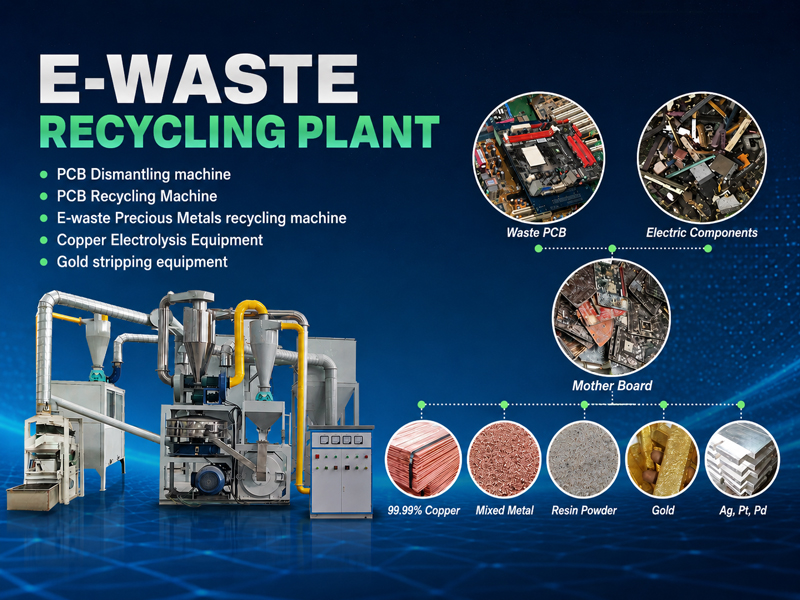
- Printed circuit boards (PCBs) – computer boards, communication boards, control boards, and other electronic circuits.
- Waste household appliances – refrigerators, washing machines, air conditioners, microwave ovens, and televisions.
- Communication equipment – mobile phones, routers, switches, and telecommunications devices.
- Small electronic products – printers, scanners, electronic toys, chargers, and power adapters.
- Electronic cables and wires – copper or aluminum conductors covered with plastic insulation.
Different types of e-waste have different compositions, so the recycling process should be designed according to the feedstock and required recovery rate.
Why Is E-Waste Dismantling Necessary?
Simply shredding mixed electronic waste is not always the best solution. E-waste dismantling allows valuable components and potentially hazardous parts to be separated before mechanical processing.
During dismantling, operators or automated equipment can remove batteries, motors, compressors, cables, circuit boards, screens, transformers, capacitors, and other components. This improves material purity, protects downstream equipment, and makes subsequent separation more efficient.
Dismantling also creates different material streams that can be processed using specialized equipment instead of mixing everything together.
What Components Can Be Recovered?
A properly designed e-waste recycling system can recover:
- Printed circuit boards (PCBs)
- Copper wires and cables
- Aluminum components
- Iron and steel parts
- Plastic housings
- Glass
- Motors and transformers
- Heat sinks
- Electronic components
- Valuable metal-bearing fractions
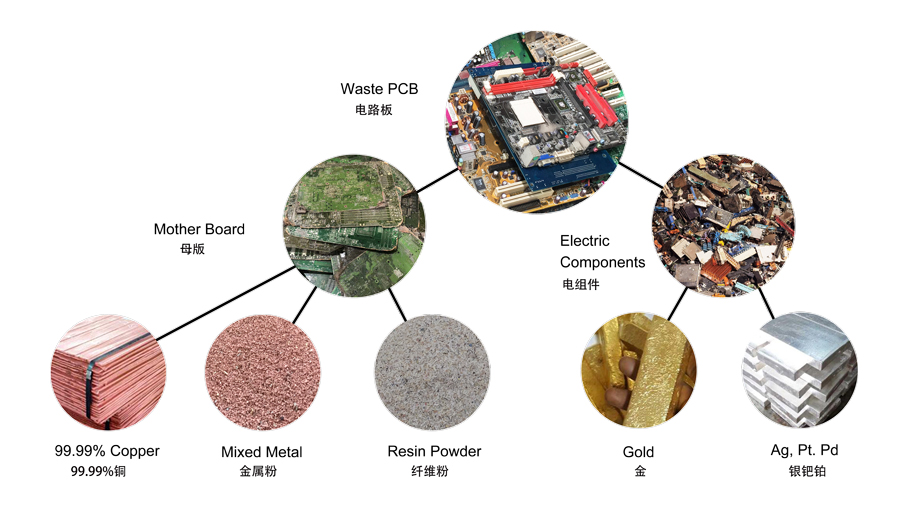
PCBs are particularly important because they can contain copper, gold, silver, palladium, and other valuable metals. Therefore, high-grade PCB fractions may have significantly greater economic value than ordinary mixed waste.
How to Build a Complete E-Waste Recycling Line?
A complete e-waste dismantling and recycling line normally consists of several processing stages:
- Feeding and sorting: E-waste is inspected and classified according to its type and composition.
- Manual or automated dismantling: Large components, batteries, cables, motors, PCBs, and hazardous parts are removed.
- Primary shredding: Large electronic products are reduced to a suitable size using a heavy-duty shredder.
- Secondary crushing: A crusher or granulator further reduces the material and liberates metal from plastic.
- Magnetic separation: Ferrous metals such as iron and steel are separated using magnetic separators.
- Eddy current separation: Non-ferrous metals such as aluminum can be separated from other materials.
- Air separation: Lightweight plastics and other materials are separated from heavier metal fractions.
- Screening: Vibrating screens or other classification equipment separate materials according to particle size.
- Fine metal separation: For suitable PCB and mixed-metal fractions, additional separation technologies can improve metal purity.
The exact equipment configuration should be customized according to the type, capacity, particle size, and composition of the incoming e-waste.
What Materials Can an E-Waste Recycling Line Recover?
The final products may include copper, aluminum, ferrous metals, precious-metal-bearing PCB fractions, plastics, and glass. High-quality separation can produce cleaner material streams that are easier to sell or send to specialized downstream refining facilities.
The recovered copper and aluminum can be reused in metal manufacturing, while recycled plastics can be processed into new plastic products. Steel can return to metal production, reducing the demand for virgin raw materials.
Economic and Environmental Value
The biggest advantage of an e-waste recycling line is that it converts discarded electronics into reusable resources. Valuable metals can generate revenue, while recyclable plastics, aluminum, copper, and steel provide additional income streams.
At the same time, proper dismantling and recycling reduces the amount of electronic waste sent to landfills or uncontrolled processing facilities. It also helps prevent hazardous substances from entering soil and water.
For recyclers planning a commercial project, the most important factors include e-waste composition, processing capacity, automation level, recovery efficiency, labor costs, equipment investment, and downstream product prices.
An e-waste dismantling and recycling line combines dismantling, shredding, crushing, screening, and separation technologies to recover valuable resources from discarded electronics. By selecting the right equipment and process according to the feedstock, recyclers can obtain cleaner copper, aluminum, ferrous metals, plastics, glass, and valuable PCB fractions while improving both economic returns and environmental performance.