
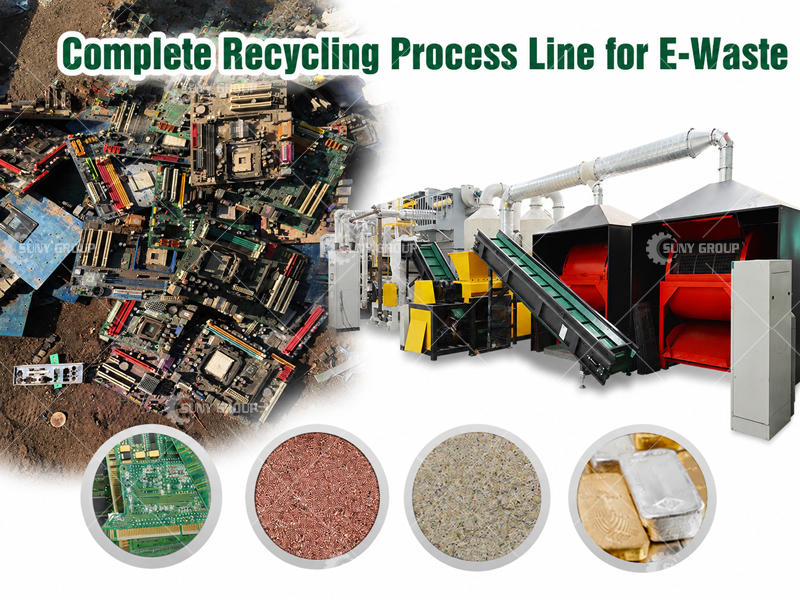
Complete Recycling Process Line for E-Waste
Complete recycling process line for e-waste is an integrated system designed to safely dismantle, sort, and recover valuable materials from discarded electrical and electronic equipment. With the rapid growth of digital devices, global electronic waste (e-waste) has become one of the fastest-growing waste streams. Proper recycling not only reduces environmental pollution but also recovers high-value resources such as copper, gold, aluminum, and plastics.
Main Categories and Sources of E-Waste
E-waste comes from a wide range of electronic and electrical products. It can be classified into several major categories:
1. Household Electronics
- Televisions, refrigerators, washing machines
- Microwaves, air conditioners, vacuum cleaners
2. IT and Communication Equipment
- Computers, laptops, servers
- Mobile phones, routers, printers
3. Consumer Electronics
- Audio systems, cameras, gaming consoles
- Chargers, headphones, small gadgets
4. Industrial and Electrical Equipment
- Circuit boards, control panels
- Electrical cables and wiring systems
Sources of E-Waste:
- Residential households
- Offices and data centers
- Manufacturing industries
- Telecommunication companies
- Retail and replacement markets
Why E-Waste Has High Recycling Value
E-waste is often called an “urban mine” because it contains significant quantities of recoverable metals and materials.
Valuable Components Include:
- Precious metals: gold, silver, palladium (mainly in PCBs)
- Base metals: copper, aluminum, iron
- Plastics: ABS, PVC, engineering plastics
- Glass: from screens and monitors
Economic and Environmental Value:
- Reduces mining of natural resources
- Lowers production cost of raw materials
- Minimizes landfill pollution and toxic leakage
- Supports circular economy development
Complete Recycling Process Line for E-Waste
A modern e-waste recycling plant typically follows a structured mechanical and separation process to maximize recovery efficiency.
1. Pre-Processing and Dismantling
Large electronic equipment is manually or mechanically dismantled to remove hazardous components such as batteries, capacitors, and refrigerants.
2. Shredding and Crushing
E-waste is fed into shredders or crushers to reduce size and liberate different materials for easier separation.
3. Magnetic Separation
Iron and steel materials are removed using magnetic separators, improving material purity.
4. Eddy Current Separation
Non-ferrous metals like aluminum are separated using eddy current systems.
5. Air Classification
Light materials such as plastic films and dust are separated from heavier metal particles.
6. Density and Optical Sorting
Advanced systems may use air tables or optical sorting to further refine material separation.
7. Fine Metal Recovery
Circuit boards and fine residues undergo additional processing such as grinding and electrostatic separation to recover copper and precious metals.
Recovered Materials and Their Market Value
After processing, the recycling line produces multiple reusable materials:
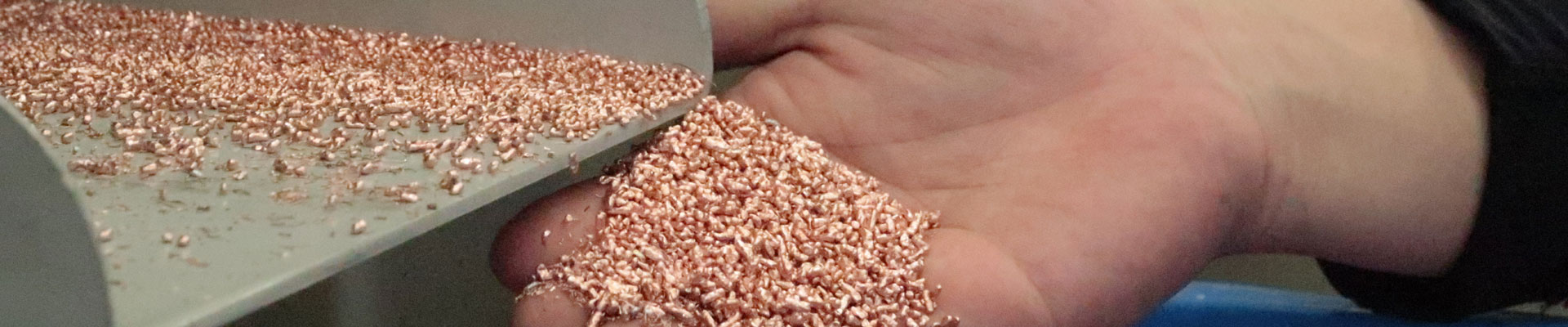
1. Copper
- Recovered from wires and circuit boards
- High market demand in electrical industries
2. Aluminum
- Used in construction, automotive, and packaging industries
3. Iron and Steel
- Reintroduced into steel manufacturing
4. Precious Metals
- Gold, silver, palladium extracted from PCBs
- High value per kilogram
5. Plastics
- Recycled into pellets for manufacturing new plastic products
6. Glass and Residues
- Used in construction materials or safely disposed of
Complete e-waste recycling process line is essential for efficient resource recovery and environmental protection. By converting discarded electronics into reusable raw materials, recycling plants not only generate strong economic returns but also support sustainable development. As global e-waste continues to increase, advanced recycling systems will play a critical role in building a cleaner and more resource-efficient future.