
Machine to Separate Copper from Electrical Wires
With the rapid growth of electronic consumption and industrial electrification, waste electrical wires have become a major recyclable resource. A machine to separate copper from electrical wires plays a key role in modern recycling plants, enabling efficient metal recovery, reducing environmental pollution, and supporting the circular economy.
1. Types and Sources of Electrical Wires
Waste electrical wires come from multiple sectors and are generally classified as:
- Household electrical wires
- Power cables, extension cords, appliance wiring
- Industrial cables
- Factory power systems, machinery cables, control wires
- Communication cables
- Internet cables, telecom wires, coaxial cables
- Automotive wires
- Vehicle wiring harnesses, EV battery cables
- Construction demolition waste
- Old buildings, infrastructure renovation projects
These wires typically contain copper (Cu) as the core conductive material, surrounded by plastic or rubber insulation.
2. Why Copper Must Be Separated
Copper separation is essential for several reasons:
- High economic value: Copper is one of the most valuable base metals in recycling
- Resource shortage: Natural copper ore is increasingly limited
- Environmental protection: Burning wires releases toxic gases if not properly processed
- Industrial reuse: Recycled copper performs almost like virgin material
- Energy saving: Recycling copper saves up to 85–90% energy compared to mining
Therefore, efficient separation is both economically and environmentally necessary.
3. Machine to Separate Copper from Electrical Wires
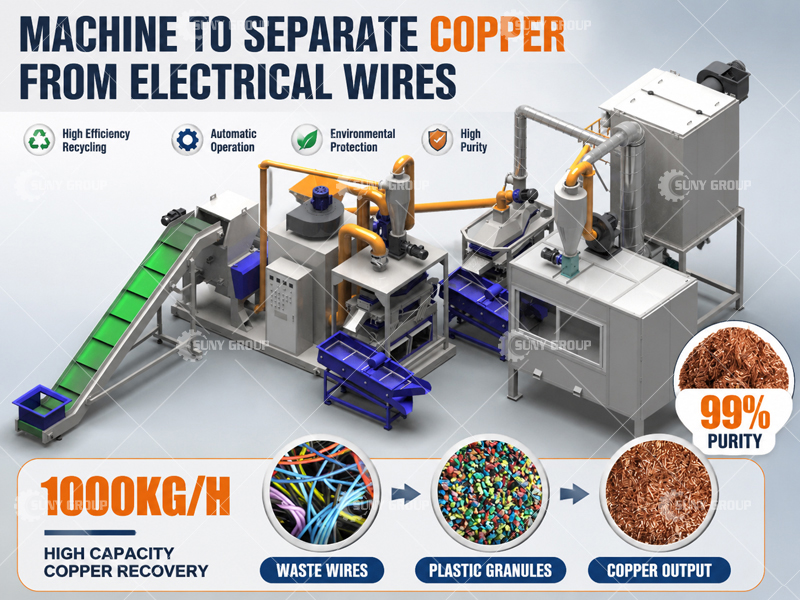
A copper wire recycling machine (also called cable granulator) is designed to process waste wires and extract pure copper granules.
Main components include:
- Crusher or shredder unit
- Air or gravity separator
- Vibration screen
- Dust collection system
- Control system (PLC automation)
4. Working Process of Copper Wire Recycling Machine
The complete process is highly automated and consists of the following steps:
Step 1: Feeding
Waste wires are fed into the conveyor system or directly into the shredder.
Step 2: Crushing
Wires are cut into small mixed particles of copper and plastic.
Step 3: Granulation
Further size reduction ensures uniform particle distribution.
Step 4: Air Separation
Using airflow density difference, copper particles are separated from plastic insulation.
Step 5: Vibration Sorting
Fine separation ensures higher purity of copper output.
Step 6: Dust Collection
A dust removal system captures micro-particles to ensure clean production.
5. Final Output Materials
After processing, the machine produces:
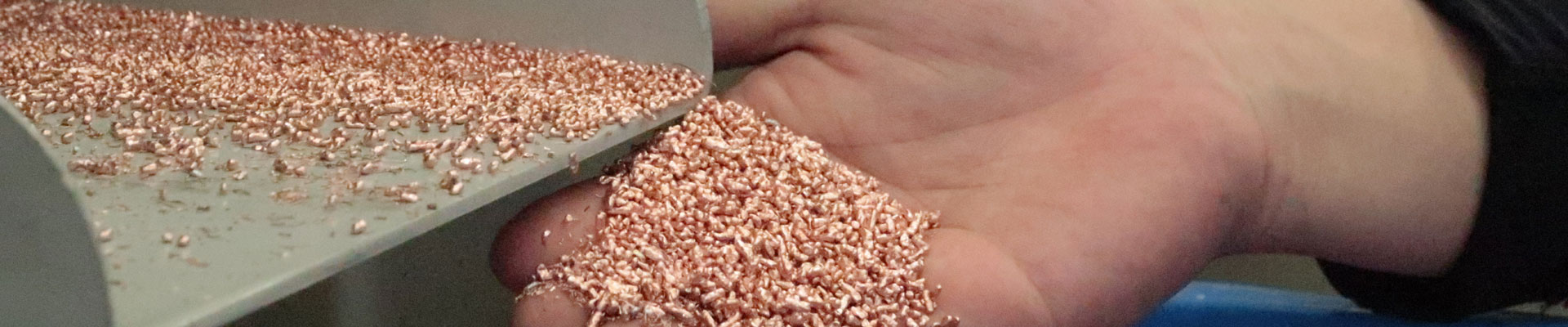
- Pure copper granules (99%+ purity in advanced systems)
- Plastic particles (PVC or rubber)
- Fine dust residue (collected for safe disposal or reuse)
6. Copper Recovery Rate
The efficiency of modern wire recycling machines is very high:
- Recovery rate: 95% – 99%
- Purity of copper: up to 99.5%
- Plastic separation efficiency: 90%+
Factors affecting recovery rate include:
- Wire type and thickness
- Insulation material
- Machine configuration
- Operator experience
Machine to separate copper from electrical wires is an essential solution for modern recycling industries. By efficiently processing different types of waste cables, it maximizes copper recovery, reduces environmental impact, and creates high economic value. As global demand for copper continues to rise, cable recycling technology will play an increasingly important role in sustainable resource management.