
Recycling Machine of Solar Panels in India
India’s solar energy industry is growing rapidly, creating increasing demand for solar panel recycling machines in India. As more solar power plants are installed, damaged, outdated, and end-of-life photovoltaic (PV) panels will become an important source of recyclable materials. According to a 2025 CEEW study, India generated approximately 146 kilotonnes of cumulative solar module waste by the end of 2024. This figure could increase to approximately 11,221 kilotonnes by 2047. Although the commercial recycling industry is still developing, it offers significant long-term opportunities for recycling companies and equipment investors.
Most solar panels used in India are crystalline silicon (c-Si) modules, including monocrystalline and polycrystalline solar panels. Monocrystalline modules are increasingly common in modern solar installations, while polycrystalline panels remain present in older projects. Thin-film modules, including cadmium telluride (CdTe) and copper indium gallium selenide (CIGS), account for a smaller market share. Therefore, crystalline silicon solar panel recycling lines are generally the priority for Indian recycling businesses.
1. Recommended Solar Panel Recycling Machines
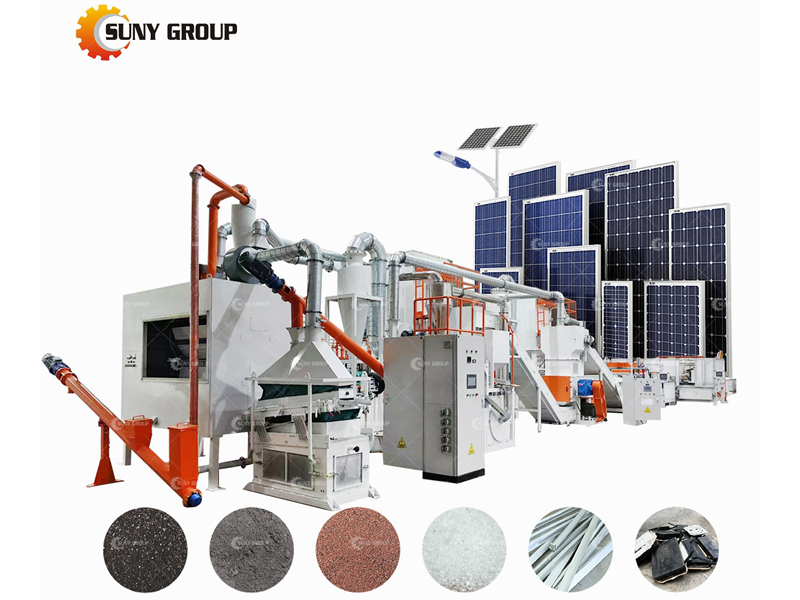
For most Indian recycling projects, a mechanical recycling line combined with thermal delamination is a practical solution. The main equipment includes:
-
Solar Panel Frame Remover: Removes aluminum frames from discarded PV modules.
-
Junction Box and Cable Removal Machine: Separates junction boxes and copper cables.
-
Glass Removal Machine: Separates the front glass from laminated solar cells.
-
Solar Panel Crusher: Crushes the remaining materials into smaller particles.
-
Hammer Mill and Grinding Machine: Further reduces particle sizes.
-
Vibrating Screen: Classifies materials according to particle size.
-
Air Separator and Eddy Current Separator: Separates lightweight plastics and non-ferrous metals.
For higher-value recovery, additional thermal or chemical treatment systems can recover silicon and silver from solar cells.
2. Solar Panel Recycling Process
The typical recycling process involves:
-
Removing aluminum frames, junction boxes, and cables.
-
Separating glass from the EVA-encapsulated solar cells through mechanical or thermal delamination.
-
Crushing and grinding the remaining materials.
-
Using screening and separation equipment to recover glass, silicon-rich fractions, copper, and other metals.
-
Applying advanced chemical treatment and purification when high-purity silicon and silver recovery is required.
For CdTe thin-film panels, specialized recycling technology is necessary to recover cadmium and tellurium safely.
3. Recyclable Materials and Their Applications
Solar panel recycling can recover several valuable materials for different industries:
| Recovered material | Reuse and applications |
|---|---|
| Glass | Glass manufacturing, construction materials, and fiberglass production |
| Aluminum | Aluminum smelting, building materials, and automotive components |
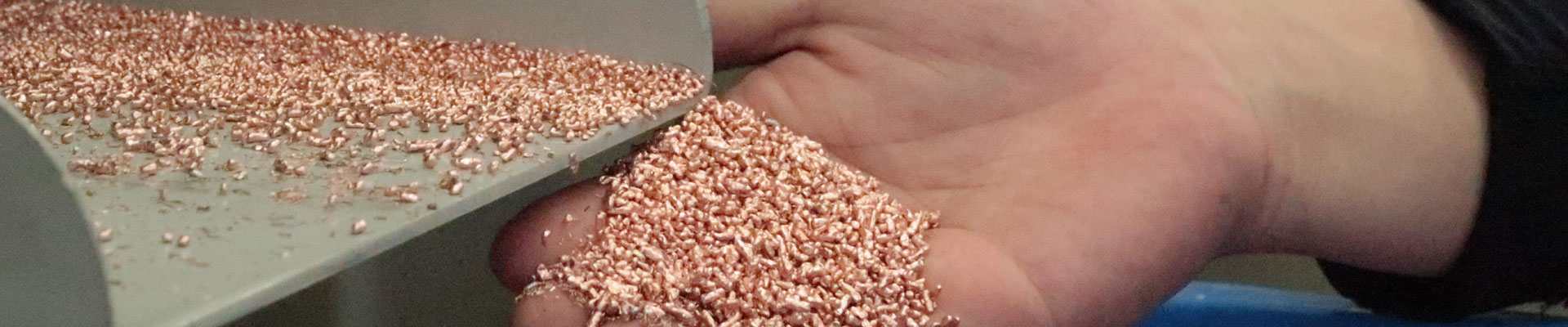
| Copper | Electrical cables, wires, motors, and electronic components |
| Silicon | Solar cell manufacturing and metallurgical applications after purification |
| Silver | Electronics, precious metal refining, and photovoltaic manufacturing |
| Plastics (EVA and backsheet) | Cement kiln co-processing and other approved waste recovery routes |
Advanced recycling technologies can recover approximately 90–98% of PV module materials under suitable process conditions, although actual recovery rates depend on the panel type and recycling technology.
4. Which Solar Panel Recycling Method Is Best for India?
For Indian recycling companies, mechanical recycling combined with thermal delamination is a practical starting point because it can efficiently recover bulk materials such as glass, aluminum, and copper. It also allows businesses to establish modular production lines and expand processing capacity according to waste availability.
For investors targeting higher-value materials, integrating chemical treatment and metal purification can improve silicon and silver recovery. However, these systems require higher investment, technical expertise, and wastewater and chemical management. Therefore, the best solution depends on processing capacity, investment budget, raw material supply, and final product requirements.
India’s E-Waste (Management) Rules, 2022, also cover solar PV panels, modules, and cells. Businesses should understand applicable CPCB registration, storage, and recycling requirements before establishing a solar panel recycling plant.