
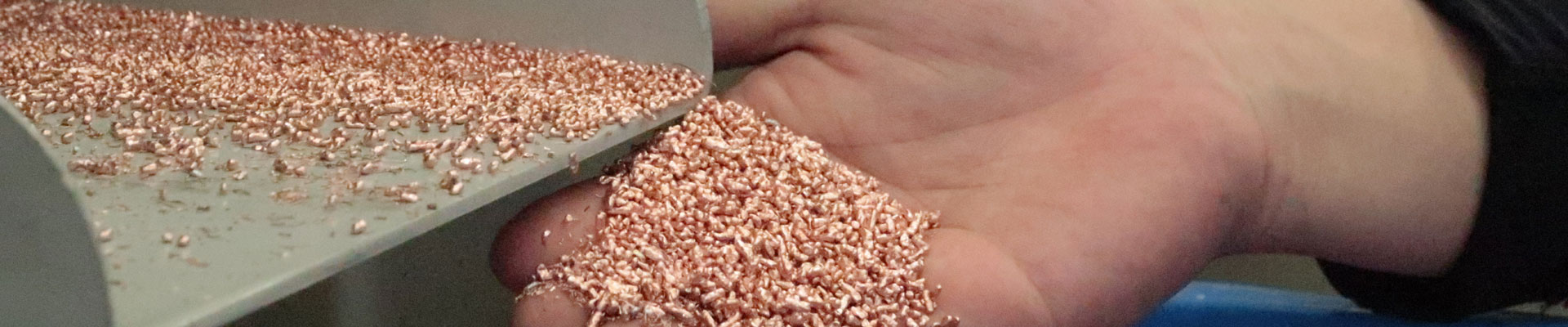
Radiator Recycling Machine
Radiator recycling has become an important sector in the scrap metal industry due to the high value of metals contained in used radiators. A modern radiator recycling machine is designed to efficiently separate and recover these valuable materials, maximizing profit while reducing environmental impact.
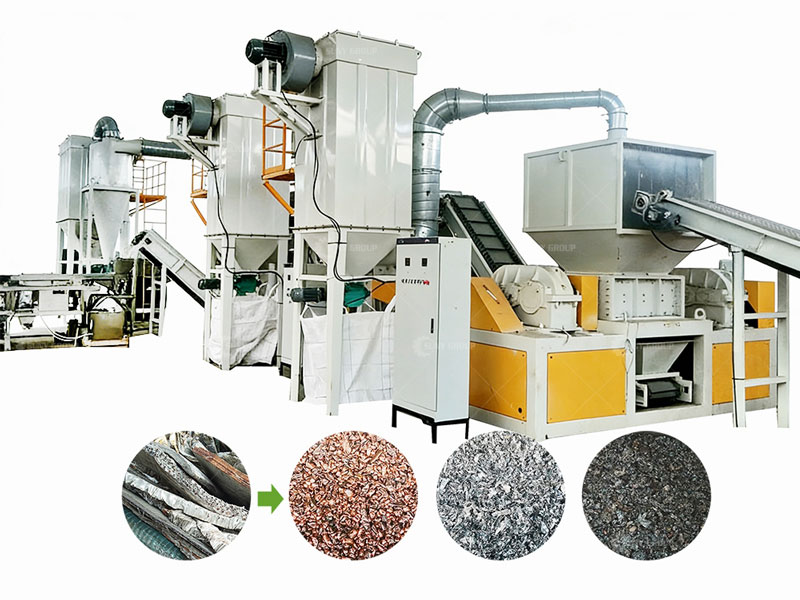
What Metals Are Found in Radiators?
Radiators, especially those from automobiles and air conditioning systems, contain a combination of high-value metals. The main materials include:
- Aluminum – Common in modern radiators due to its lightweight and corrosion resistance
- Copper – Found in older radiators; highly valuable and conductive
- Brass – Often used in tanks and fittings
- Steel/Iron – Used in frames or supporting structures
These metals are tightly bonded, making manual separation inefficient. This is why specialized radiator recycling machines are essential.
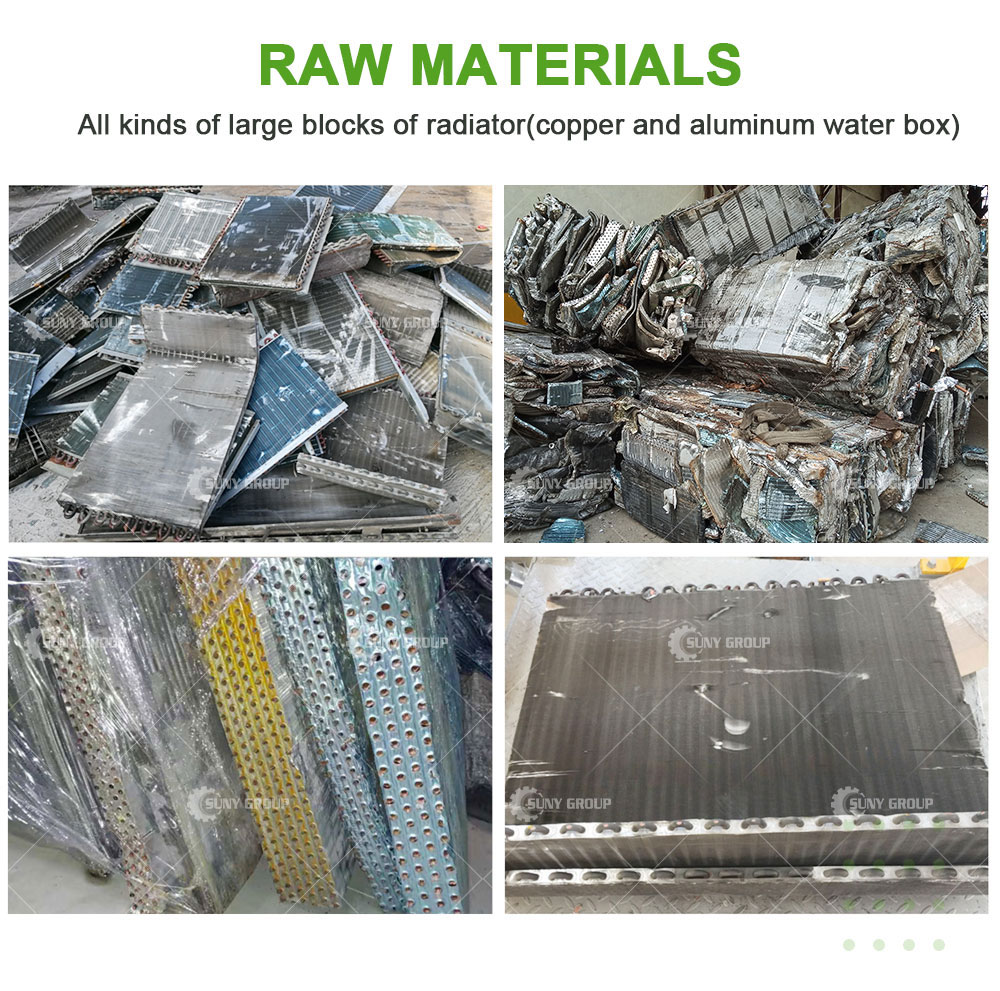
Recycling Value of Radiators
Radiators are considered premium scrap because of their mixed metal composition. Their recycling value depends on the type and purity of metals recovered.
Key value points include:
- Copper has the highest market price among radiator metals
- Aluminum is lightweight but widely used, ensuring stable demand
- Clean separation increases resale price significantly
- Mixed scrap has lower value compared to sorted metals
Efficient recycling can increase profit margins by 30–50% compared to selling untreated scrap.
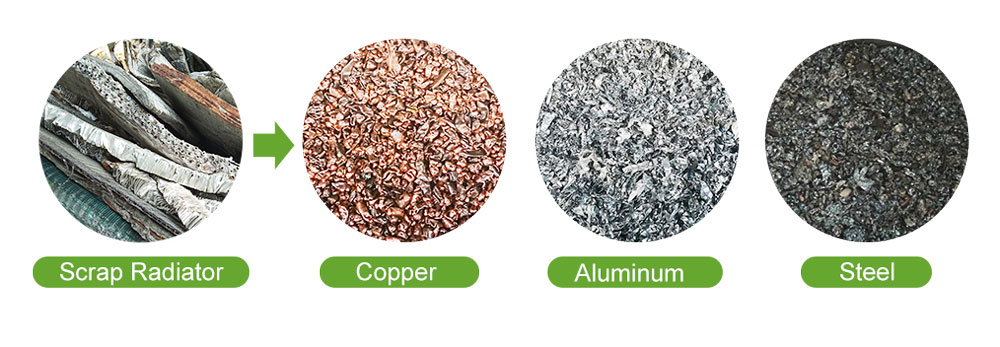
Radiator Recycling Machine Configuration
A complete radiator recycling system consists of several key components working together to achieve high separation efficiency.
1. Feeding System
- Conveyor belt for continuous and uniform feeding
- Improves automation and processing capacity
2. Primary Crusher
- Breaks radiators into smaller pieces
- Ensures easier downstream separation
3. Hammer Mill or Fine Crusher
- Further reduces material size
- Liberates copper and aluminum components
4. Magnetic Separator
- Removes iron and steel parts
- Enhances purity of non-ferrous metals
5. Air Separator
- Separates light and heavy materials
- Improves sorting accuracy
6. Gravity or Eddy Current Separator
- Separates aluminum from copper
- Achieves high recovery rates (up to 98%)
7. Dust Collection System
- Reduces pollution
- Ensures safe and clean operation
This configuration allows for a fully automated process with high efficiency and minimal labor requirements.
Applications of Recycled Radiator Materials
Recovered metals from radiator recycling are widely reused across multiple industries:
- Copper Applications
- Electrical wiring and cables
- Electronics and power equipment
- Aluminum Applications
- Automotive parts
- Construction materials
- Packaging industry
- Brass Applications
- Plumbing fittings
- Decorative hardware
- Steel/Iron Applications
- Construction and manufacturing
Recycling these materials reduces the need for mining, saves energy, and lowers carbon emissions.
A radiator recycling machine is a vital investment for businesses in the scrap metal industry. By efficiently separating aluminum, copper, brass, and steel, it significantly enhances the value of waste radiators. With proper machine configuration and advanced separation technology, recyclers can achieve high recovery rates and maximize profits. At the same time, recycled metals play a crucial role in sustainable manufacturing, making radiator recycling both economically and environmentally beneficial.