

Lithium Battery Recycling Unit
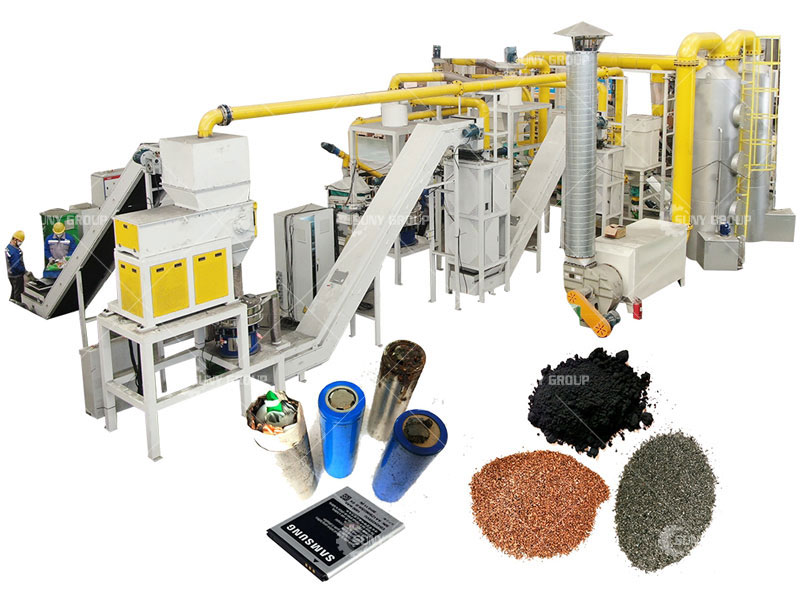
Lithium battery recycling unit is an advanced system designed to process, recover, and reuse valuable materials from spent lithium-ion batteries. With the rapid growth of electric vehicles, consumer electronics, and energy storage systems, the demand for efficient recycling solutions has increased significantly. This article explores lithium battery sources and classifications, environmental and economic benefits, recycling unit advantages, and the applications of recovered materials.
1. Sources and Classification of Lithium Batteries
Main Sources of Lithium Batteries
Lithium batteries are widely used across multiple industries. The primary sources include:
- Consumer electronics: smartphones, laptops, tablets, and wearable devices
- Electric vehicles (EVs): battery packs from cars, buses, and e-bikes
- Energy storage systems: solar and wind energy storage batteries
- Industrial equipment: power tools and backup power systems
Classification of Lithium Batteries
Lithium batteries can be categorized based on their chemical composition:
- Lithium Cobalt Oxide (LCO) – commonly used in smartphones and laptops
- Lithium Iron Phosphate (LFP) – widely used in EVs and energy storage due to safety
- Lithium Nickel Manganese Cobalt Oxide (NMC) – balanced performance, popular in EVs
- Lithium Nickel Cobalt Aluminum Oxide (NCA) – high energy density, used in premium EVs
- Lithium Manganese Oxide (LMO) – used in power tools and hybrid vehicles
2. Environmental and Economic Benefits of Recycling
Environmental Benefits
Recycling lithium batteries plays a crucial role in sustainability:
- Reduction of hazardous waste: prevents soil and water contamination
- Lower carbon emissions: reduces the need for mining raw materials
- Resource conservation: preserves finite metals like lithium, cobalt, and nickel
Economic Benefits
Lithium battery recycling also offers strong financial advantages:
- Recovery of valuable metals: cobalt, lithium, nickel, and copper
- Cost savings: reduces dependency on expensive raw material mining
- Growing market demand: driven by EV and renewable energy industries
- Job creation: supports the development of recycling and green technology sectors
3. Lithium Battery Recycling Unit: Process and Advantages
Typical Recycling Process
A lithium battery recycling unit usually includes the following stages:
- Discharging and dismantling – safe removal of residual energy
- Shredding and crushing – size reduction of battery components
- Sorting and separation – separation of metals, plastics, and black mass
- Hydrometallurgical or pyrometallurgical treatment – extraction of valuable metals
Key Advantages of Recycling Units
- High recovery efficiency: maximizes extraction of valuable materials
- Automated operation: reduces labor costs and improves safety
- Environmental compliance: meets global recycling standards
- Flexible processing capacity: suitable for various battery types
- Energy-efficient design: lowers operational costs
4. Applications of Recovered Materials
After recycling, the extracted materials can be reused in multiple industries:
- Lithium: reused in new battery production
- Cobalt and nickel: essential for manufacturing high-performance batteries
- Copper and aluminum: used in electrical wiring and industrial manufacturing
- Graphite: reused in battery anodes or industrial lubricants
Industry Applications
- Electric vehicle battery manufacturing
- Consumer electronics production
- Renewable energy storage systems
- Metallurgical and chemical industries
Lithium battery recycling unit is a critical solution for managing the growing volume of battery waste. By efficiently recovering valuable materials, it not only reduces environmental pollution but also creates significant economic value. As demand for lithium batteries continues to rise, investing in advanced recycling technologies will play a key role in building a sustainable and circular economy.