
Waste Battery Recycling Machine for Lithium Ion Batteries
With the rapid development of electric vehicles, consumer electronics, and energy storage systems, the number of discarded lithium batteries is increasing every year. As a result, waste battery recycling machine for lithium ion batteries has become an essential technology in the recycling industry. Proper recycling not only protects the environment but also recovers valuable metals for reuse.
Why Lithium Battery Recycling Is So Important
Lithium-ion batteries contain many valuable and potentially hazardous materials. If these batteries are discarded without proper treatment, they may cause serious environmental pollution and safety risks.
The importance of lithium battery recycling can be summarized as follows:
-
Environmental protection – Prevents harmful substances from contaminating soil and water.
-
Resource recovery – Valuable metals such as lithium, cobalt, nickel, copper, and aluminum can be reused.
-
Energy conservation – Recycling metals consumes far less energy than mining new resources.
-
Growing battery waste – The rapid expansion of electric vehicles and electronics increases the volume of waste batteries every year.
Therefore, efficient recycling equipment is necessary to manage the increasing amount of battery waste.
Configuration of a Lithium Ion Battery Recycling Machine
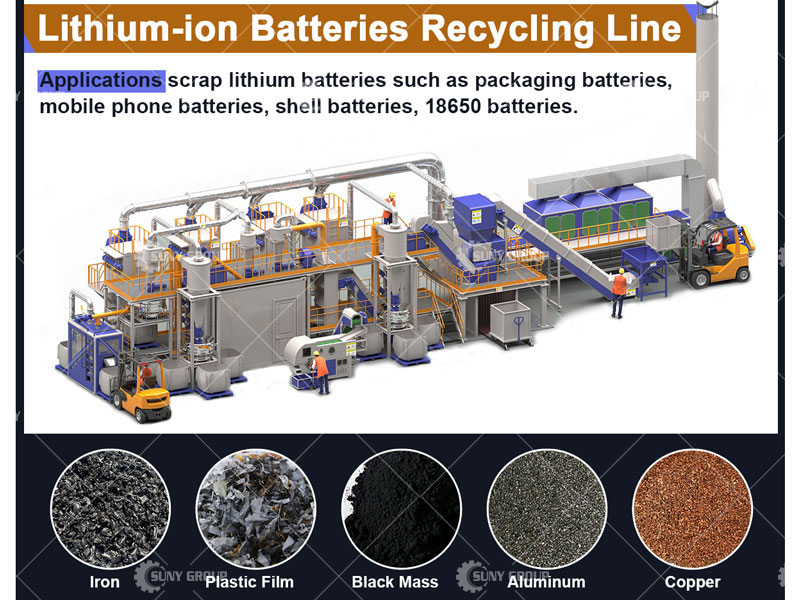
A typical waste battery recycling production line consists of several machines that work together to process used batteries and separate valuable materials. The configuration is designed to ensure safe, efficient, and environmentally friendly recycling.
The main stages usually include:
-
Battery discharging
-
Crushing and shredding
-
Grinding and screening
-
Air separation and gravity separation
-
Dust collection and environmental protection
Each stage plays an important role in recovering valuable materials from lithium-ion batteries.
Main Machines Included in the Recycling Line
A complete lithium battery recycling line usually includes the following equipment:
-
Battery discharge machine – Safely removes remaining electricity from waste batteries.
-
Battery shredder or crusher – Breaks batteries into smaller pieces.
-
Hammer mill or grinder – Further reduces particle size.
-
Vibrating screen – Classifies materials according to size.
-
Air separator – Separates light materials such as plastic films.
-
Gravity separator – Separates metal powder from non-metal materials.
-
Dust collection system – Prevents pollution and ensures safe operation.
These machines work together to achieve efficient material separation and high recovery rates.
Recycling Efficiency of Lithium Battery Recycling Machines
Modern lithium battery recycling machines are designed to provide high efficiency and stable performance. Advanced production lines can process large volumes of waste batteries with minimal environmental impact.
Typical efficiency advantages include:
-
High metal recovery rate
-
Automated operation and low labor requirements
-
Continuous production capability
-
Stable and safe recycling process
Many industrial recycling lines can process hundreds of kilograms to several tons of batteries per hour, depending on machine configuration and capacity.
How Waste Materials Are Recovered
During the recycling process, waste lithium batteries are broken down and separated into different materials. These recovered materials can then be reused in various industries.
The main recovered materials include:
-
Black mass powder – Contains lithium, cobalt, nickel, and manganese used in battery manufacturing.
-
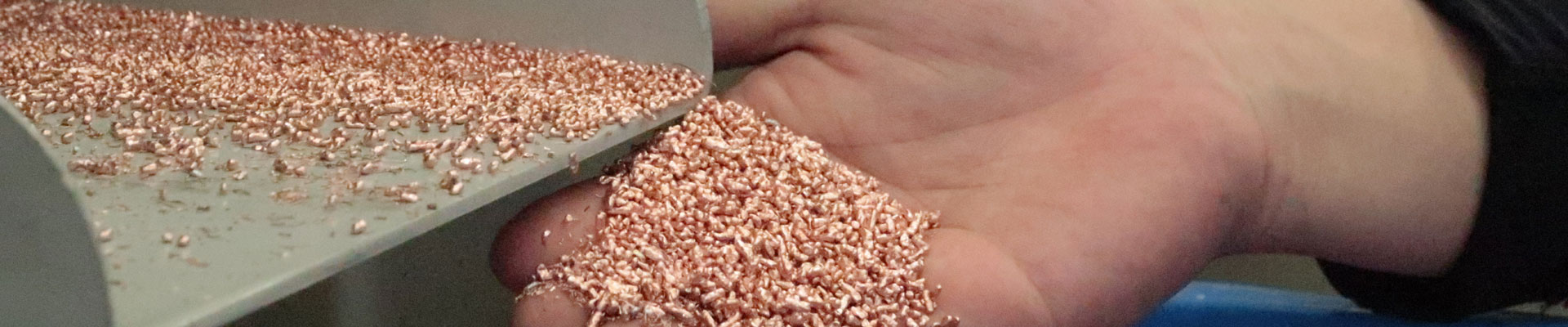
Copper and aluminum – Reused in metal processing industries.
-
Plastic materials – Recycled into industrial raw materials.
-
Steel components – Recovered and reused in metal production.
The recovered materials have significant economic value, making lithium battery recycling both environmentally beneficial and profitable.
As the global demand for lithium batteries continues to grow, the importance of waste battery recycling machines for lithium ion batteries becomes increasingly significant. Efficient recycling technology helps recover valuable metals, reduce environmental pollution, and support sustainable resource utilization. Investing in advanced battery recycling equipment is a key step toward building a circular economy in the energy storage and electronics industries.