

Lithium Battery Recycle Plan
Lithium battery recycle plan refers to a complete technical and operational solution for safely processing spent lithium-ion batteries and recovering valuable materials. With the rapid expansion of electric vehicles, energy storage systems, consumer electronics, and renewable energy industries, the number of retired lithium batteries is growing exponentially. Without proper recycling, lithium batteries pose serious environmental, safety, and resource waste challenges. Therefore, establishing an efficient lithium battery recycle plan has become essential for sustainable development and circular economy growth.
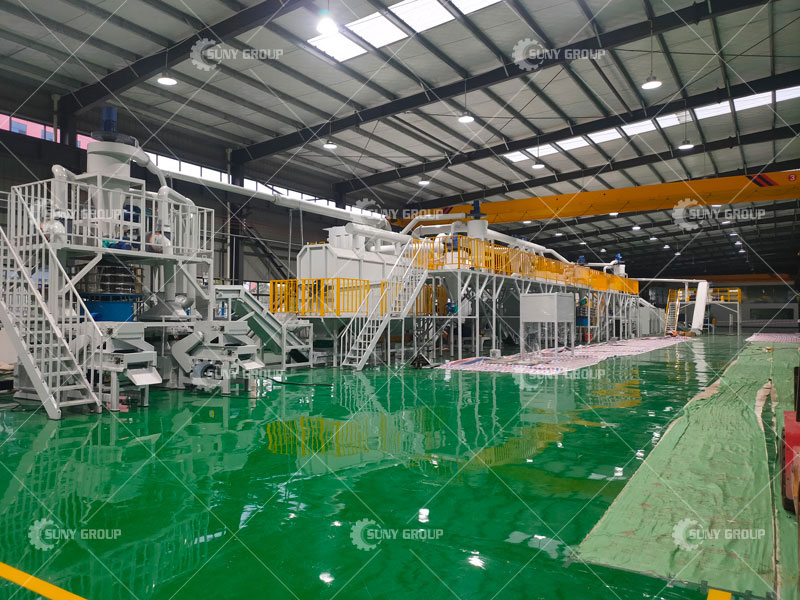
Why Lithium Batteries Must Be Recycled
Lithium batteries contain hazardous substances and high-value resources. Improper disposal can lead to environmental pollution and safety risks.
Key reasons for lithium battery recycling include:
-
Environmental Protection – Electrolytes and heavy metals can contaminate soil and groundwater if not treated properly.
-
Fire and Explosion Risk Reduction – Spent batteries may short-circuit, overheat, or ignite during landfill disposal.
-
Resource Conservation – Lithium batteries contain scarce and non-renewable metals.
-
Regulatory Compliance – Many countries now require mandatory recycling of lithium batteries.
-
Economic Value Creation – Recycling recovers high-value metals and reduces raw material costs.
High-Value Recyclable Materials in Lithium Batteries
Lithium batteries are often described as “urban mines” due to their rich metal content. Several components have significant recycling value.
Major recyclable materials include:
-
Lithium – Used again in battery cathode material production
-
Cobalt – High market price and strong demand
-
Nickel – Critical material for high-energy-density batteries
-
Manganese – Widely used in cathode formulations
-
Copper – From current collectors and wiring
-
Aluminum – From battery shells and cathode foils
-
Graphite – Anode material reused in battery and metallurgical industries
Recovering these materials helps stabilize supply chains and reduces dependence on primary mining.
Lithium Battery Recycle Plan Types and Machine Configuration
Different lithium battery recycle plans are designed based on capacity, battery type, and investment scale.
Common lithium battery recycle plans include:
-
Physical Recycling Plan – Mechanical dismantling, crushing, and separation
-
Hydrometallurgical Recycling Plan – Chemical leaching and metal extraction
-
Combined Recycling Plan – Physical pretreatment followed by chemical refining
Typical machine configuration of a lithium battery recycle plan:
-
Battery discharge system for safety
-
Automatic battery dismantling machine
-
Crushing and shredding system
-
Magnetic separation unit
-
Air separation and screening system
-
Powder collection system for black mass
-
Dust removal and gas treatment system
These machines work together to achieve high recovery efficiency while ensuring operational safety.
Advantages of Lithium Battery Recycle Plan
A well-designed lithium battery recycle plan offers both technical and economic benefits.
Core advantages include:
-
High recovery rate of critical metals
-
Automated and continuous operation
-
Reduced environmental impact
-
Lower energy consumption compared to mining
-
Flexible configuration for different battery types
-
Scalable capacity for industrial expansion
These advantages make lithium battery recycling a long-term, profitable business model.
Applications of Final Recycled Materials
The materials recovered from lithium battery recycling are widely reused across multiple industries.
Recycled material applications include:
-
Battery manufacturing for new lithium-ion cells
-
Electric vehicle and energy storage systems
-
Metallurgical and alloy production
-
Electronics and electrical equipment manufacturing
-
Chemical and material processing industries
Recycling lithium batteries closes the material loop and supports sustainable industrial development.
A comprehensive lithium battery recycle plan is essential for addressing the growing challenge of battery waste. By recycling lithium batteries, valuable materials such as lithium, cobalt, nickel, copper, and aluminum can be efficiently recovered and reused. With advanced machine configurations, clear process advantages, and broad application of recycled materials, lithium battery recycling represents a high-value, environmentally responsible investment for the future.