
E-waste Recycling Plant
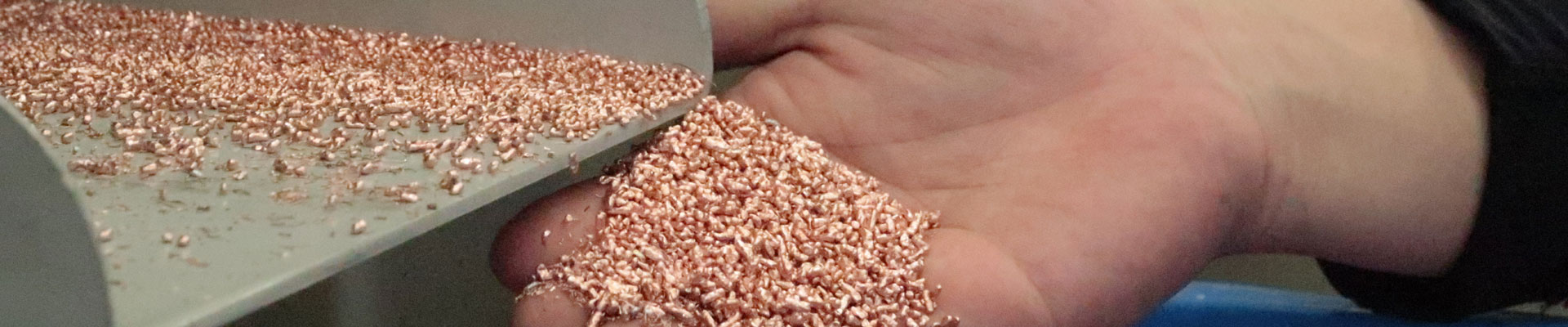
E-waste recycling plant is designed to process discarded electronic products and recover valuable materials. With the rapid growth of electronic consumption, e-waste recycling has become essential for environmental protection and resource sustainability. Modern plants integrate dismantling, crushing, separation, and refining technologies to achieve high-efficiency recovery.
What Materials Are Included in E-waste?
E-waste contains a wide range of recyclable materials, including:
- Printed Circuit Boards (PCBs) – rich in copper and precious metals
- Wires and Cables – mainly copper and plastic insulation
- Electronic Components – capacitors, resistors, chips
- Household Appliances – TVs, refrigerators, washing machines
- IT Equipment – computers, servers, mobile phones
- Motors and Batteries – containing metals and chemical materials
These waste streams contain valuable resources such as copper, aluminum, gold, silver, and palladium, as well as reusable non-metal materials like plastics and fiberglass.
E-waste Recycling Process
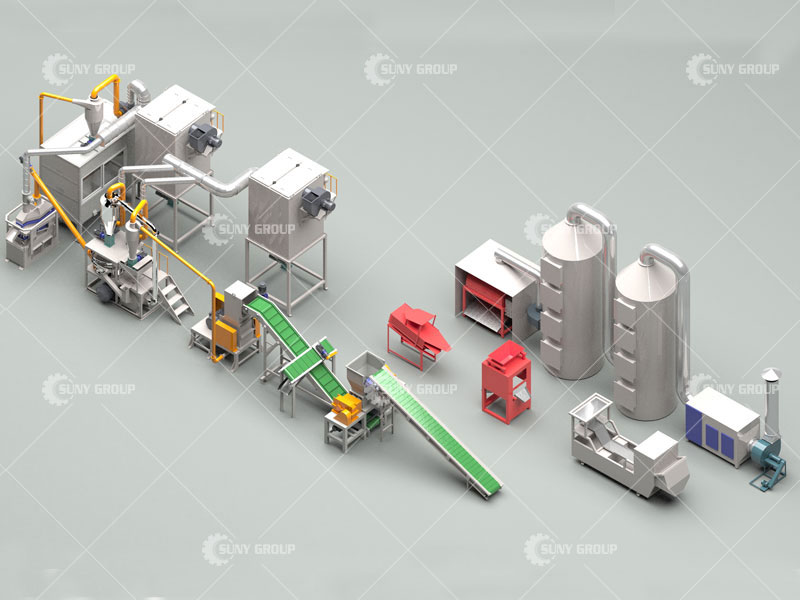
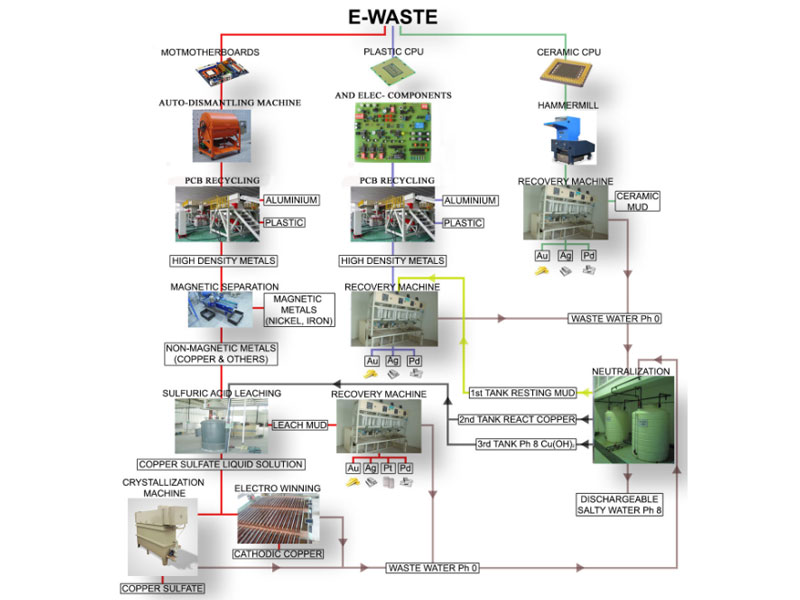
A standard e-waste recycling plant follows several key steps:
- Component Removal
PCB dismantling machines remove electronic components, improving separation efficiency and material purity. - Crushing and Physical Separation
The main body of e-waste is shredded and crushed. Magnetic separators, eddy current separators, and electrostatic systems separate metals from non-metals. - Precious Metal Extraction
Gold, silver, and other valuable metals are extracted using electrolysis or chemical refining technologies. - Dust Collection and Environmental Protection
Advanced filtration systems ensure clean and safe operation, meeting environmental standards.
Applications of Recycled Materials
Recovered materials are widely reused in various industries:
- Copper & Aluminum: used in smelting, electrical wiring, and manufacturing
- Precious Metals: applied in electronics, jewelry, and high-tech industries
- Plastic & Resin Powder: used for construction fillers and composite materials
- Mixed Metals: refined into industrial raw materials
Economic Value of E-waste Recycling
E-waste recycling offers strong economic advantages:
- High Profit Potential – valuable metals like gold and copper increase revenue
- Cost Reduction – recycled materials reduce reliance on raw mining
- Market Demand Growth – global focus on sustainability drives industry expansion
- Policy Support – environmental regulations encourage recycling investments
- Automation Efficiency – modern plants reduce labor costs and improve output
An e-waste recycling plant plays a crucial role in transforming electronic waste into valuable resources. Through component removal, crushing and separation, and precious metal extraction, it achieves maximum material recovery. With wide applications and high economic returns, e-waste recycling is a sustainable and profitable solution that supports the global circular economy.