
Copper Wire Waste Recycling Machine
With the rapid development of electrical infrastructure, renewable energy projects, and electronic products, the consumption of copper wire has increased significantly. Large quantities of copper cables are generated every year from power grids, construction demolition, automotive wiring, communication systems, and electronic waste. As copper wire ages or becomes obsolete, improper disposal leads to serious environmental pollution and resource waste.
This growing challenge has driven strong demand for the copper wire waste recycling machine, which provides an efficient and environmentally friendly solution for recovering valuable copper from waste cables.
Recycling Value of Copper Wire Waste
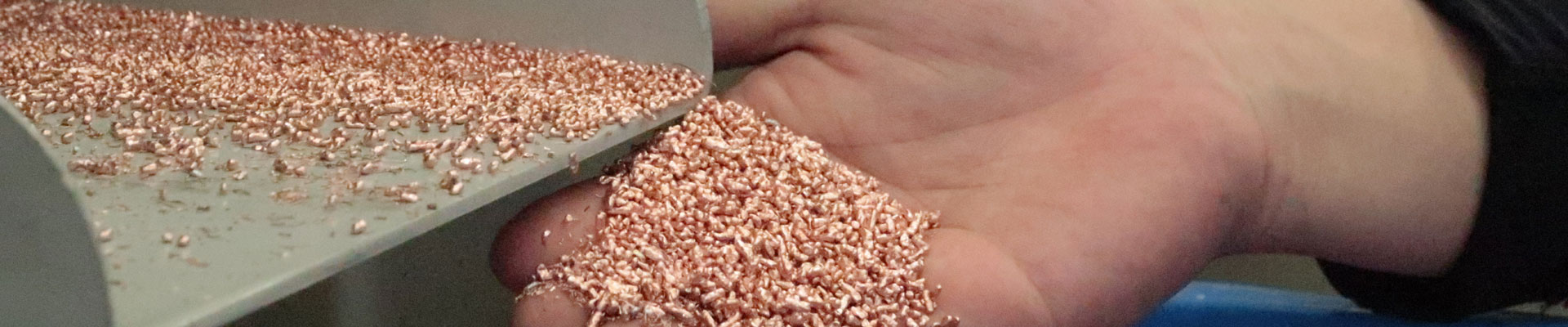
Copper is one of the most valuable non-ferrous metals due to its excellent electrical conductivity, corrosion resistance, and recyclability. A copper wire waste recycling machine can recover copper with a purity of over 99%, making recycled copper almost equivalent to virgin copper in market value.
Key recycling values include:
-
High economic return due to strong global copper demand
-
Reduced mining pressure and energy consumption
-
Lower production cost compared to primary copper smelting
-
Stable secondary raw material supply for manufacturing industries
Recycling copper wire waste is both a profitable and sustainable business model.
Working Principle of a Copper Wire Waste Recycling Machine
The working principle of a copper wire waste recycling machine is based on mechanical crushing and physical separation. The machine first cuts and crushes copper wires into small granules, liberating copper from insulation materials such as PVC or rubber.
After size reduction, advanced separation technologies are applied, including:
-
Air separation based on material density differences
-
Vibration separation for precise copper-plastic classification
-
Electrostatic separation for fine copper recovery
This physical recycling method avoids chemical pollution and ensures stable, high-quality output.
Main Components and Configuration of the Recycling Machine
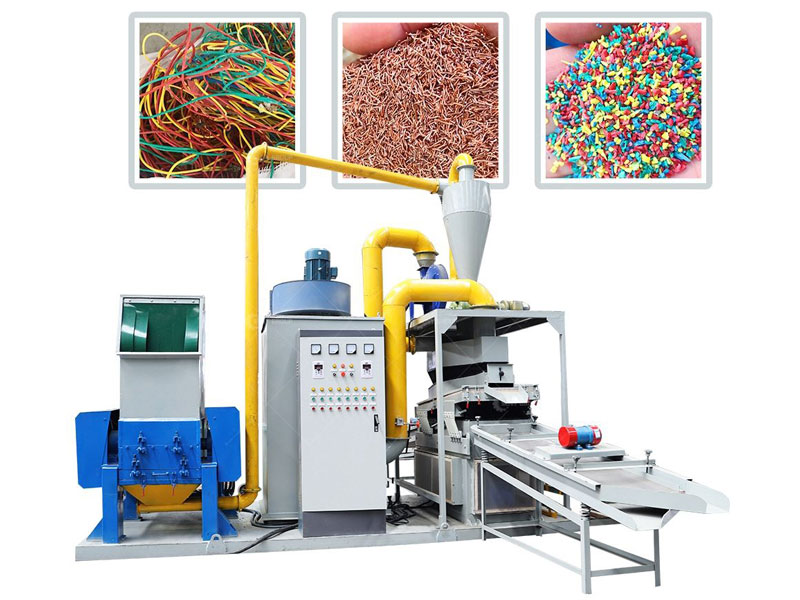
A standard copper wire waste recycling machine usually consists of several integrated units:
-
Feeding system – ensures uniform material input
-
Crusher and granulator – breaks wires into small particles
-
Air separator – separates light plastics from heavy copper
-
Vibrating screen – improves separation accuracy
-
Dust collection system – maintains clean and safe operation
The modular configuration allows flexible adjustment according to different wire types and processing capacities.
Copper Wire Recycling Process Flow
The complete recycling process using a copper wire waste recycling machine typically follows these steps:
-
Waste copper wires are collected and sorted
-
Wires are fed into the crushing and granulating unit
-
Copper and insulation are fully liberated
-
Mixed particles enter the separation system
-
Pure copper granules and plastic residues are discharged separately
This automated process ensures high efficiency, low labor cost, and continuous production.
Final Applications of Recycled Materials
Materials recovered by a copper wire waste recycling machine have wide industrial applications:
-
Recycled copper granules are used in electrical cables, motors, transformers, and copper products manufacturing
-
Plastic insulation materials can be pelletized and reused in plastic products or construction materials
-
Fine copper powder is applied in metallurgy and conductive materials
These applications maximize resource utilization and support a circular economy.
The copper wire waste recycling machine plays a crucial role in modern metal recycling industries. By combining high recycling value, advanced mechanical separation technology, and wide downstream applications, copper wire recycling offers both environmental and economic advantages. As copper demand continues to rise, investing in copper wire recycling equipment represents a sustainable and profitable opportunity.