
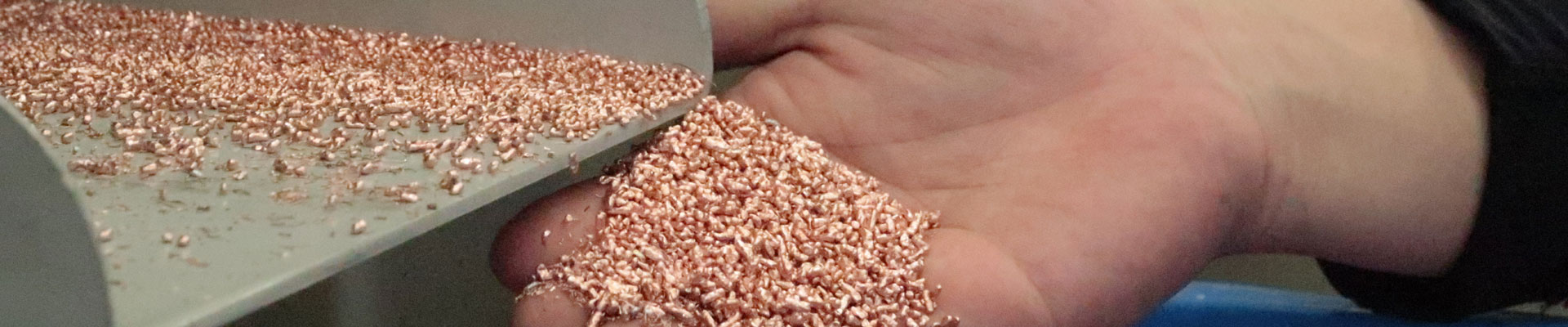
Copper Cable Recycling Line
Copper cables are widely used across multiple industries, making them one of the most common recyclable metal wastes. Major sources include construction and demolition projects, electrical power transmission systems, telecommunications networks, automotive wiring systems, and household appliances. Industrial equipment upgrades and infrastructure replacement also generate large volumes of discarded copper cables. These cables often contain high copper content, but are mixed with plastic or rubber insulation, requiring professional processing through a copper cable recycling line.

Why Copper Cables Need to Be Processed
Direct reuse of scrap copper cables is impractical due to insulation layers, contamination, and inconsistent sizes. Processing is essential to unlock their full recycling value. Proper treatment through a copper cable recycling line offers several advantages:
-
Improves copper purity and recovery rate
-
Eliminates environmental pollution caused by burning or landfill disposal
-
Reduces manual labor and safety risks
-
Enhances economic returns from recycled copper
Mechanical recycling ensures copper cables are handled in an environmentally responsible and efficient manner, meeting modern recycling standards.
Introduction to the Copper Cable Recycling Line
A copper cable recycling line is an integrated system designed to separate copper conductors from insulating materials through automated mechanical processes. The line typically combines shredding, crushing, screening, and physical separation technologies. It can process various cable sizes, including thin wires and thick power cables, with stable performance. Advanced dust collection systems ensure clean operation and compliance with environmental regulations, making the recycling line suitable for industrial-scale copper recovery.
Copper Cable Recycling Process and Workflow
The recycling process begins with feeding copper cables into a shredder, where they are cut into smaller segments. These pieces then enter a granulation unit for further size reduction. After granulation, the mixed materials pass through multiple separation stages:
-
Magnetic separation removes steel impurities
-
Air separation separates light plastic fractions
-
Gravity separation accurately separates copper granules
Each stage is precisely controlled to maintain high separation efficiency. The entire copper cable recycling line operates continuously, ensuring consistent output quality and high processing capacity.
Output Materials and Copper Quality
The final outputs of a copper cable recycling line include copper granules, plastic insulation fragments, and minor residual materials. The recovered copper granules are clean, uniform in size, and high in purity, with minimal plastic content. This high-quality copper meets industry requirements and retains excellent electrical conductivity. Plastic by-products can also be collected for further recycling, improving overall resource utilization.
Applications of Recycled Copper Output
Recovered copper from a copper cable recycling line is widely used in downstream industries. Common applications include copper smelting, wire drawing, electrical cable manufacturing, and production of electrical components. Recycled copper performs comparably to virgin copper while significantly reducing raw material costs and environmental impact. By investing in a copper cable recycling line, recycling businesses can achieve sustainable growth and long-term profitability.